3D Printing Hotend Upgrade: High Flow, All-Metal, and When the Stock One Is Fine
LayerWalker is a participant in the Amazon Services LLC Associates Program. We may earn a commission when you buy through links on our site, at no extra cost to you.
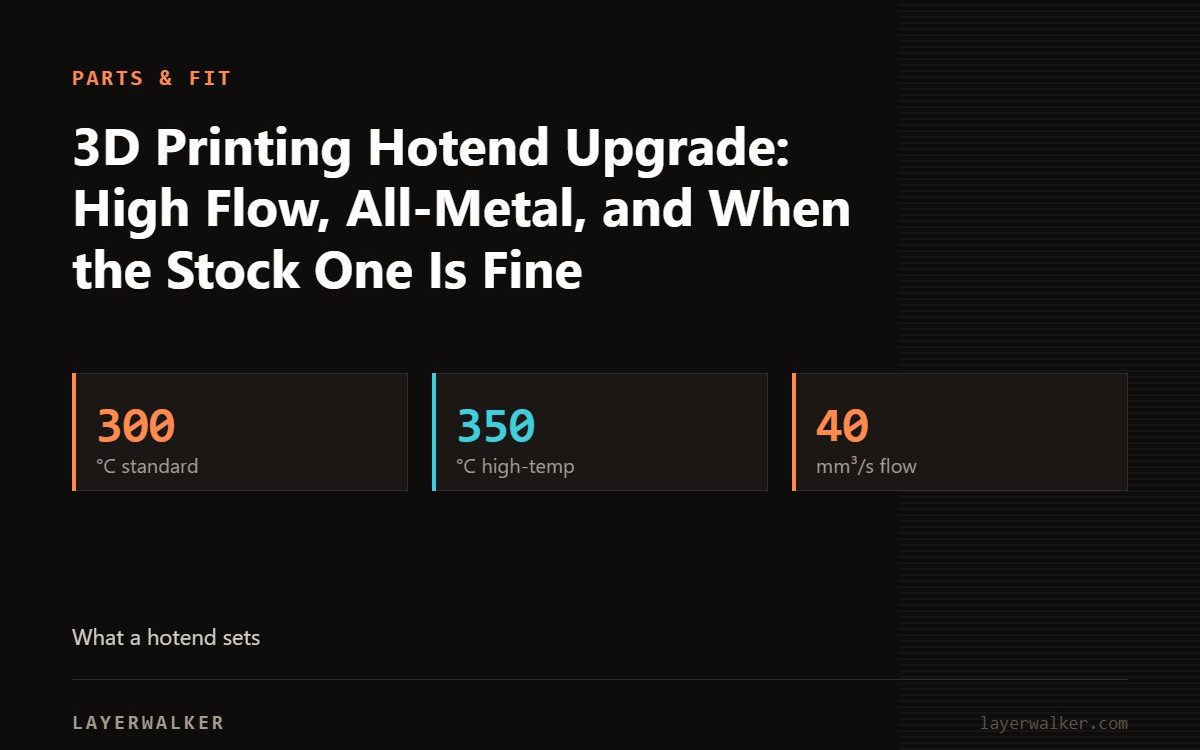
Upgrade the hotend for one of two reasons: you need 260 °C and above for nylon or polycarbonate, which means an all-metal heat break, or you want to print faster than the stock melt zone can feed, which means a high-flow hotend or a CHT-style nozzle. For PLA and PETG at normal speeds the stock hotend is not the bottleneck.
The hotend is the heater block, heat break and nozzle together. It sets two limits: how hot the printer can run before the PTFE liner degrades, and how many cubic millimetres of plastic per second it can melt, which caps print speed. Stock hotends on budget printers are lined with PTFE and have a short melt zone, so they top out around 240 to 250 °C and 10 to 15 mm³/s. That is enough for PLA and PETG at the speeds those printers move. Upgrades matter when you exceed one of those limits.
Where to buy
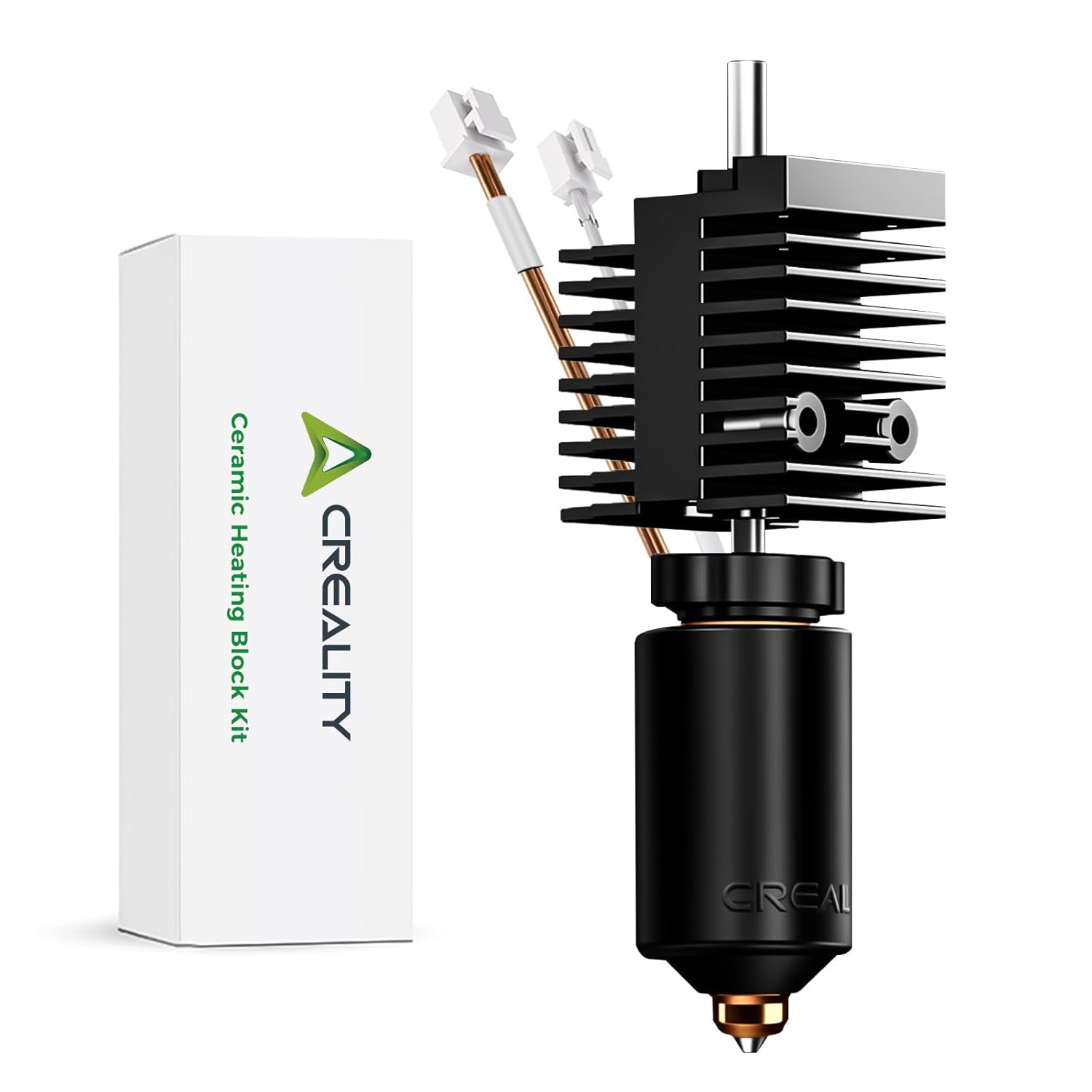


All-metal: for temperature
An all-metal heat break removes the PTFE liner from the hot zone so the hotend can run at 280 to 300 °C without fumes or degradation. Nylon, polycarbonate and CF blends need it. The cost is a slightly narrower window for PLA, which can jam in an all-metal heat break if retraction is long, and the need to re-tune retraction shorter.
High flow: for speed
A longer melt zone, or a nozzle with internal channels that split the filament, melts more plastic per second. Flow is rated in mm³/s; the volumetric speed guide explains how to measure yours. A stock hotend at about 12 mm³/s limits a 0.4 mm nozzle at 0.2 mm layers to roughly 150 mm/s; a high-flow unit at 25 to 35 mm³/s doubles that. If your printer’s motion system cannot reach those speeds, the upgrade is wasted.
What to check
- Fit. Hotends mount to a specific carriage. Ender-class printers take MK8-style or V6-style units with an adapter; CoreXY printers take a brand assembly. The thread guide helps identify what you have.
- Heater and thermistor compatibility. 24 V heaters on a 24 V printer; the thermistor type must match the firmware setting or temperatures read wrong.
- Stated flow rating and max temperature. Reputable makers publish both.
- Cooling. A high-flow hotend produces more heat creep; the heatsink fan must be up to it, or you get clogs mid-print.
The hotends in the box
The listed units are high-flow hotends and complete hotend assemblies for common printers. Check each one’s fit list and stated flow against your machine; a hotend with a higher flow rating than your printer can use adds nothing but weight.
Who should keep the stock hotend
Anyone printing PLA, PETG, ABS or TPU at normal speeds on a bed-slinger. Fix clogs by cleaning, fix speed by tuning, and upgrade only when a material or a measured flow limit tells you to.
For the two specific kits people ask about most: the Micro Swiss all-metal kits and which printer each one fits, and the E3D V6, which is the design most of these are copying.
3D printing hotend FAQ
Does a high-flow hotend improve quality?
Not directly. It lets you keep quality at higher speed. At the same speed, no change.
All-metal for PLA?
Works with shorter retraction and good cooling. If you only print PLA, there is no reason to change.
Can I just fit a CHT nozzle instead?
On a compatible hotend, a CHT-style nozzle raises flow noticeably for the price of a nozzle. It does not raise the temperature limit.
Lose the airflow over the heat break and the filament path jams within minutes. A K1 names that fault directly as Creality K1 error 501, and one of its causes is a screw dropped into the fan.

LayerWalker
Print defect diagnosis, calibration procedures and parts that actually fit. Corrections welcome through the contact page.