E3D V6 Hotend: What It Fits, the Clone Question, and Which Nozzles
LayerWalker is a participant in the Amazon Services LLC Associates Program. We may earn a commission when you buy through links on our site, at no extra cost to you.
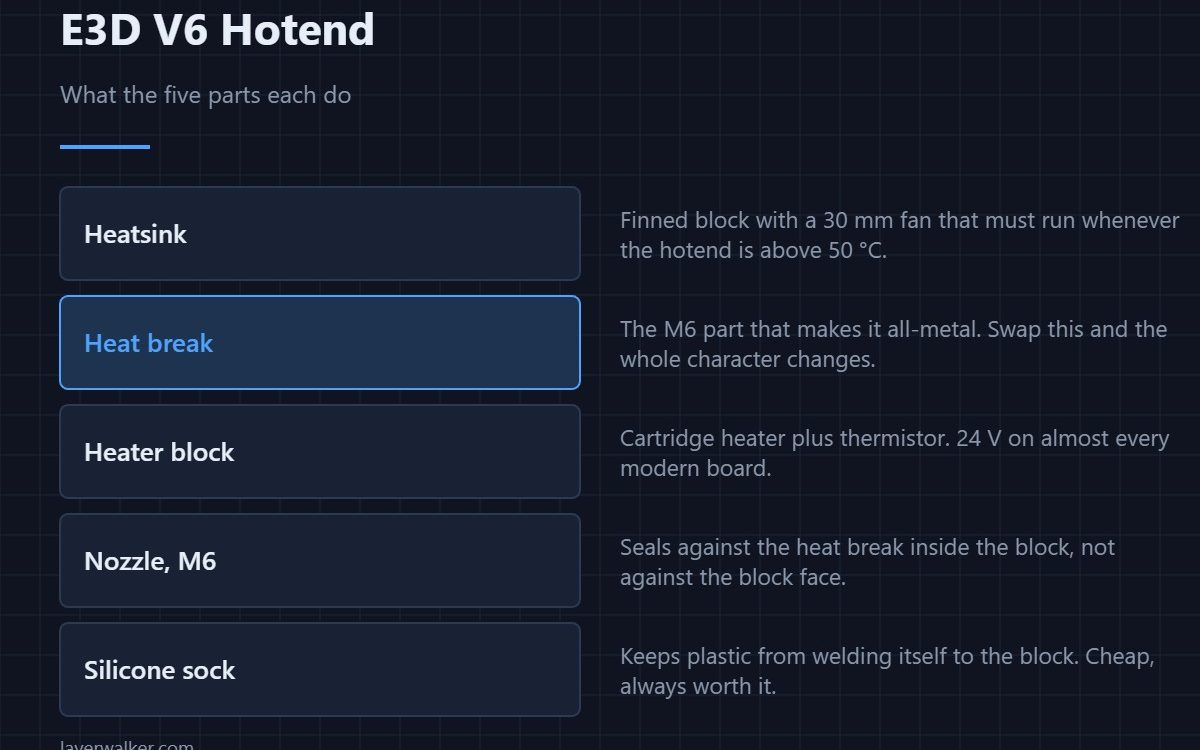
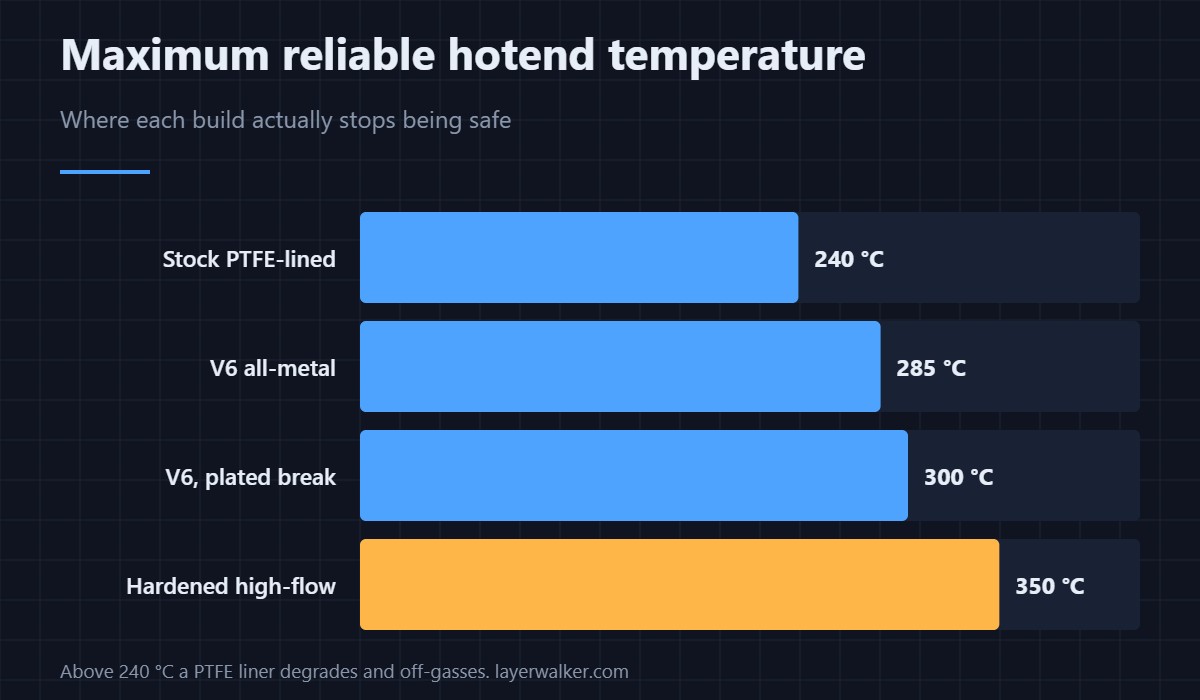
The E3D V6 hotend is the all-metal design most of the industry copied, and its M6 nozzle thread is now a de facto standard. It fits anything with a 12 mm mounting groove, takes any V6 nozzle, and reaches about 285 °C reliably. The genuine unit costs three to four times a clone; what you pay for is a heat break machined to tolerance, which is precisely the part clones get wrong.
Almost every hotend argument comes down to the heat break, and the V6 is the reason. It was the design that made a short, sharply stepped, all-metal break work at hobby prices, and the reason you can buy a nozzle from any seller and have it fit.
Where to buy

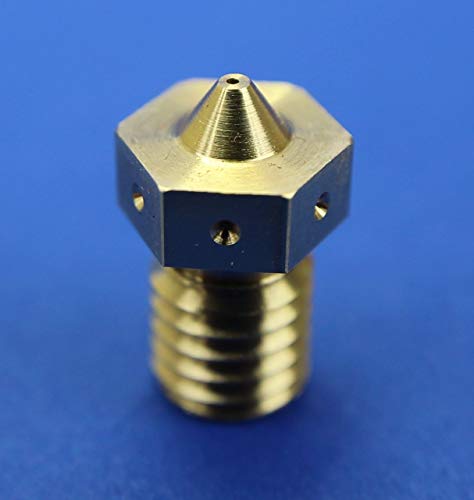

What an E3D V6 hotend is made of
Five parts, and knowing which does what saves you buying the wrong replacement. The finned heatsink with its 30 mm fan keeps the upper filament cold. The heat break is the thin-walled tube between hot and cold, and it defines the whole character of the hotend. The heater block holds the cartridge and thermistor. The nozzle threads into the block but seals against the heat break inside it — not against the block face, which is why you tighten it hot. The silicone sock is optional and always worth it.
The clone question
Clone V6 hotends are everywhere at a fifth of the price and they mostly work. The failures are specific and predictable: a heat break with a rough or oversized bore that filament catches on, a heatsink with poor contact so heat creeps up, and blocks tapped slightly off-square so the nozzle never seals. A genuine E3D heat break dropped into an otherwise clone assembly fixes most of it for a few pounds, which is the sensible middle path.
Buy genuine outright if you are printing abrasives or running above 280 °C, where tolerances start to matter more than price.
E3D V6 nozzles and what threads in
A V6 nozzle is M6 with a 1 mm pitch and an overall length of 12.5 mm. Any nozzle sold as V6 will fit, but the length is where clones go wrong — a nozzle a fraction short will not meet the heat break, and molten plastic escapes into the block. Stick to 0.4 mm unless you have a reason: 0.6 mm for speed and strength, 0.25 mm for detail. If you are unsure which format your printer takes, the four common thread patterns are easy to tell apart once you know what to measure.
For carbon fibre, glow or any filled filament, brass wears out in a spool or two. Move to hardened steel and add about 10 °C to compensate for the poorer heat conduction. Sizing is covered in more detail under why 0.4 mm became the default.
V6 or something newer
The V6 is a 2014 design and it shows in one place: flow rate. It tops out around 12 mm³/s at 0.4 mm, which was generous then and is ordinary now. If your goal is high temperature and reliability, the V6 is still an excellent answer. If your goal is speed, a high-flow hotend with a longer melt zone does more for you than any V6 variant — see when a hotend upgrade actually helps. A Micro Swiss all-metal kit is the usual drop-in route on Creality machines that never had a V6 to begin with.
E3D V6 Hotend FAQ
Will an E3D V6 hotend fit my Ender 3?
Yes, with a mounting bracket. The Ender 3 uses an MK8-style hotend in a different carriage, so a V6 conversion means a new bracket and a new fan duct. Many people take a Micro Swiss all-metal kit instead precisely because it bolts into the stock carriage.
Is a genuine E3D worth four times the clone price?
For PLA and PETG below 250 °C, usually not. For abrasives, high temperatures, or a printer you rely on, yes — the difference lives in the heat break, and that is the part that decides whether you get jams.
Do I need the fan running all the time?
Yes, whenever the hotend is above about 50 °C. The heatsink fan is not part cooling; it is what stops the filament softening before it reaches the melt zone. Wire it to always-on, never to the part fan.
Why does my V6 jam part-way through long prints?
Heat creep, nearly always. The heatsink fan is weak, blocked, or the thermal paste between break and heatsink was omitted. Retracting too far on a direct drive setup pulls softened filament up into the cold zone and makes it worse.

LayerWalker
Print defect diagnosis, calibration procedures and parts that actually fit. Corrections welcome through the contact page.