0.4 mm 3D Printer Nozzle: The Default Size, Which Thread Fits Your Hotend, and When to Change It
LayerWalker is a participant in the Amazon Services LLC Associates Program. We may earn a commission when you buy through links on our site, at no extra cost to you.
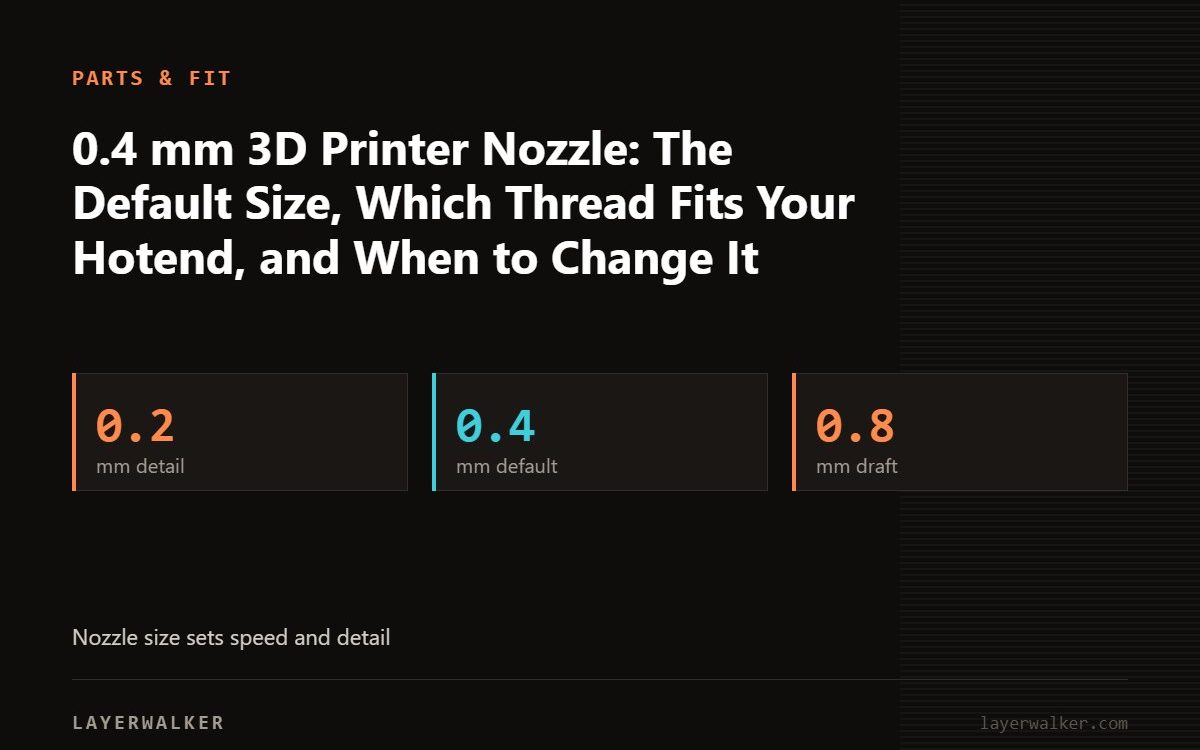
A 0.4 mm nozzle is the right default for almost everything: fine enough for detail, wide enough for speed. What you must get right is the thread and length for your hotend, which is MK8 on most Creality and clone machines, V6 on E3D-style hotends, and a complete nozzle assembly on printers like the Bambu Lab, Prusa MK4 and Flashforge Adventurer. Brass for PLA and PETG; hardened steel for anything with fibre or glow additive.
The nozzle is the cheapest part on the printer and the one that decides line width, layer time and how many materials you can run. 0.4 mm became the standard because it balances the two things a nozzle trades off: a smaller hole gives finer detail and slower prints, a larger one prints fast and strong with visible lines. Most people never need to leave 0.4 mm. What they do need is the right one for their hotend, because a nozzle that is the wrong thread or the wrong length leaks, clogs or grinds the heatbreak.
Where to buy
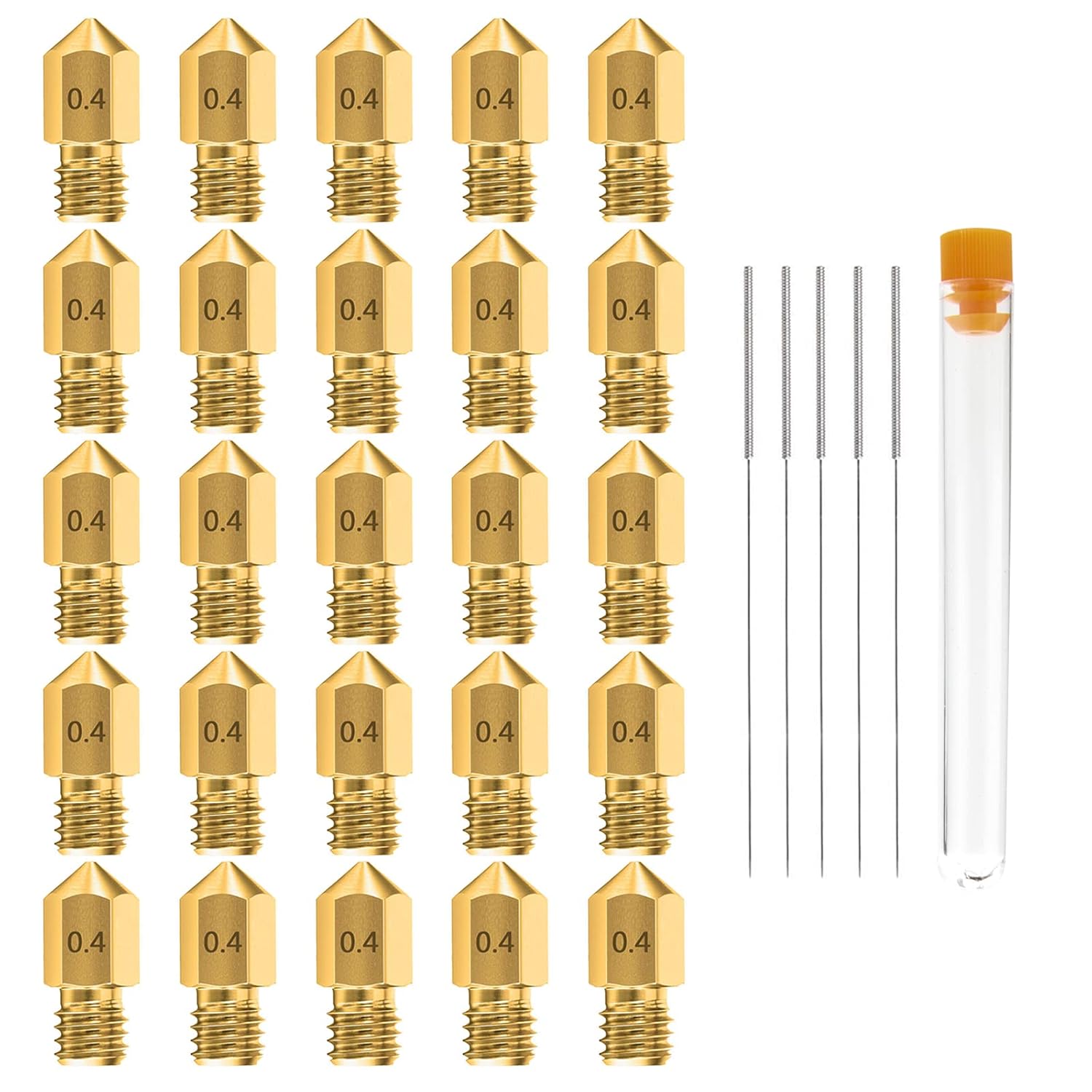

Comgrow 25PCS MK8 Ender 3 V2 Nozzles 0.4MM, 3D Printer Brass Hotend Nozzles

Identify your thread before you buy anything
- MK8: M6 thread, about 13 mm long with a short hex. Creality Ender and CR series, most clones, many Anycubic and Elegoo Neptune printers.
- V6: M6 thread, about 12.5 mm, longer taper. E3D hotends, Prusa MK3 and earlier, many upgrades.
- Volcano: M6 thread, 21 mm long. High-flow hotends only.
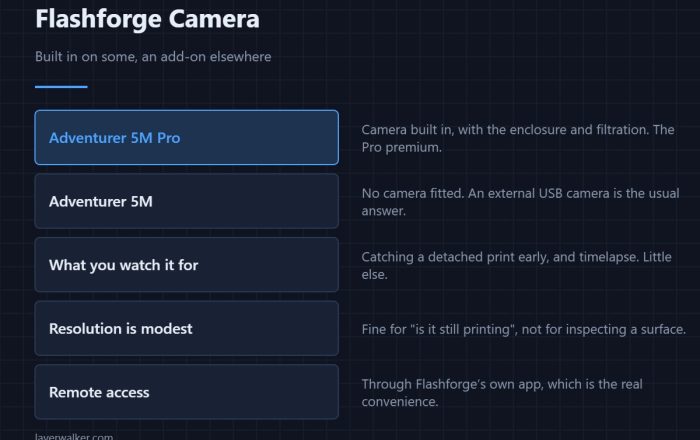
- Brand assemblies: Bambu Lab, Prusa MK4 and later, Flashforge Adventurer 5M, Creality K1 series and most CoreXY printers use a nozzle joined to its heatbreak. You replace the assembly, not a bare nozzle.
The nozzle thread guide has photos and measurements. Buying the wrong one is the most common nozzle mistake and it is not recoverable.
Material
Brass conducts heat best and is the right choice for PLA, PETG, ABS and TPU. It wears fast against carbon fibre, glass fibre, glow-in-the-dark and metal-filled filaments; one spool of CF-PETG can open a brass 0.4 to 0.5. For those, hardened steel, printed 5 to 10 °C hotter because it conducts worse.
The nozzles in the box
The two 25-piece MK8 brass packs are the consumable for Ender-class printers: cheap enough to swap a suspect nozzle rather than clean it, and the count lasts years. Check the hex size matches your wrench, usually 6 mm or 7 mm. The Flashforge Adventurer 5M assembly is the example of the other world: a complete high-flow nozzle-and-heatbreak unit that swaps in seconds on that printer and fits nothing else.
When to change a nozzle
- When a partial clog survives a cold pull. A brass nozzle costs less than the time.
- When the tip is visibly rounded or the hole is oval. Check by extruding in mid-air; a bent or oversized stream means wear.
- When first-layer lines get inconsistent for no reason after abrasive filament.
- When switching to fibre-filled filament: fit hardened steel before the first spool, not after.
Changing it without damage
Heat the hotend to printing temperature, hold the heater block with a spanner, unscrew the nozzle with the other. Fit the new one until it seats against the heatbreak, back off a quarter turn, tighten the heatbreak to it, then a final snug at temperature. A nozzle tightened cold leaks when hot.
3D printer nozzle 0.4 mm FAQ
0.4 or 0.6 mm?
0.6 mm for strong functional parts printed fast; 0.4 mm for anything with text, small holes or fine features. Keep both.
Do I need a new nozzle for PETG?
No. Brass 0.4 mm handles PETG; keep it clean and dry the filament.
Are brand-name nozzles better than a 25-pack?
For brass 0.4 mm, machining quality matters less than fit. For hardened steel and specialty geometries, brand quality shows.

LayerWalker
Print defect diagnosis, calibration procedures and parts that actually fit. Corrections welcome through the contact page.