Glow in the Dark Filament: Why It Eats Nozzles, and How to Get a Bright Glow
LayerWalker is a participant in the Amazon Services LLC Associates Program. We may earn a commission when you buy through links on our site, at no extra cost to you.
Glow-in-the-dark filament is PLA with strontium aluminate phosphor, and that phosphor is hard enough to wear a brass nozzle out in a single spool. Fit a hardened steel nozzle first. Then print thick walls or solid infill, because the glow comes from the volume of phosphor, and charge the part under UV or daylight before showing it off.
Glow filaments are the abrasive nobody expects. The phosphor particles that store and release light are mineral, and at 10 to 20 % loading they act like fine sandpaper inside the nozzle. Print a spool through brass and the 0.4 mm orifice becomes 0.5 mm with a rounded tip, and every print after it is slightly worse. The abrasive filament list puts glow alongside carbon fibre for this reason.
Where to buy

ELEGOO PLA 3D Printer Filament Glow in the Dark Green 1KG 1.75mm
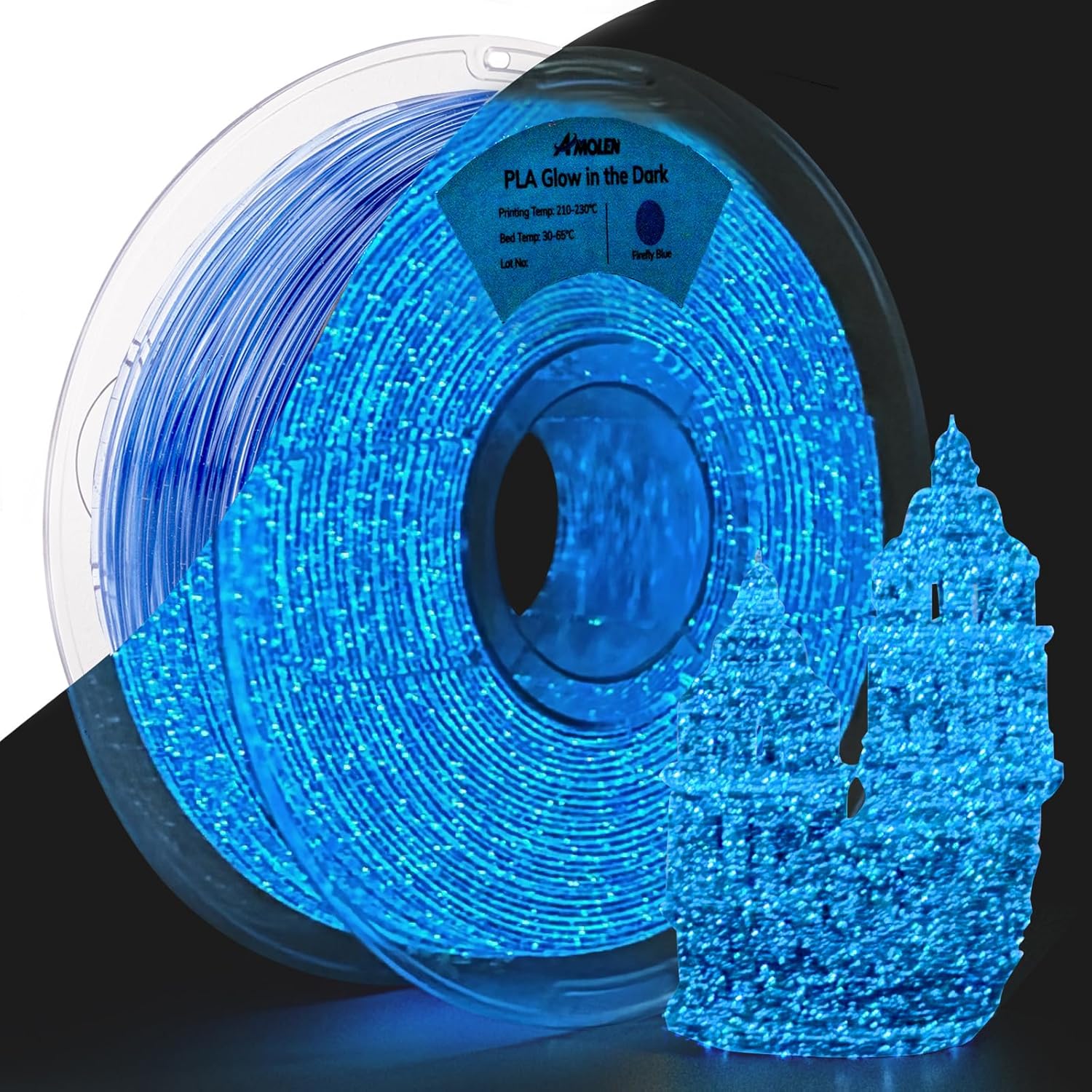

DURAMIC 3D PLA Glow in the Dark Filament Neatly 1.75mm 1Kg 2Pack Glow Green
What to look for
- Phosphor loading stated or, failing that, reviews that mention glow duration. Cheap glow spools use little phosphor and fade in minutes.
- Base polymer. Most are PLA; some are PETG or TPU. The base sets the print settings.
- Colour. Green glows brightest and longest with the common phosphor; blue is next; other colours dim quickly.
- Tolerance and sealing as for any filament.
The spools in the box
The listed glow PLA spools are the common green and multi-colour options with stated PLA base. Judge them by reviewed glow time; the price difference between spools usually tracks phosphor content.
Printing it
- Hardened steel nozzle, 0.4 or 0.6 mm, before the first layer. Brass versus hardened explains the wear.
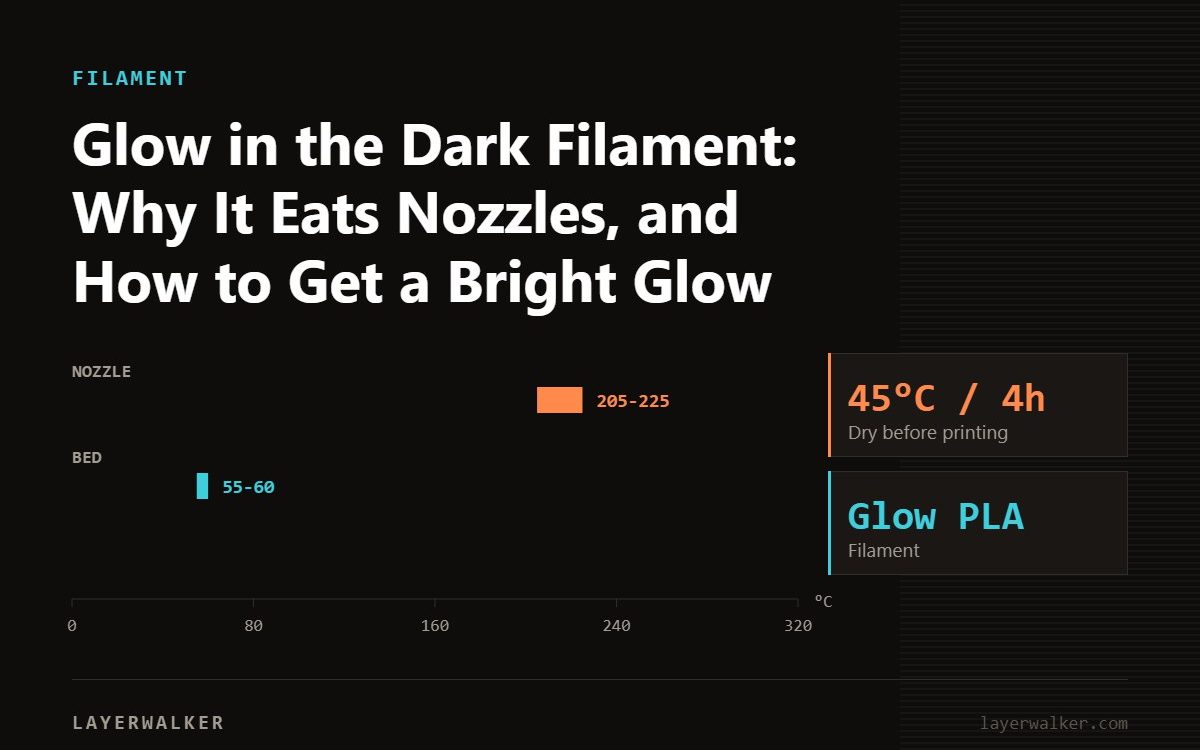
- Base polymer settings. Glow PLA at 200 to 220 °C, bed 60 °C. Slightly hotter than plain PLA because the filler reduces flow.
- Thick walls. Three to four perimeters or a high infill; a two-wall hollow part glows faintly.
- Slower. 40 to 60 mm/s. Filled filaments clog more when pushed fast.
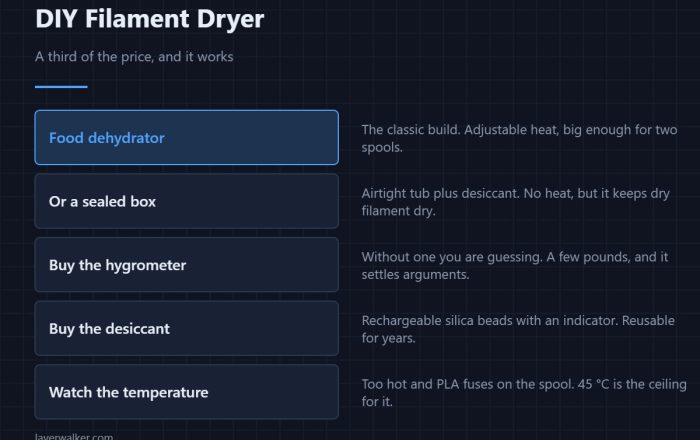
- Dry it. Filled PLA absorbs water faster than plain.
Getting the brightest glow
Charge with a UV torch for 30 seconds, or leave in strong daylight for a few minutes; the phosphor stores more energy from UV than from room light. Expect a bright glow for ten to twenty minutes and a fading glow for an hour or more with good filament. Light colours of base PLA glow brighter than dark ones because the pigment does not block the phosphor.
When glow is the wrong choice
Structural parts: the filler weakens the PLA. Anything where a nozzle swap is not practical. Detailed models: the surface is slightly grainy.
Glow in the dark filament FAQ
Can I run one spool through brass and replace the nozzle after?
Yes, if you accept the print quality drifting during the spool. A hardened nozzle costs about the same as the brass you will scrap.
Is glow filament radioactive?
No. Strontium aluminate is a non-radioactive phosphor.
Does it glow forever?
It recharges indefinitely from light; each charge lasts minutes to an hour.

LayerWalker
Print defect diagnosis, calibration procedures and parts that actually fit. Corrections welcome through the contact page.