Bambu Lab A1 mini: What the 180 mm Bed Rules In and Out
LayerWalker is a participant in the Amazon Services LLC Associates Program. We may earn a commission when you buy through links on our site, at no extra cost to you.
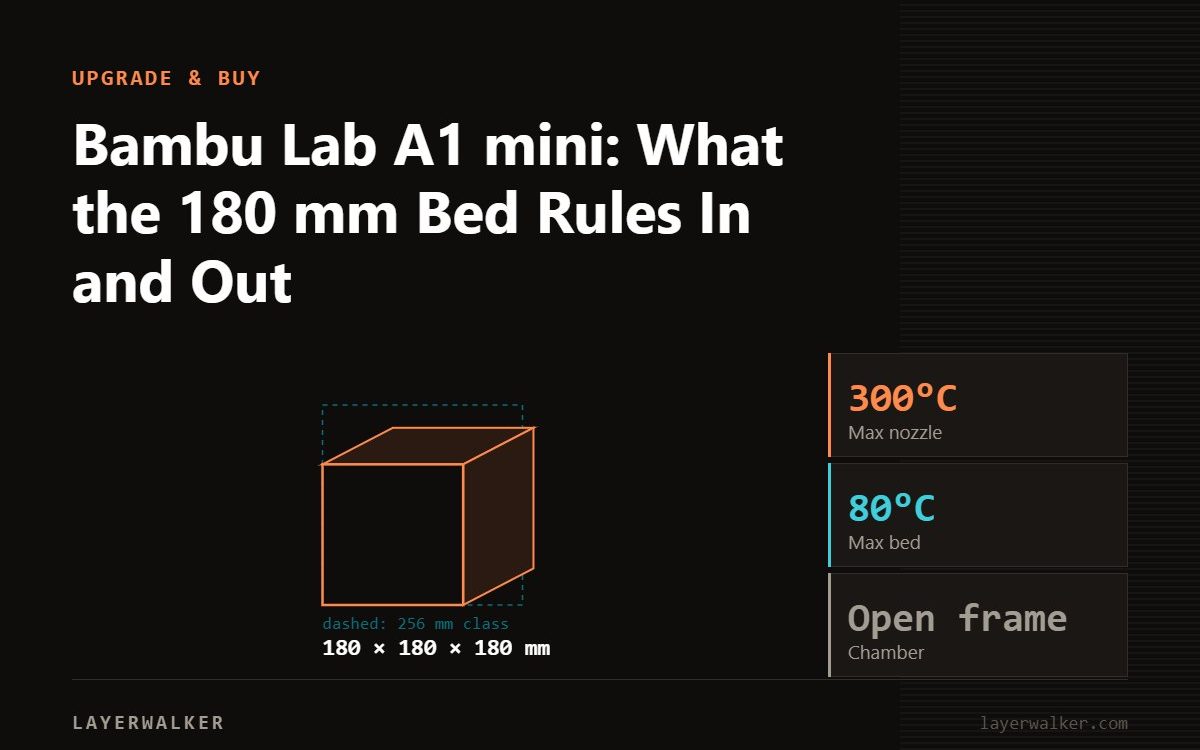
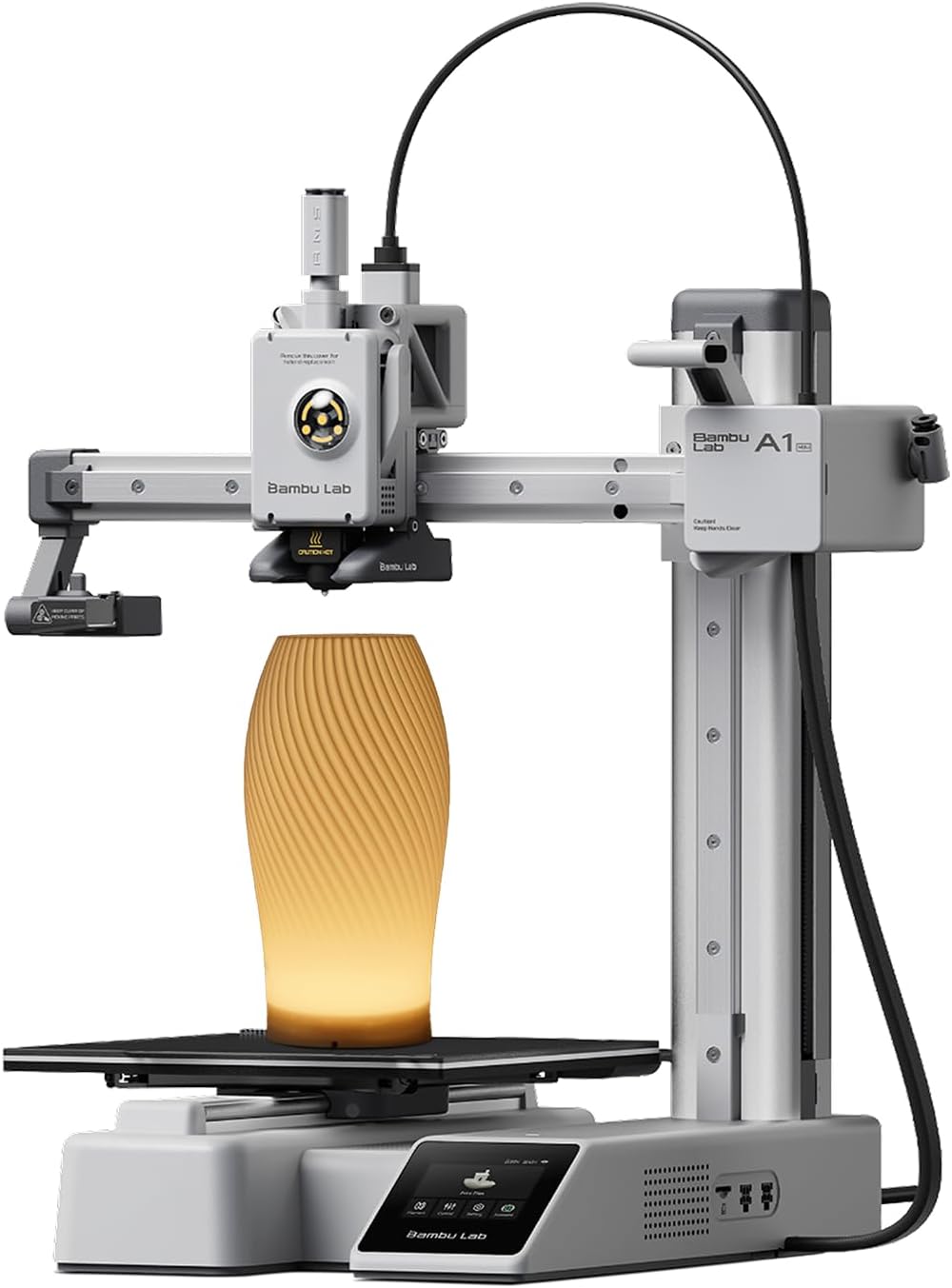
The A1 mini is a fully auto-calibrating bedslinger with a 180 × 180 × 180 mm bed, a 300 °C hotend and an 80 °C bed. It prints PLA, PETG and TPU very well and is the least fiddly printer on this site. It rules itself out for anything over 180 mm on a side, for ABS and ASA (open frame, 80 °C bed), and for abrasive filament without a hardened nozzle swap.
The A1 mini is the printer most people should start with, and the one most people outgrow for exactly one reason: size. Everything else about it is a strength. Bed levelling, Z-offset, flow calibration, resonance tuning and belt tension are all measured by the machine before each job, so the usual first-week troubleshooting posts on this site mostly do not apply to it.
Where to buy

Specifications that change a decision
| Item | Value | Why it matters |
|---|---|---|
| Build volume | 180 × 180 × 180 mm | Helmets, most cosplay and many organisers do not fit in one piece |
| Max nozzle temperature | 300 °C | PLA, PETG, TPU, PVA; PA and PC are not supported |
| Max bed temperature | 80 °C | Fine for PLA and PETG; too low for reliable ABS or ASA |
| Max toolhead speed | 500 mm/s | Real print speeds are 150 to 300 mm/s; speed is not the limit |
| Acceleration | 10000 mm/s² | Half the P1S figure, which matters little at this size |
| Kinematics | Bedslinger (moving bed) | Tall thin parts wobble more than on a CoreXY |
| Multi-material | AMS lite, 4 spools | Open, unheated; spools sit in room humidity |
| Camera | 720p, timelapse | Enough to check for spaghetti remotely |
What it does better than the price suggests
Three things stand out against printers in the same class. First, the nozzle is the probe: the machine measures the absolute Z-offset each print instead of asking you to slide paper under it, so first-layer adhesion problems are rare. Second, the eddy-current flow sensor runs pressure-advance calibration automatically, which is why its corners look like a tuned Klipper machine out of the box. Third, the quick-swap hotend releases with one clip, so a clog is a two-minute fix rather than a disassembly.
Where it falls down
- 180 mm. Check your biggest planned model against the bed before ordering, not after. The A1 has the same electronics with a 256 mm bed.
- Open frame. ABS and ASA warp without an enclosure and the 80 °C bed does not help. Treat it as a PLA, PETG and TPU machine.
- Abrasives. The stock nozzle is stainless steel. Carbon-fibre, glow and sparkle filaments wear it quickly; a hardened swap is required first.
- AMS lite is exposed. Four spools in open air in a humid room is a drying problem waiting to happen; the enclosed AMS units are for the P and X series only.
The units in the box
The two listings are the A1 mini on its own, bundled with the LED lamp kit, and the A1 mini Combo with the AMS lite. Buy the Combo only if you will use multi-colour or multiple materials in one job; a single-colour user is better served putting the difference toward a spare plate and a dryer.
Bambu Lab A1 Mini 3D printer FAQ
Can the A1 mini print ABS?
Not reliably. Open frame and 80 °C bed.
Does the A1 mini need levelling?
No. It probes the bed and measures Z-offset automatically every print.
Is 180 mm enough?
For miniatures, functional parts, toys and organisers, yes. For helmets, vases over 18 cm and most cosplay armour, no.

LayerWalker
Print defect diagnosis, calibration procedures and parts that actually fit. Corrections welcome through the contact page.