Polypropylene Filament: Excellent Plastic, Miserable to Stick Down
LayerWalker is a participant in the Amazon Services LLC Associates Program. We may earn a commission when you buy through links on our site, at no extra cost to you.
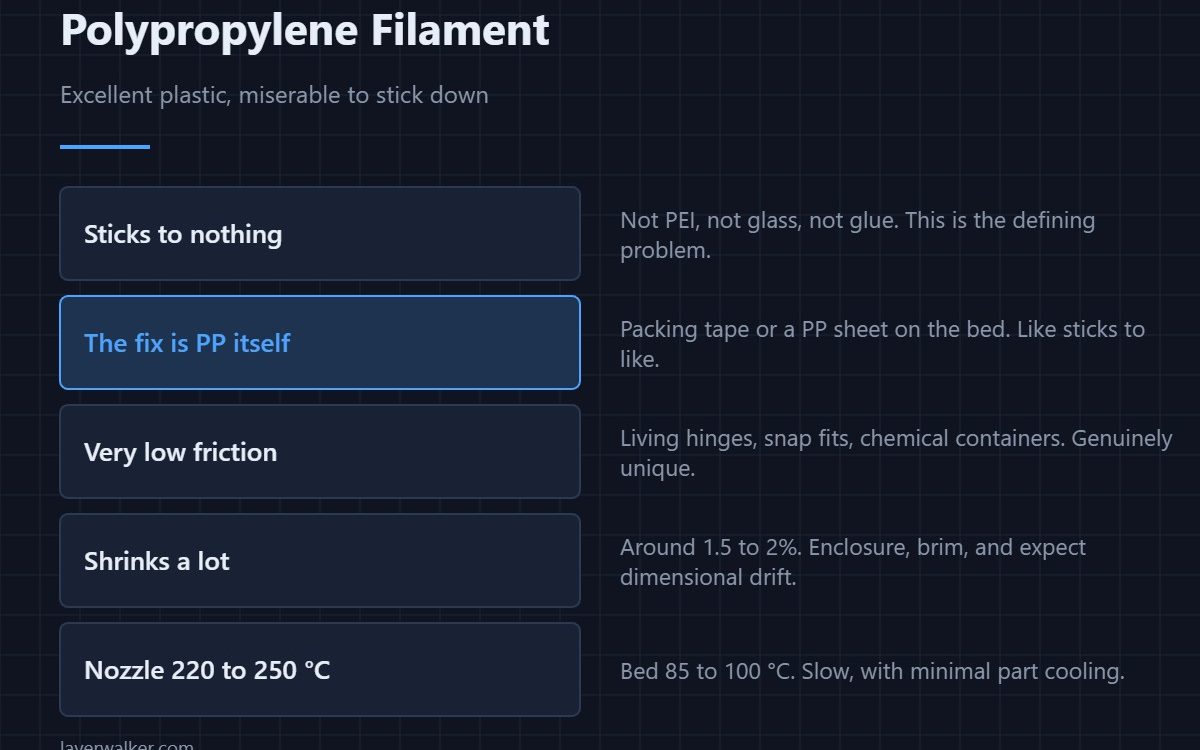
Polypropylene filament, sold as PP filament, is chemically resistant, fatigue-proof and almost impossible to make stick to a normal build plate. The fix is to print it onto polypropylene: packing tape or a PP build sheet. It also shrinks 1.5–2%, so it needs an enclosure and a brim. Use it for living hinges, snap fits and chemical containers, not for general parts.
PP is the plastic that food tubs, car bumpers and bottle caps are made from, and its two best properties are exactly why it is awkward to print. It is chemically inert, so nothing sticks to it, including build plates and adhesives. And it is semi-crystalline, so it shrinks hard as it solidifies.
Where to buy


Making it stick
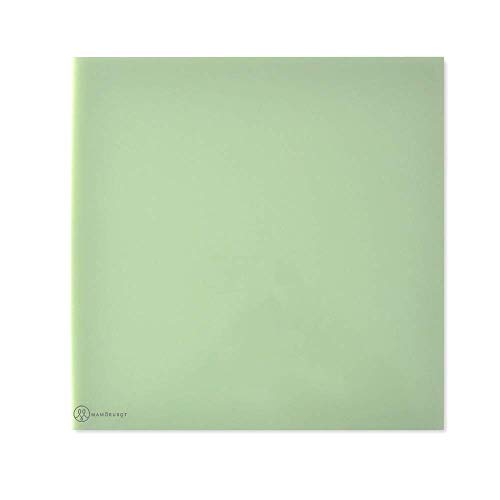
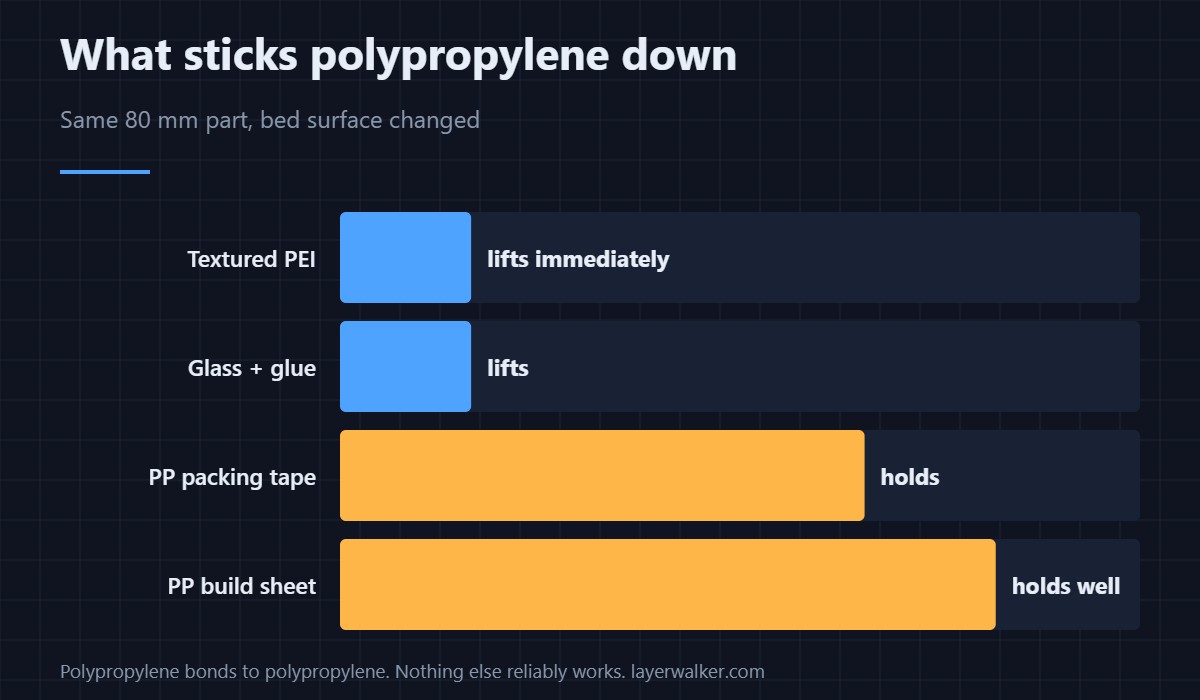
Every normal answer fails. PEI does nothing. Glass with glue stick does nothing. Purpose-made adhesives mostly do nothing. What works is putting polypropylene on the bed: a strip of clear PP packing tape, or a proper PP build sheet sold for this. Like bonds to like, and suddenly it holds. This is the single fact that decides whether PP is usable on your machine.
Shrinkage and the enclosure
At 1.5–2%, PP shrinks more than ABS. Practically that means an enclosure, a generous brim, minimal part cooling, and accepting that dimensions will drift — design with clearance rather than expecting a press fit to land first time. Corners will lift given any excuse, exactly as in warping and corners lifting.
Settings that work
Nozzle 220–250 °C depending on the grade, bed 85–100 °C, part fan at 0–20%, and slow — 25–35 mm/s. PP does not need a hardened nozzle unless it is glass-filled, and plain brass is fine. Dry it before use; it absorbs less than nylon but enough to matter, and drying costs nothing.
What it is genuinely good at
- Living hinges. PP is the standard material for them. It survives thousands of flex cycles where PLA cracks on the first few.
- Chemical containers. It resists acids, bases and most solvents, which is a short list of materials you can print at home.
- Snap fits. Low friction and high fatigue resistance in one material.
- Low-friction parts. Slides against itself without galling.
For outdoor parts generally, PP is UV-sensitive and other materials suit better. For toughness alone, look at the toughest filaments compared.
Polypropylene Filament FAQ
Why will polypropylene not stick to my PEI plate?
Because PP is chemically inert and PEI relies on a chemical bond. It is not a cleanliness or temperature problem, and no amount of tuning fixes it. Put PP packing tape or a PP sheet on the plate instead.
Is PP filament food safe?
The raw polymer is used for food containers, but a printed part has layer lines that trap bacteria and may contain additives or nozzle residue. The realistic answer is in food safe filament.
Does polypropylene need a hardened nozzle?
No, unless it is glass-filled. Plain PP is not abrasive and brass handles it fine.
Can I print polypropylene on an open-frame printer?
Small parts with a brim and no draughts, sometimes. Anything larger warps. It shrinks more than ABS, so treat the enclosure as a requirement.

LayerWalker
Print defect diagnosis, calibration procedures and parts that actually fit. Corrections welcome through the contact page.