Best Build Plate for PETG: Textured PEI, and Why Smooth PEI Needs a Release Layer
Short answer Print PETG on a textured PEI spring-steel plate: it grips at 70 to 85 °C and lets go when cool,…
Nozzles, build plates, hotends and extruders — with fitment tables that say “not verified” when we have not checked, because a wrong answer here costs you a hotend.
Short answer Print PETG on a textured PEI spring-steel plate: it grips at 70 to 85 °C and lets go when cool,…
Short answer Buy a textured PEI spring-steel plate as your everyday surface: PLA and PETG stick hot and pop off cold, and…
Short answer Fit a hardened steel nozzle before the first spool of any abrasive filament: carbon fibre, glass fibre, glow-in-the-dark, wood, metal-filled…
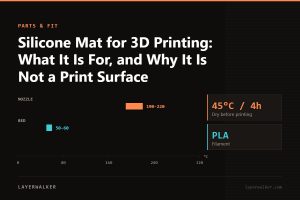
Short answer A silicone mat is a work surface, not a build surface: it goes under the resin printer or wash station…
Short answer You need about eight tools for a filament printer: flush cutters, a thin scraper, a deburring tool, 0.35 mm nozzle…
Short answer Use colour-indicating silica gel beads: about 50 g per spool in a sealed box, recharged in an oven at 120…
Short answer Keep a glass bed for two things: a perfectly flat reference when your PEI plate or aluminium bed is warped,…
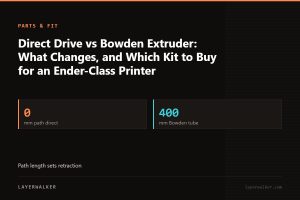
Short answer Convert to direct drive if you want to print TPU, if PETG stringing will not tune out, or if you…
Short answer Switch a Marlin bed-slinger to Klipper if you want input shaping and pressure advance, which together let an old printer…
Short answer A wash and cure station is worth it the moment you print resin more than once a week: it replaces…