Best Build Plate for PETG: Textured PEI, and Why Smooth PEI Needs a Release Layer
LayerWalker is a participant in the Amazon Services LLC Associates Program. We may earn a commission when you buy through links on our site, at no extra cost to you.
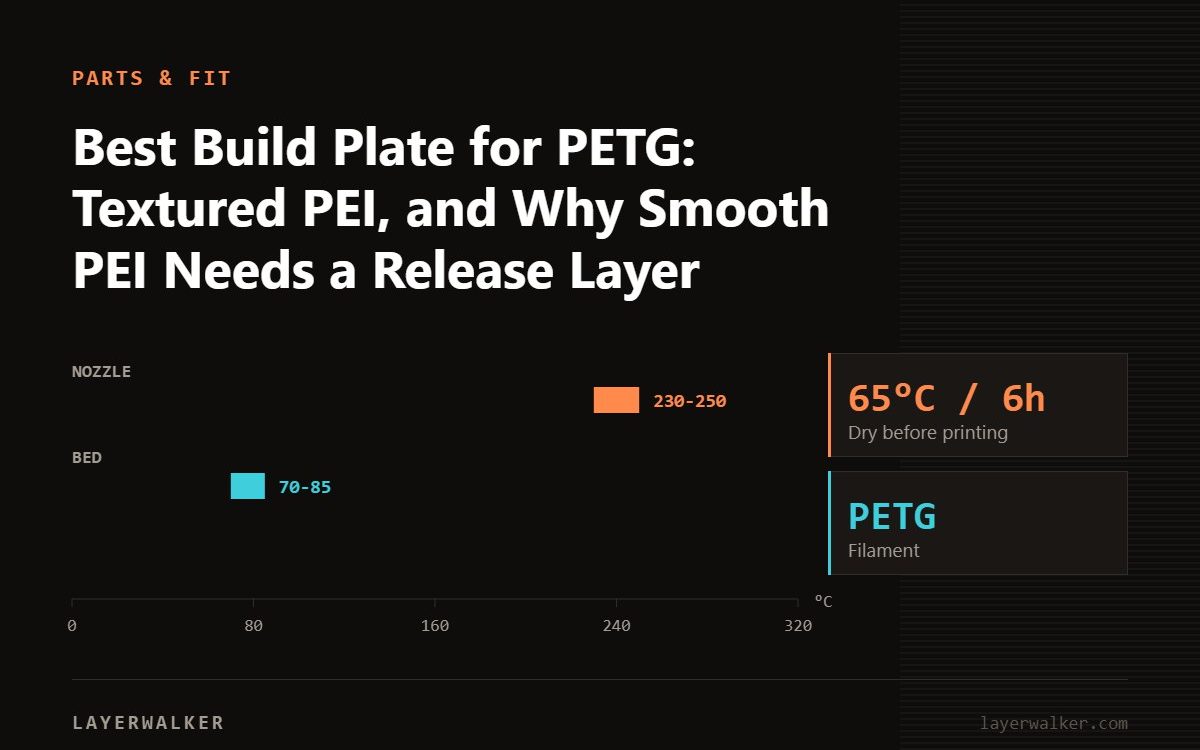
Print PETG on a textured PEI spring-steel plate: it grips at 70 to 85 °C and lets go when cool, with no glue and no damage. If you only have smooth PEI or glass, wipe on a thin glue-stick layer first so the part releases; bare smooth PEI will lose its coating to a PETG part.
PETG has the opposite adhesion problem to most filaments. It does not struggle to stick; it sticks too well to a smooth surface and fuses to it. People who move from PLA to PETG on the same smooth PEI sheet discover this when a part comes off with a patch of yellow coating attached. The fix is either a textured surface, where the powder-coat finish grips PETG hot and breaks the bond cold, or a sacrificial layer between the part and the plate.
Where to buy


How the surfaces rank for PETG
- Textured PEI. The answer. No adhesive, strong hold at temperature, clean release when cold, matte bottom finish. The smooth versus textured guide explains why the texture matters.
- Smooth PEI with glue stick. Glossy bottom, and the glue layer is what releases. Works well; you re-apply every few prints.
- Glass with glue stick or spray. The old way. Flat and glossy; PETG on bare glass can pull chips out of the glass.
- Bare smooth PEI. Do not. One good print, then a damaged sheet.
- Garolite (G10). Made for nylon; PETG grips it well but release can be harder than PEI.
What to check on the plate
- Exact size and tab layout for your printer: around 235 mm for Ender-class beds, 256 mm for the Bambu P and X series and similar CoreXY machines, 180 mm for compact printers.
- Powder-coat quality. Thin coats wear bald in months under PETG’s grip. Reviews that mention longevity matter more than price.
- Double-sided option. Textured for PETG on one side, smooth for glossy PLA on the other, is the practical buy.
The plates in the box
The listed plates are textured PEI spring-steel sheets in common sizes, one double-sided. Match the dimensions and tabs to your printer, then use the textured side for every PETG print.
Settings that go with the plate
- Bed 70 to 85 °C. Below 70 °C PETG can lift at the corners; above 90 °C the bottom layers soften and squish.
- Z-offset slightly higher than for PLA, about 0.05 mm. PETG needs less squish; too low and it bonds too hard even to textured PEI.
- Let it cool fully before removing. Warm PETG on any PEI is where coating damage happens.
- Wash the plate with dish soap after every few prints; PETG leaves a residue that stops the next first layer sticking.
Best build plate for PETG FAQ
Can I print PETG on the smooth side of a double-sided plate?
With glue stick, yes. Bare, no.
Why does my PETG still not stick to textured PEI?
Bed too cold, plate greasy, or wet filament. Clean, raise to 80 °C, and dry the spool.
Does textured PEI leave a rough bottom?
A fine matte pebble finish. Most people prefer it; use smooth with glue stick when you want gloss.

LayerWalker
Print defect diagnosis, calibration procedures and parts that actually fit. Corrections welcome through the contact page.