Stringing and oozing between parts
LayerWalker is a participant in the Amazon Services LLC Associates Program. We may earn a commission when you buy through links on our site, at no extra cost to you.
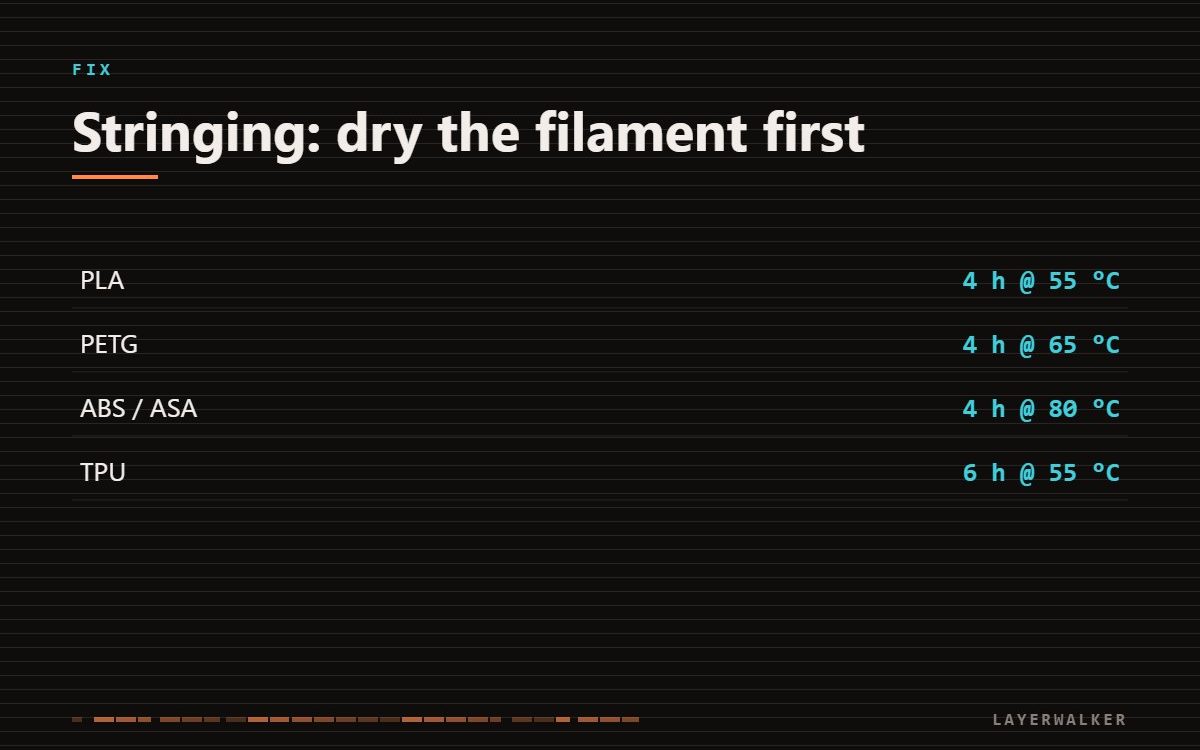
Dry the filament, drop the nozzle 5 degC at a time, then tune retraction. Most people go straight to retraction settings and never fix the actual cause, which is usually wet filament.
Stringing is molten plastic leaking out of the nozzle while the head travels through open air. Three things control it, and they are not equally important.
Where to buy

SUNLU Filament Dryer Box 2026 New Upgrade S1 Plus, Black


Polymaker Polydryer Filament Storage Box for 1kg PA Nylon PLA PETG ASA ABS
1. Moisture, the first cause of PETG stringing
Water in the filament boils in the melt zone. The steam pushes plastic out of the nozzle during travel moves regardless of what your retraction settings say. If a spool has been open on a bench for weeks, dry it before changing a single slicer setting.
| Property | Value |
|---|---|
| PLA | 4 h at 55 degC |
| PETG | 4 h at 65 degC |
| ABS / ASA | 4 h at 80 degC |
| TPU | 6 h at 55 degC |
| PA / Nylon | 12 h at 80 degC |
| PC | 6 h at 90 degC |
2. Temperature
Hotter plastic is runnier. Print a temperature tower and use the lowest temperature that still gives you clean layer bonding. Most stringing complaints on PETG come from running it 15-20 degC hotter than necessary.
3. Retraction
Starting point. Run a retraction tower before trusting these.
Bowden needs far more retraction to overcome tube compliance.
Fine hairs between towers and across gaps
Molten plastic escaping the nozzle during travel moves
- Dry the filament for the time and temperature above.
- Print a temperature tower and pick the lowest clean rung.
- Increase retraction distance in 0.2 mm steps on direct drive, 0.5 mm on Bowden.
- Raise travel speed. Less time in the air means less time to ooze.
- Enable Z-hop only if the nozzle is knocking into the print.
The numbers differ a lot by material, so there is a page for each: PLA stringing, where retraction and temperature do the work; PETG stringing, where drying the spool matters more than any setting; and TPU stringing, where retraction barely helps and print speed is the real lever.
PETG will always string a little
PETG is stickier and more elastic in the melt than PLA and will produce some fine wisps even when tuned. Wisps that brush off with a finger are normal. Thick strands that need cutting are not.

LayerWalker
Print defect diagnosis, calibration procedures and parts that actually fit. Corrections welcome through the contact page.