Under-extrusion: thin, gappy walls
LayerWalker is a participant in the Amazon Services LLC Associates Program. We may earn a commission when you buy through links on our site, at no extra cost to you.
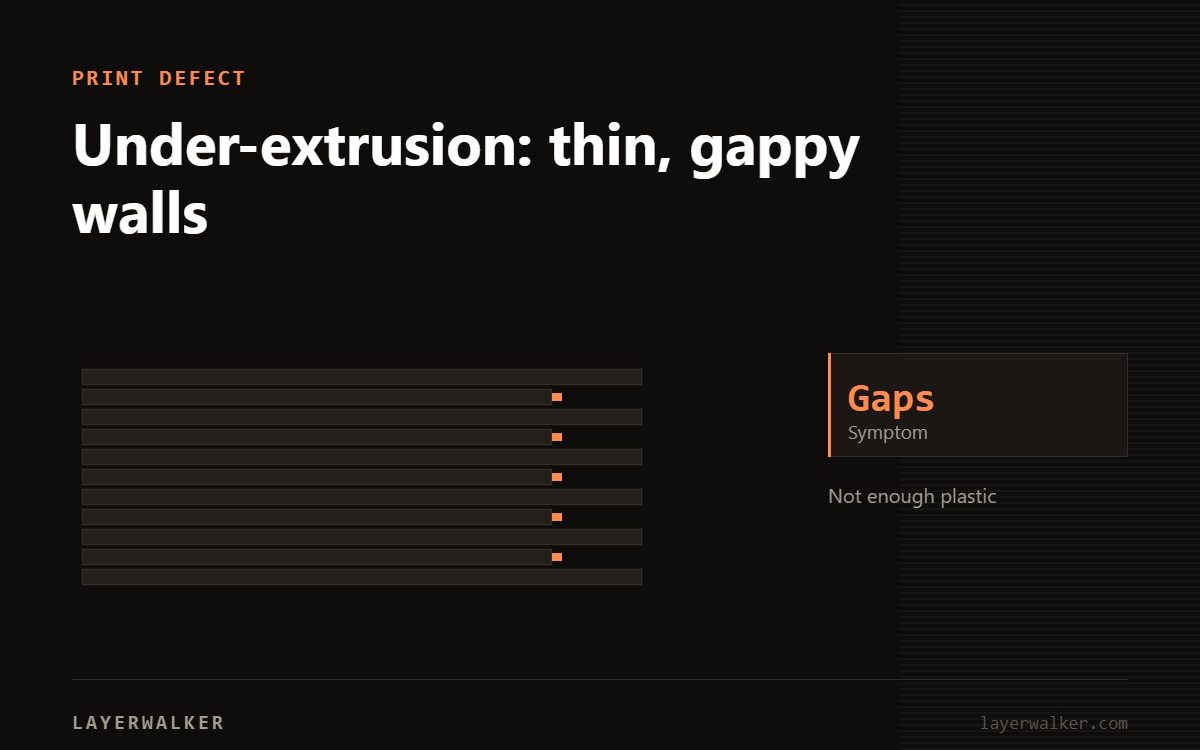
Walls with visible gaps between lines mean less plastic is arriving than the slicer planned. Check for a partial clog and a worn nozzle before you start raising the flow rate to paper over it.
Raising flow rate is the tempting first move and the wrong one. If the cause is a partial clog, more flow just makes the extruder work harder against the same restriction.
Where to buy


8Pcs 3D Printer Upgraded Hardened Steel MK8 Nozzles w/DIY Tool Storage Box

Under extrusion 3D print: find the cause before compensating
Gaps between adjacent lines, weak walls, visible layer voids
Insufficient material reaching the plate
- Extrude 100 mm manually and measure what comes out. A healthy hotend delivers a steady, consistent strand.
- Look at the strand. Bubbling or spitting means wet filament, not a flow problem.
- Do a cold pull. Black or brown flecks in the plug confirm burnt residue restricting the bore.
- Inspect the nozzle bore with a bright light. Abrasive filament wears it oval and it never recovers.
- Measure filament diameter with calipers. Consistently undersized filament gives consistent under-extrusion.
- Only then calibrate flow rate.
Calibrating flow properly
Print a single-wall cube with the walls set to one perimeter and no top or bottom layers. Measure the wall thickness with calipers at several points and average it. Divide your intended extrusion width by the measured width and multiply the current flow rate by that ratio.
Measure at four points and average. Do not measure at a corner.
The opposite fault looks nothing like this one and is easy to miss because prints still finish: see over extrusion for bulging walls and parts that measure oversized.
Nozzle wear is the one people miss
A brass nozzle printing carbon fibre filled filament can wear measurably within a spool or two. The bore goes oval, the extrusion width drifts, and quality declines gradually enough that nobody notices until they compare against an old print. If you run abrasives at all, treat brass nozzles as consumables and move to hardened steel.

LayerWalker
Print defect diagnosis, calibration procedures and parts that actually fit. Corrections welcome through the contact page.