ASA vs ABS for outdoor parts
LayerWalker is a participant in the Amazon Services LLC Associates Program. We may earn a commission when you buy through links on our site, at no extra cost to you.
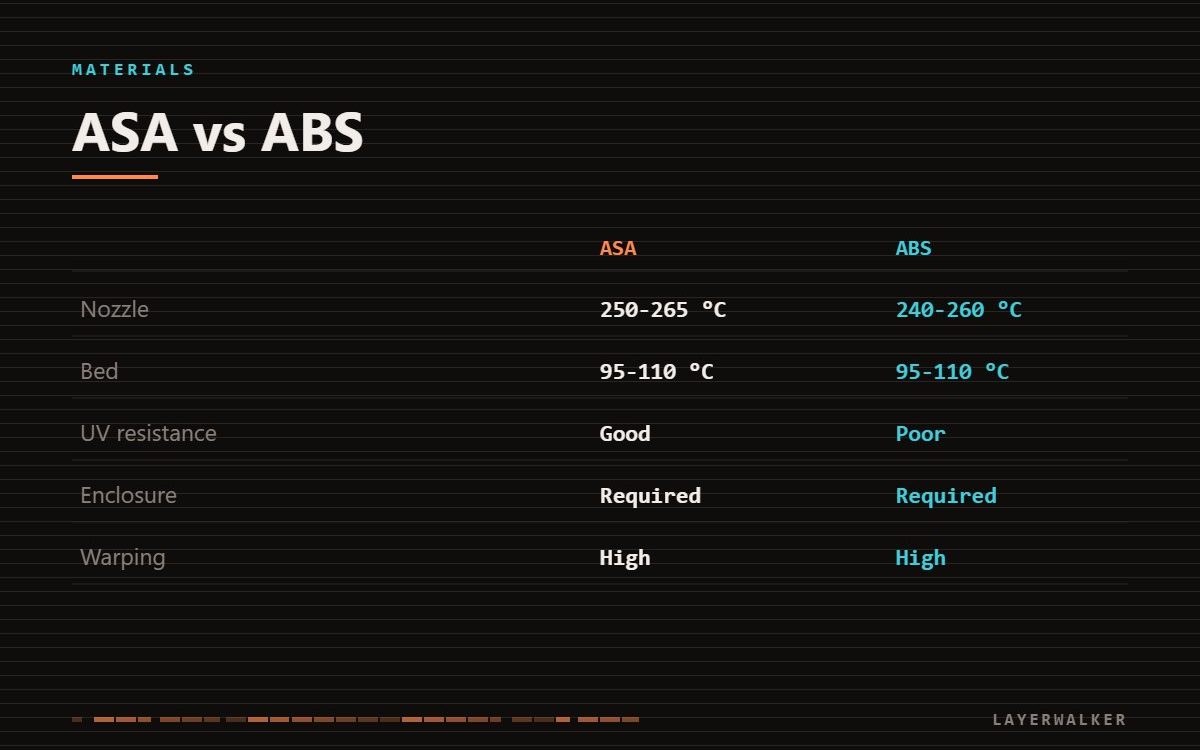
For anything living outdoors, use ASA. It prints almost identically to ABS but holds up under UV, where ABS yellows and turns brittle within a season.
| Property | Value |
|---|---|
| Nozzle temperature | ASA 250-265 degC, ABS 240-260 degC |
| Bed temperature | both 95-110 degC |
| Enclosure | required for both |
| UV resistance | ASA good, ABS poor |
| Warping | ASA slightly less, both high |
| Fumes | both significant, ventilate |
| Impact resistance | comparable, ABS marginally better |
| Post-processing | both smooth with acetone vapour |
Where to buy

Polymaker ASA Filament 1.75mm Black 1KG, UV & Weather Resistant
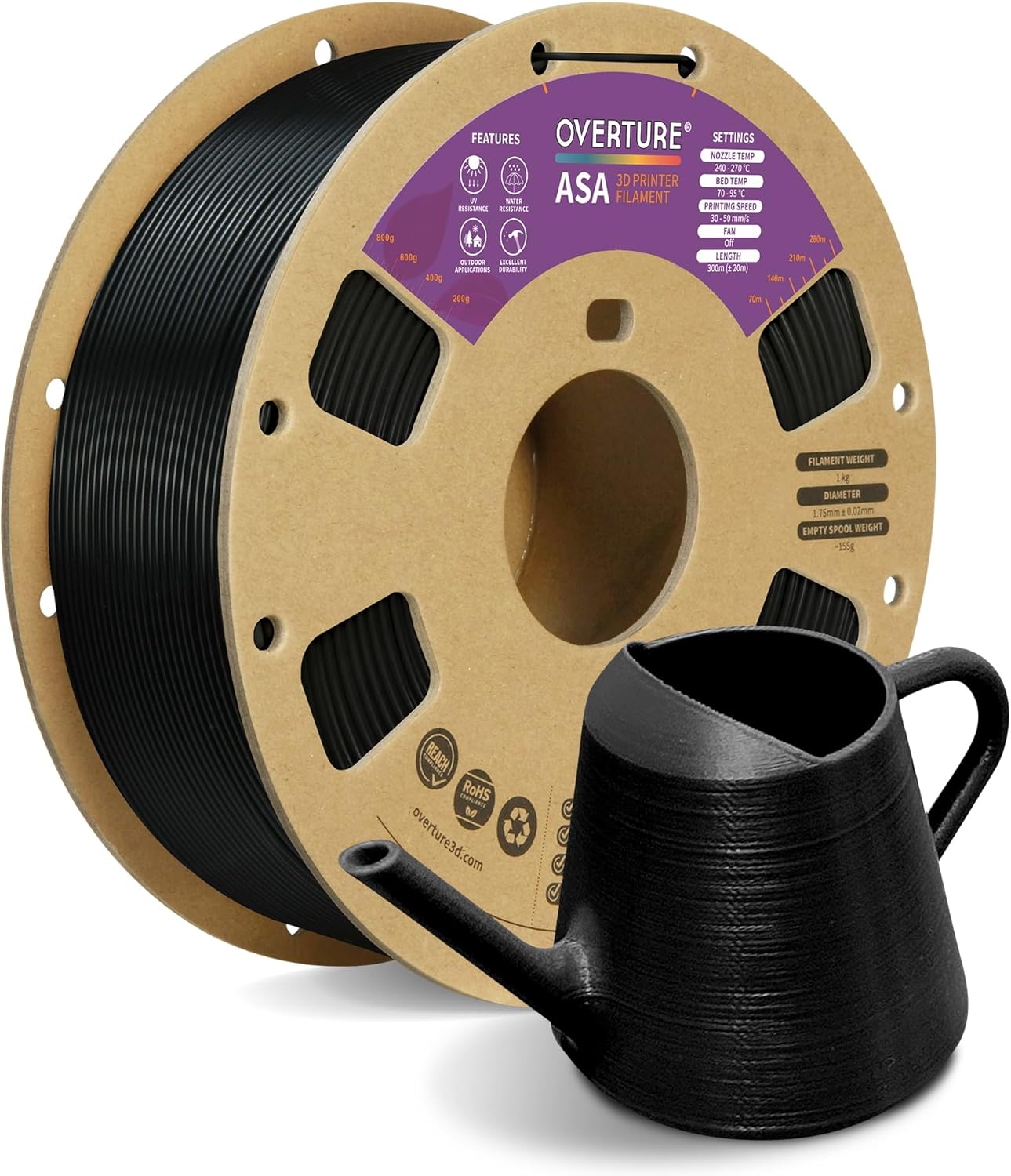

ASA vs ABS: the UV difference is the whole point
ABS left in direct sun yellows visibly within weeks and loses impact strength as the surface degrades. ASA was formulated for exactly this and is what outdoor automotive trim is made from. If the part will see sunlight, the choice is made for you.
Printing either one
Chamber temperature matters more than any other setting here.
Warping, cracking or layer splits in ASA or ABS
Chamber too cold or cooling too high
- Close the enclosure and let the chamber reach temperature before starting.
- Turn part cooling to zero or near it.
- Raise the bed to 100-110 degC.
- Add a brim and use a glue stick on smooth PEI.
- Remove all draughts. Opening the door mid-print can crack a tall part.
ABS and ASA release styrene and ultrafine particles while printing. Print in a ventilated space, keep the enclosure closed during the job, and do not put the machine in an occupied bedroom. Acetone smoothing adds a flammable solvent to that list — vapour polish outdoors or in a fume hood, never near an ignition source.
They also fail in the same two ways: ASA warping and ABS not sticking to the bed have almost identical fixes, and both start with the chamber.
If you cannot enclose the machine
Do not print either material. Open-frame ABS on anything larger than a few centimetres will warp off the plate or crack. PETG is the sensible compromise: moderate outdoor performance, no enclosure needed.

LayerWalker
Print defect diagnosis, calibration procedures and parts that actually fit. Corrections welcome through the contact page.