HMS 0300-9300-0001-0002: chamber heater temperature sensor open circuit
LayerWalker is a participant in the Amazon Services LLC Associates Program. We may earn a commission when you buy through links on our site, at no extra cost to you.
The chamber heater’s temperature sensor reads open circuit. The machine will not regulate chamber heat without it, so ABS and ASA lose the environment they depend on. PLA is unaffected.
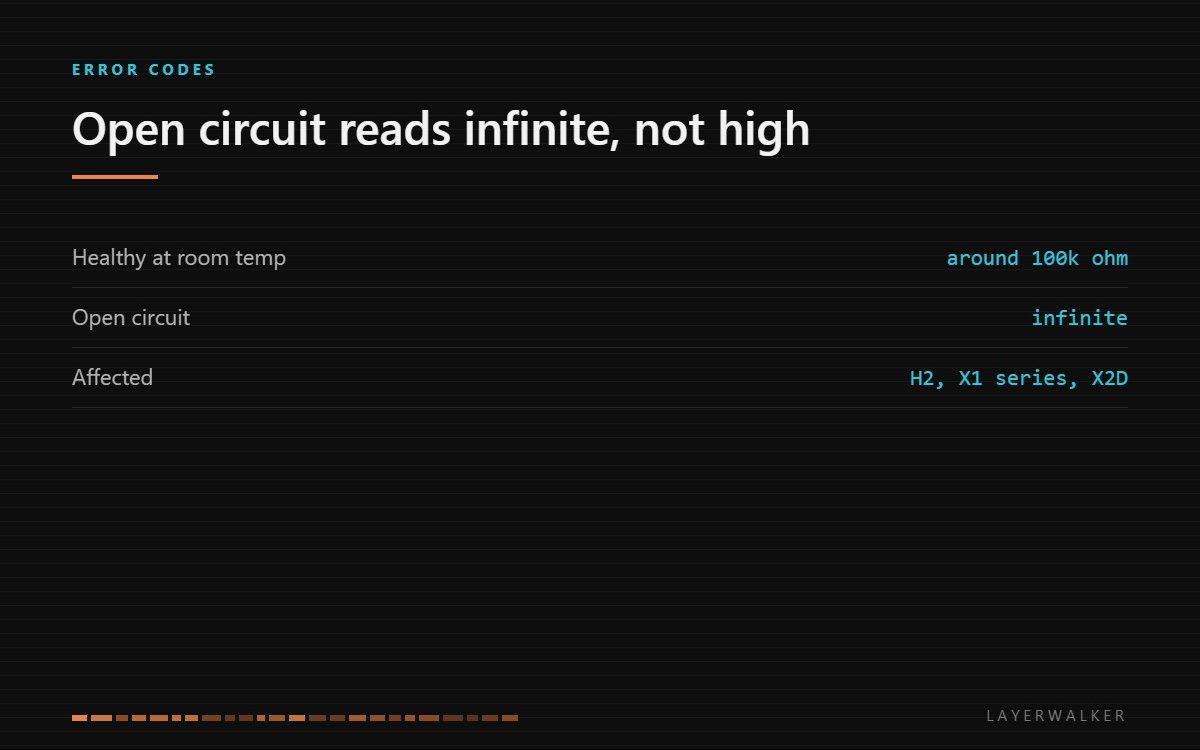
Affected machines: H2, X1 series, X2D. An open circuit is the opposite failure to a short: instead of reading near zero, the sensor reads as though it is not connected at all.

Where to buy


What you lose while it is faulty
Chamber heat keeps the layer below the nozzle warm enough for the next one to bond to it. Materials that shrink as they cool, chiefly ABS and ASA, split along their layer lines without it, usually on a tall flat face and usually some hours into the print.
If everything you print is PLA, this code is an inconvenience rather than a blocker, because PLA prefers cool air anyway. Knowing which category you are in decides how urgent the repair is.
Code appears at startup or when a chamber-heated material is selected; chamber temperature reads implausibly
Open sensor element, disconnected sensor, or a broken lead
- Power off at the wall and let the chamber cool before opening it.
- Locate the chamber sensor and unplug it at its connector.
- Measure across the sensor pins. Around 100k ohm at room temperature is healthy; an open reading confirms the fault.
- If the sensor reads healthy, the break is in the lead or the connector. Inspect the run and tug gently on each wire at the housing.
- Fit a replacement sensor for your machine model, seating it in the same position as the original since placement affects the reading.
Position matters more than people expect. A chamber sensor mounted in a different spot reads a different temperature, and the firmware assumes the original location when it decides how much to heat.
Our page on enclosed printers explains what chamber heat does and why passive enclosure is not the same thing. ABS and ASA covers the materials that need it, and the troubleshooting index covers the rest.
FAQ
Can I print PLA meanwhile? Yes. PLA does not use chamber heating.
Is this the same as the nozzle sensor? No. Different sensor, different location, different part.
Does mounting position matter? Yes. Fit the replacement where the original sat or the readings will be wrong.
What reading confirms it? An open circuit. A healthy sensor reads around 100k ohm cold.

LayerWalker
Print defect diagnosis, calibration procedures and parts that actually fit. Corrections welcome through the contact page.