Qidi Plus 4 Review: 370 °C and a 65 °C Chamber
LayerWalker is a participant in the Amazon Services LLC Associates Program. We may earn a commission when you buy through links on our site, at no extra cost to you.
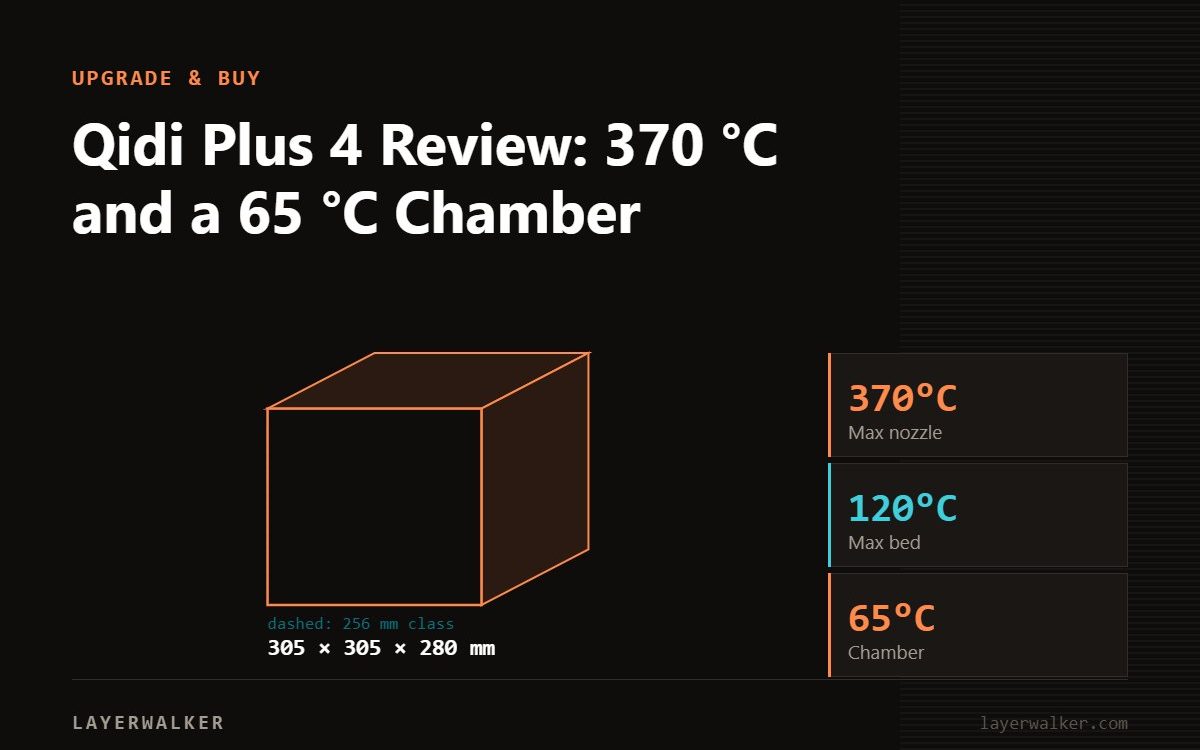
The Plus4 is Qidi’s engineering machine: 65 degC chamber heating and a 370 degC integrated nozzle, which together put PPS-CF and the harder filled materials in range rather than just ABS. That nozzle temperature is higher than anything in Bambu’s mainstream range and higher than Creality’s K2 Plus at 350 degC. If your requirement is high-temperature filament rather than speed or colour, this is the specification to compare against.
This assessment is based on Qidi’s published figures rather than a workshop test. The Plus4 is a narrow product with a clear purpose, and the two numbers in the short answer are almost the whole story.
Where to buy


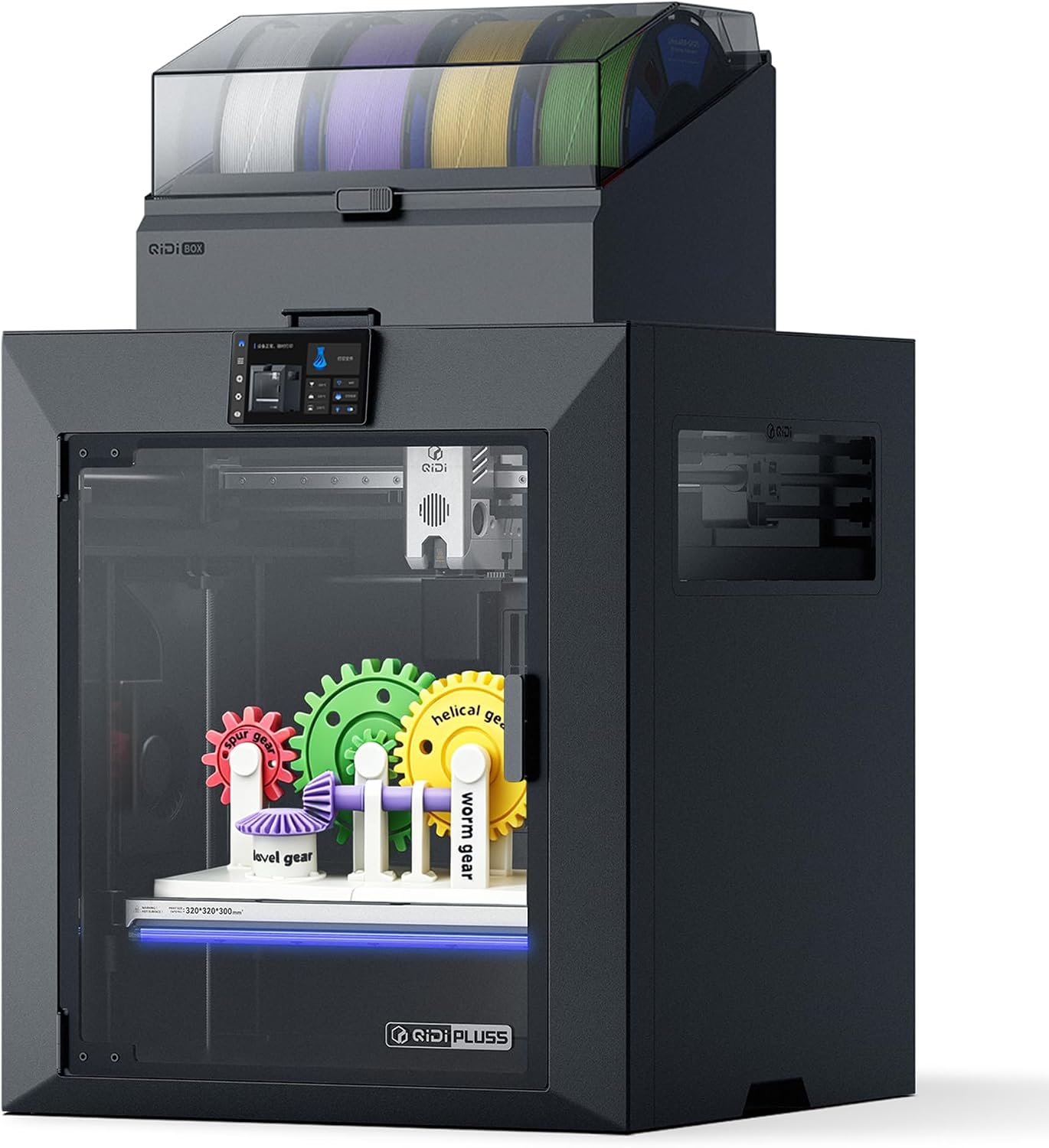
The two numbers that matter
65 degC of chamber heating. Not enclosure, not trapped bed heat, but an actively heated chamber holding a target. This is the same figure Bambu quotes for the H2D and H2S, its top machines, and it is what allows a part to cool slowly enough that internal stresses do not tear layers apart.
370 degC at the nozzle. For context, the Bambu P2S and X1 Carbon stop at 300 degC, the H2D at 350 degC, Creality’s K2 Plus at 350 degC and Prusa’s CORE One+ at 290 degC. 370 degC is above all of them, and nozzle temperature is what gates the very high temperature engineering polymers.
Together those two figures define the machine. Everything else about it is secondary to the question of whether you actually need materials that demand them.
Do you need it
Be honest here, because the answer is often no. PLA, PETG and TPU need none of this. ABS and ASA want a warm chamber but are handled comfortably by machines at 300 degC with 60 degC chambers. Nylon and carbon-filled blends are within reach of 300 to 350 degC machines.
Where 370 degC and 65 degC earn their keep is PPS and PPS-CF, PEKK-class materials and similar, plus the reliability margin they give you on the merely difficult materials. If you are printing functional parts for heat, chemical exposure or sustained load, that margin is the product.
If not, the money is better spent on plate size, speed or a filament changer. Our Plus 4 overview and Qidi range page put it in context.
Practicalities
Abrasive filament is the point of a machine like this, so treat nozzles as consumables and stock hardened ones. Note that the Plus4 uses an integrated nozzle assembly rather than a bare nozzle, which changes what a replacement costs and how often you want to be doing it.
Filament drying stops being optional at this level. PA, PPA and PPS pick up moisture quickly and print badly when wet, in ways that look like hardware faults. See our notes on drying filament and on dryers.
Also check the catalogue before buying. Qidi has since introduced the Q2, Plus5 and Max4, and the Plus4 no longer appears on some of its own product listings, so marketplace listings need reading carefully.
Who should buy it
Buy the Plus4 if high-temperature engineering filament is a requirement and you want the highest nozzle temperature available in a desktop machine at sensible money. Choose a Bambu H2D instead if you also want dual-nozzle printing and a mature software stack. Choose a P2S, Centauri Carbon or K1C if your real materials list is PLA, PETG, ABS and the occasional filled filament, because all three cost less and cover that.
Qidi Plus 4 Review FAQ
How hot does the Plus4 nozzle get?
370 degC, higher than the Bambu H2D at 350 degC and the Prusa CORE One+ at 290 degC.
Does it heat the chamber?
Yes, to 65 degC.
Can it print PPS-CF?
That is the class of material those two figures are for.
Is the Plus4 still current?
Qidi’s range now also includes the Q2, Plus5 and Max4. Verify the exact model in any listing.

LayerWalker
Print defect diagnosis, calibration procedures and parts that actually fit. Corrections welcome through the contact page.