Tree supports vs normal supports
LayerWalker is a participant in the Amazon Services LLC Associates Program. We may earn a commission when you buy through links on our site, at no extra cost to you.
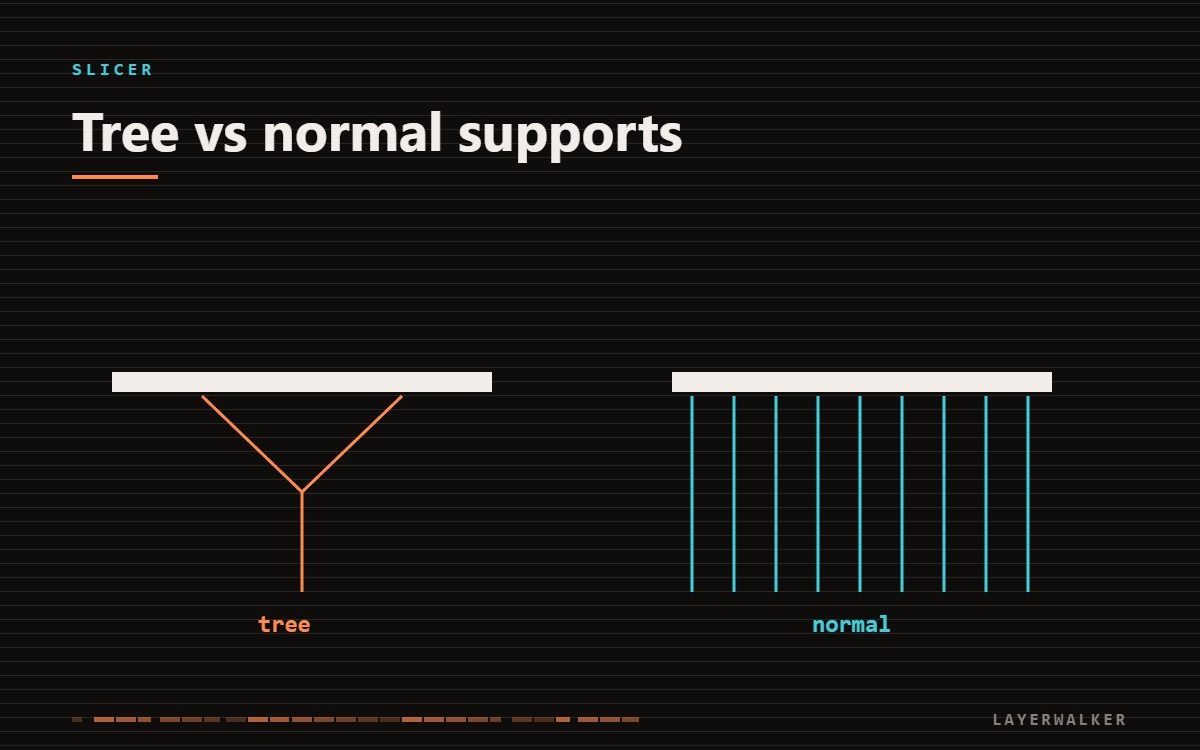
Tree supports for organic shapes, figurines and anything where support scars would be visible. Normal supports for flat overhanging faces that need even backing across their whole area.
| Property | Value |
|---|---|
| Material use | tree lower, normal higher |
| Print time | tree usually faster |
| Contact area | tree small, normal large |
| Removal | tree easier, normal harder |
| Flat overhang support | tree poor, normal good |
| Reliability on tall thin models | tree can topple, normal stable |
| Surface scarring | tree less, normal more |
Where to buy


KATA Mini Flush Cutters, 5-Inch Micro Wire Cutters for Jewelry & Model Kits

Bivethoi 3pcs Micro Wire Cutters Flush Cut Snips, 5 Inch, Light Blue
Tree supports vs normal supports: where tree supports fail
A large flat overhang — the underside of a horizontal plate, for instance — needs backing across its whole area. Tree supports reach up and touch in a few places, and the plastic sags between the contact points. That is a job for normal supports.
Tall, slender tree structures also topple. If the branches are long and unbraced, a nozzle collision partway up brings the whole thing down and takes the print with it.
Settings that matter for both
Top Z distance is the single most important setting.
The organic tree variant
Most slicers now offer an organic or slim tree style that curves around the model. It uses even less material and touches in fewer places, at the cost of being slower to slice and less stable on tall models. Worth using on figurines, not on functional parts.
Support quality is the main reason people keep PrusaSlicer installed — see PrusaSlicer for what else it does well, and PrusaSlicer vs Cura for how the two compare on overhangs.
Best support is no support
Before choosing a style, try rotating the model. A part reoriented so its overhangs fall under 45 degrees needs no supports at all, prints faster, and has no scars to clean up.

LayerWalker
Print defect diagnosis, calibration procedures and parts that actually fit. Corrections welcome through the contact page.