Drooping overhangs and failed bridges
LayerWalker is a participant in the Amazon Services LLC Associates Program. We may earn a commission when you buy through links on our site, at no extra cost to you.
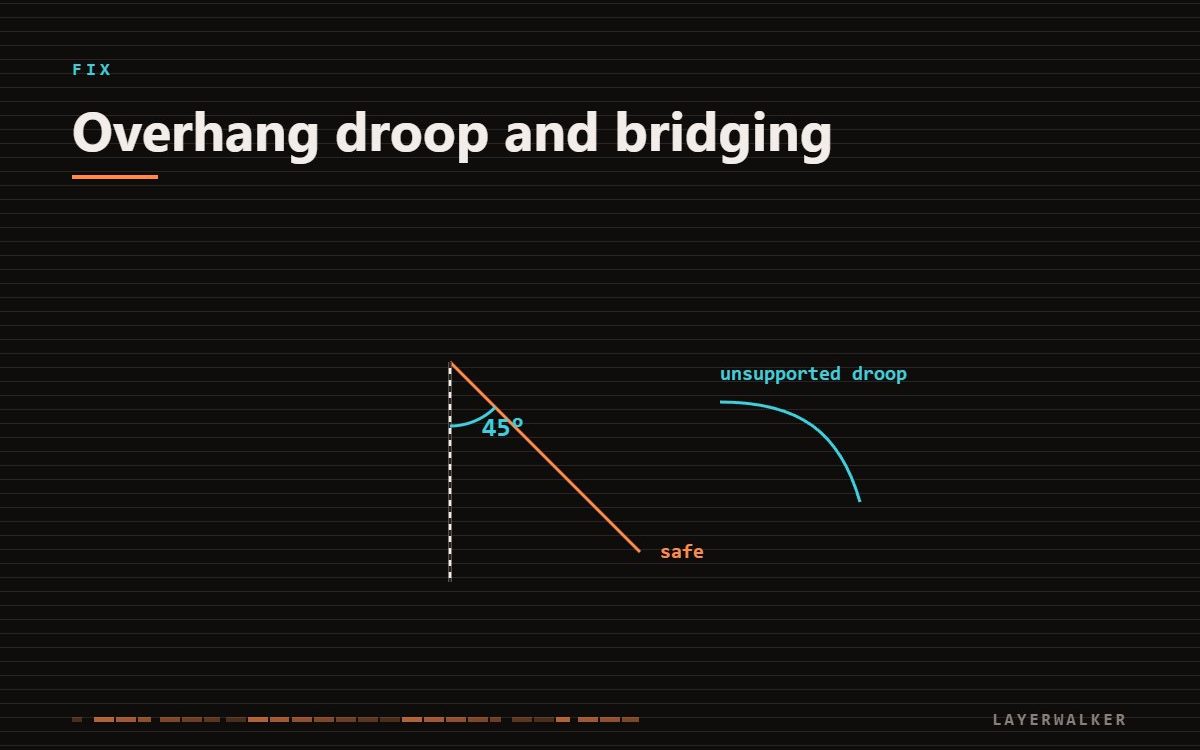
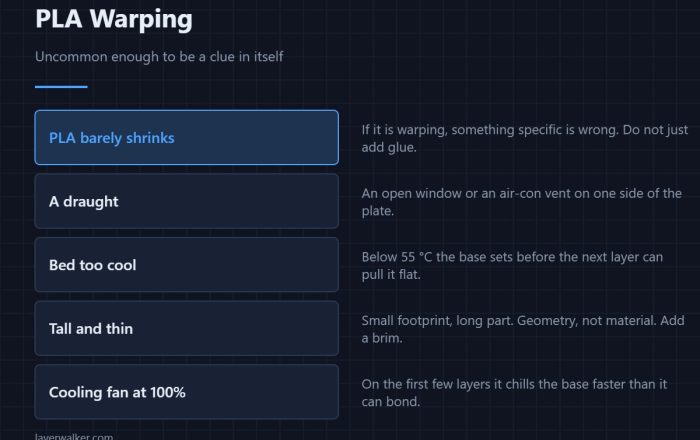
An overhang droops because the extruded line has nothing under it and has not solidified before the next one lands. More cooling and a slower outer wall fix most of it; past about 50 degrees from vertical you need supports.
Bridges and overhangs are the same physics with different geometry. A bridge spans between two anchors and can be printed fast under tension. An overhang is cantilevered and has nothing pulling it straight.
Sagging undersides, drooping bridges, rough overhang surfaces
Extruded plastic staying molten too long without support
- Turn part cooling to maximum for PLA. This is the single biggest factor.
- Slow the outer wall to 25-40 mm/s so each line has time to set.
- Drop the nozzle temperature 5-10 degC.
- Enable bridge-specific settings in the slicer if available.
- Reduce layer height. Thinner layers overhang further before they sag.
- Reorient the part so the overhang faces up, or split and glue.
Bridges want speed and cooling. Overhangs want slow and cooling.
Where to buy


GDSTIME 50mm x 15mm Blower Fan 24V High Speed 5015 Part Cooling 2Pin 2-Pack

3D print overhang droop: know the limit
Roughly 45 degrees from vertical is what most machines manage cleanly. Between 45 and 60 you can push it with cooling and slow walls at the cost of surface finish. Beyond that, use supports or change the orientation — no setting saves an unsupported 80 degree overhang.
ABS and ASA are worse
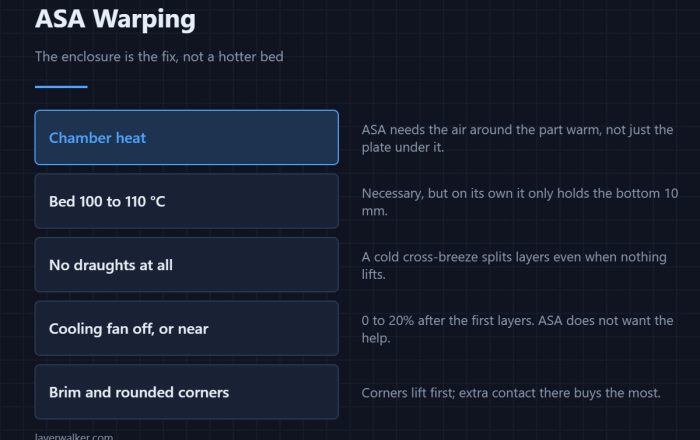
These materials need the cooling turned down to avoid warping, and cooling is exactly what overhangs need. That conflict is real and there is no setting that resolves it. Design around it, or accept rougher overhangs.

LayerWalker
Print defect diagnosis, calibration procedures and parts that actually fit. Corrections welcome through the contact page.