HMS 0C00-0300-0003-000F: Nozzle Covered With Jammed or Clogged Material
LayerWalker is a participant in the Amazon Services LLC Associates Program. We may earn a commission when you buy through links on our site, at no extra cost to you.
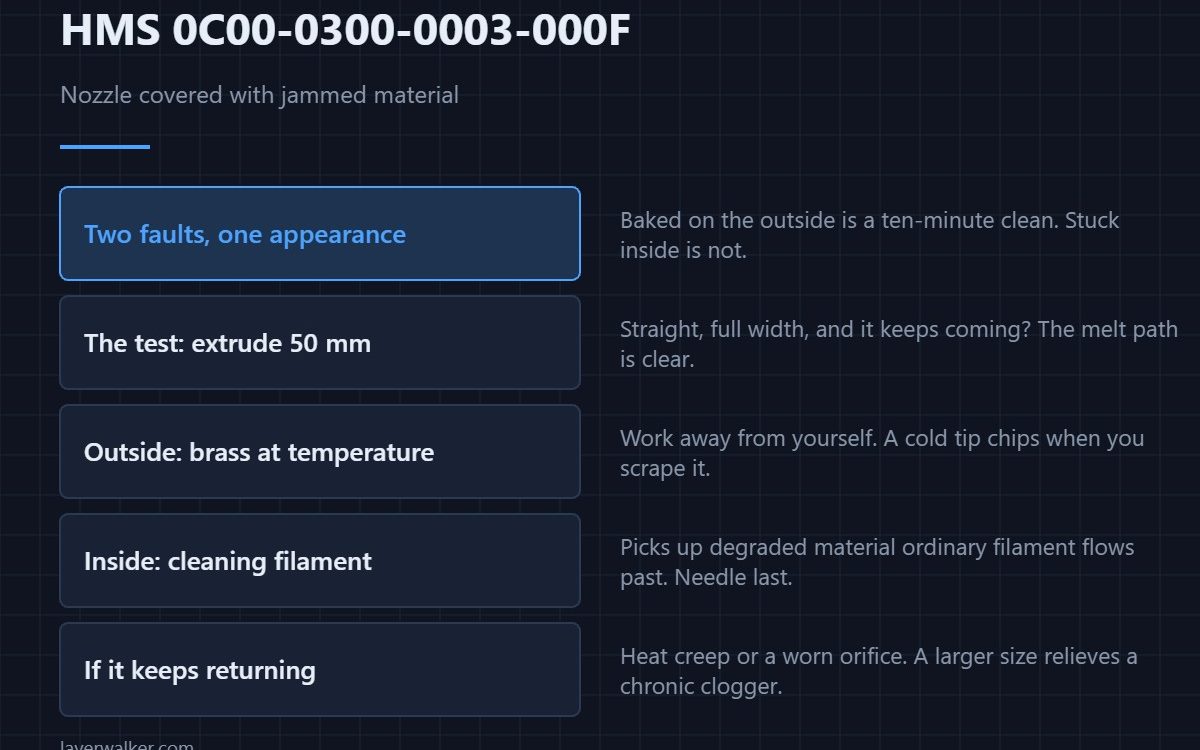
HMS 0C00-0300-0003-000F means the inspection system looked at the nozzle and saw it coated in jammed or clogged material. The message covers two different problems with the same appearance: plastic baked onto the outside of the tip, and plastic stuck inside the melt zone. The outside case is a ten-minute clean, the inside case is not.
Knowing which one you have before you start saves you taking a hotend apart you did not need to touch.
Where to buy


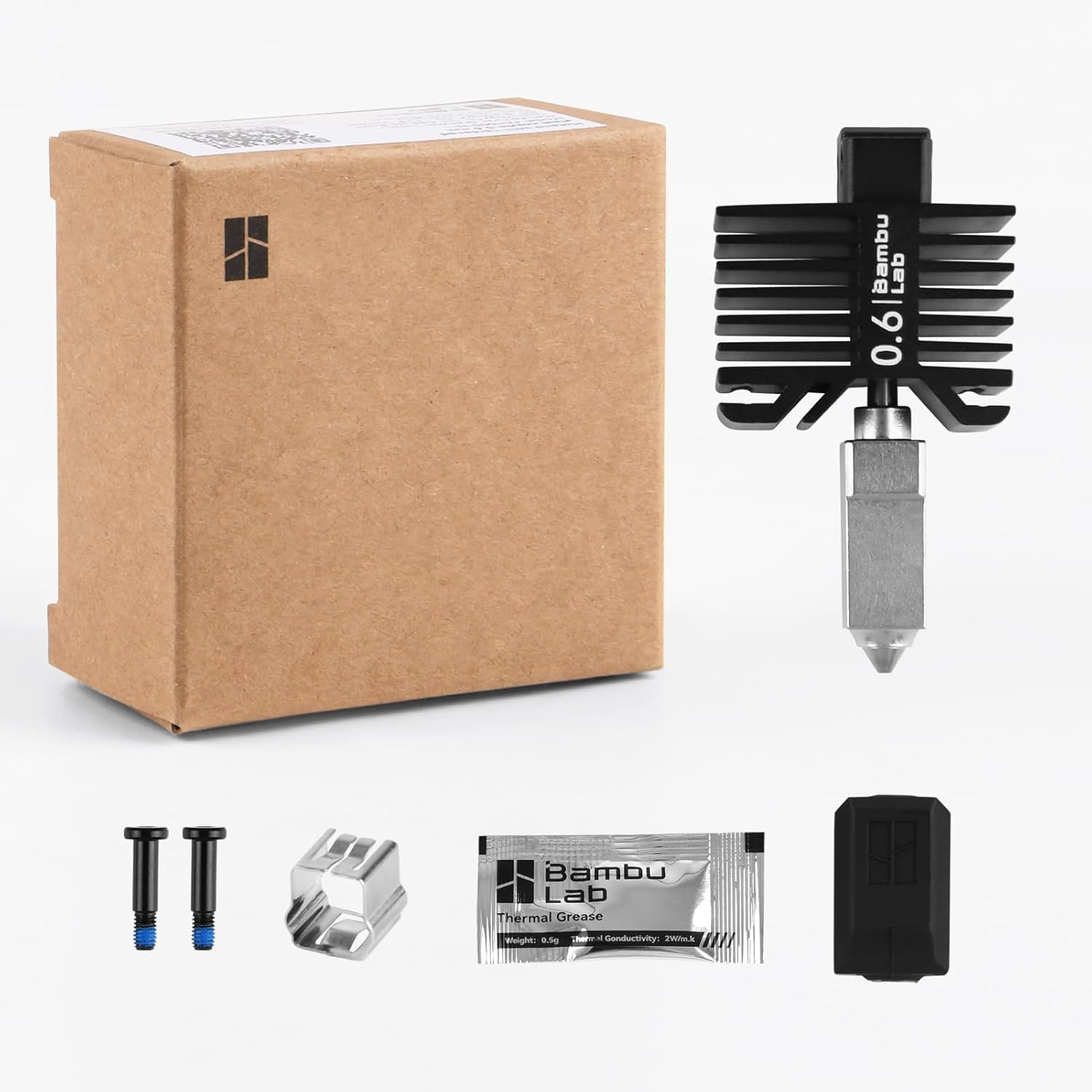
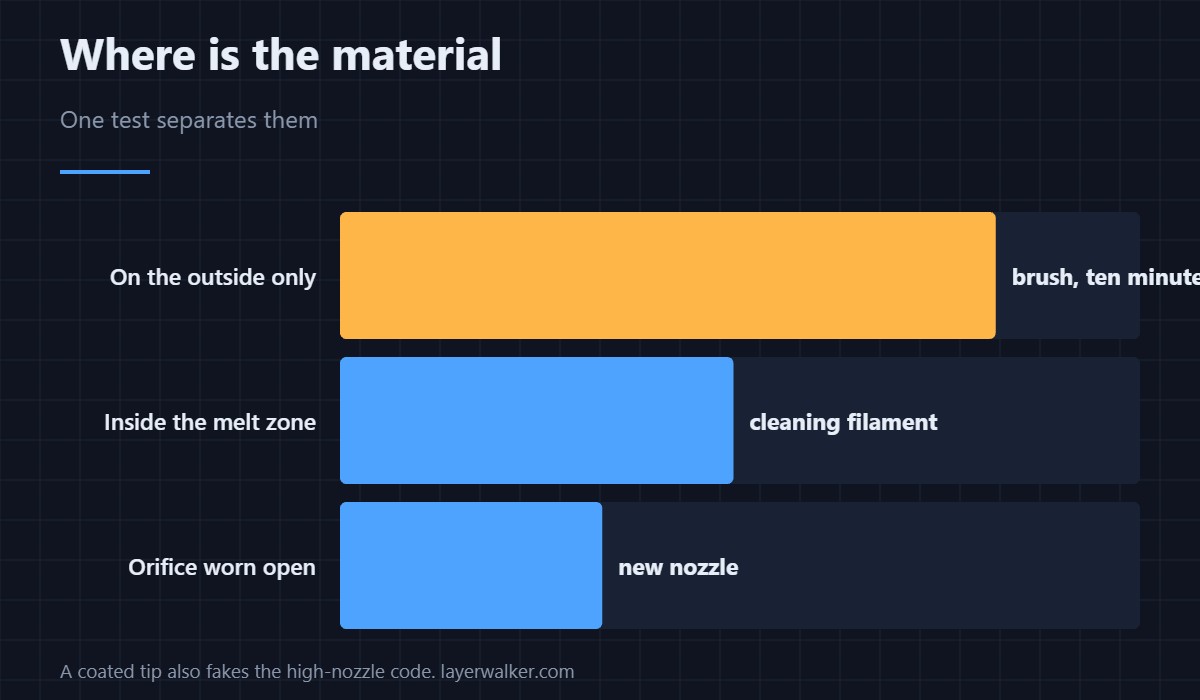
Tell the outside from the inside in one test
Heat the hotend and extrude 50 mm by hand. If plastic comes out straight, at full width, and keeps coming, the melt path is clear and everything you can see is on the outside. If it curls, thins, or stops, the blockage is internal and the cleaning that follows is a different job — set out in a clogged nozzle.
Cleaning the outside
Bring the nozzle to printing temperature, then work the brass brush around the tip away from yourself. Brass is softer than the nozzle and harder than the deposit, which is exactly the hardness you want. A cold tip must never be scraped: coatings chip, and a chipped nozzle sheds flakes into the next print.
Clearing the inside
A cleaning filament pushed through at a high temperature picks up the degraded material that ordinary filament flows past. Finish with a cold pull if the machine allows one. The needle through the orifice is a last step rather than a first, because an oversized needle widens the hole you were trying to save. Technique is in nozzle cleaning.
Why HMS 0C00-0300-0003-000F keeps coming back
A nozzle that re-coats itself within a few prints is usually telling you about heat creep or a worn orifice rather than about dirt. Going up a size relieves a tip that clogs chronically on filled or recycled material, and the trade-offs are in 0.4 mm nozzles.
What it has to do with the first layer
A coated tip holds itself off the plate and lays a thin line, which is the measurement behind the high-nozzle code HMS 0C00-0200-0002-0006. If you are seeing both, treat the nozzle as the single cause rather than chasing two faults.
HMS 0C00-0300-0003-000F FAQ
Can I keep printing with it showing?
Not usefully. Material on the tip transfers onto the part and drags across finished surfaces.
Is a steel brush better than brass?
No. Steel is harder than the nozzle and will damage it. Brass is the correct choice precisely because it is softer.
How often should a nozzle be replaced?
When abrasive material has been through it, far sooner than people expect. Wear is covered in hardened steel nozzles.
Does the inspection ever misread a shiny tip?
It can, and a reflective new nozzle occasionally reports once and then settles. A code that repeats across prints is real.

LayerWalker
Print defect diagnosis, calibration procedures and parts that actually fit. Corrections welcome through the contact page.