HMS 0C00-0200-0002-0006: Nozzle Height Seems Too High
LayerWalker is a participant in the Amazon Services LLC Associates Program. We may earn a commission when you buy through links on our site, at no extra cost to you.
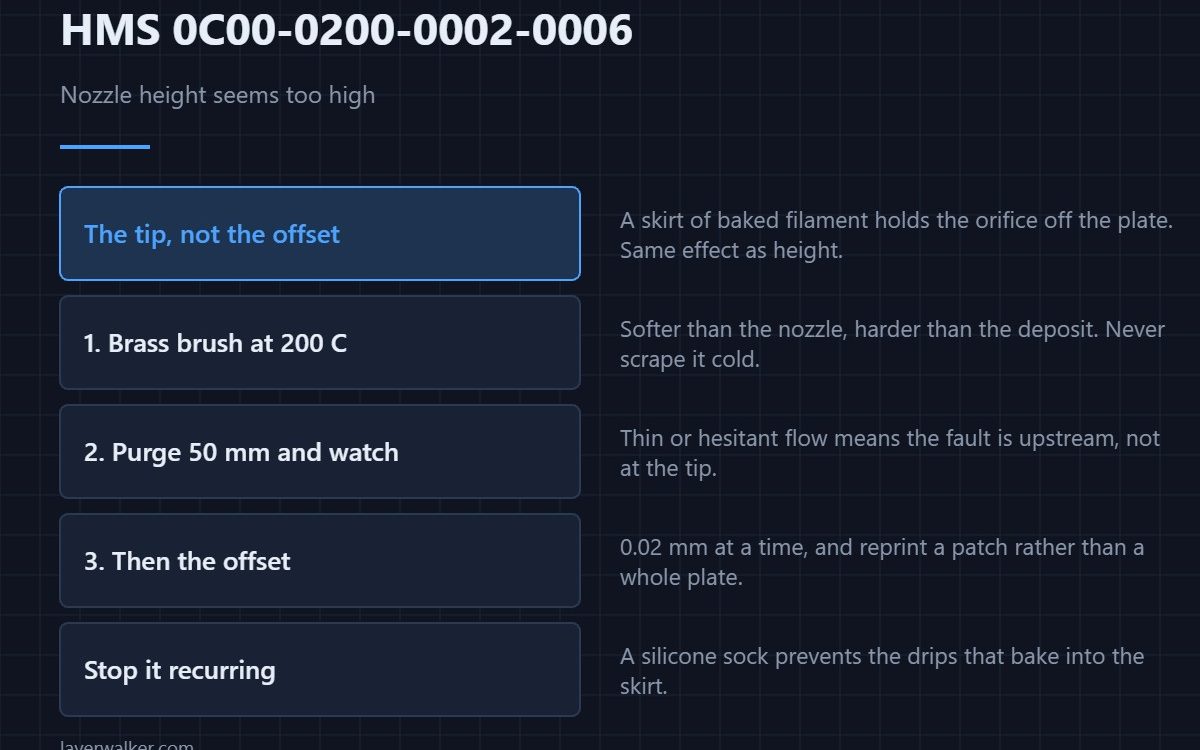
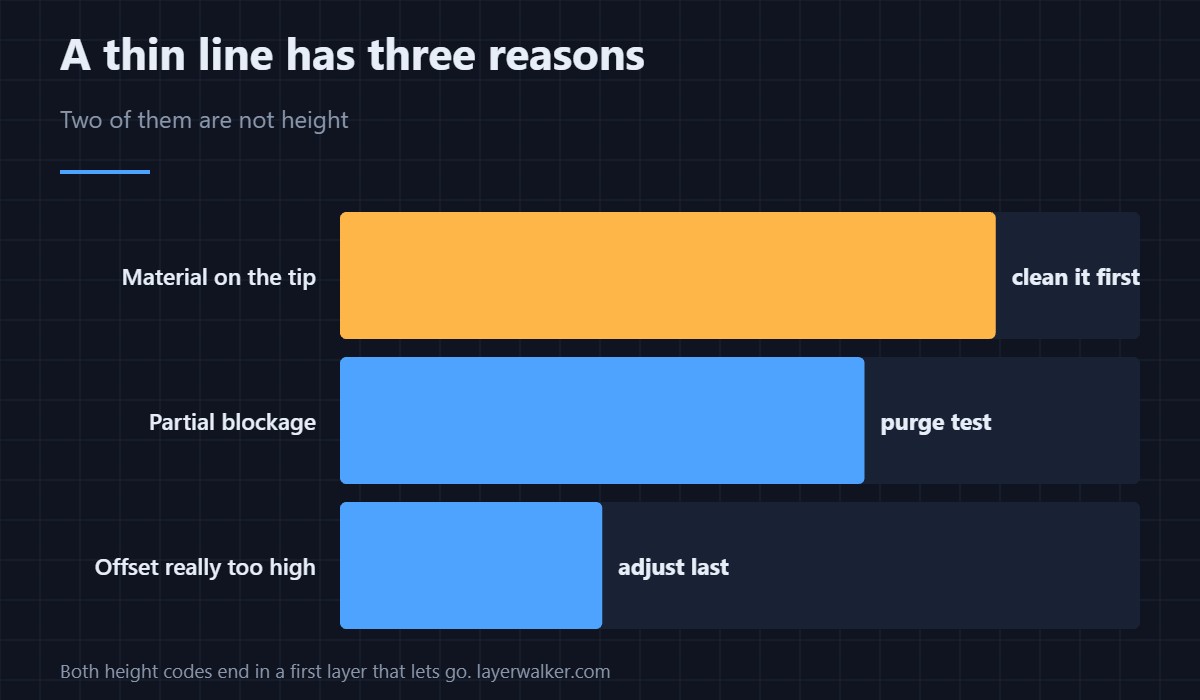
HMS 0C00-0200-0002-0006 means the Micro Lidar measured a first layer thinner and narrower than it should be, which reads as a nozzle sitting too far from the plate. The most common real cause is not height at all: it is material stuck to the nozzle tip holding it off the surface, or a partial blockage starving the line.
This is the mirror of the low-nozzle code, and the two get confused because both end in a first layer that will not stick.
Where to buy


Look at the nozzle, not the offset
A skirt of cooked filament around the tip does exactly what a raised nozzle does: it holds the orifice away from the plate and thins the line. Heat the hotend to 200 °C, then wipe the outside of the tip with a brass brush. Do not scrape a cold nozzle, which chips the coating. A silicone sock stops the drips that form the skirt in the first place.
Then rule out under-extrusion
A line that is thin because not enough plastic arrived looks identical to the lidar. Run a short purge and watch the flow: hesitant or stringy output means the problem is upstream, and the path from there is in a clogged nozzle.
Then the offset itself
If the tip is clean and flow is steady, the measurement is probably honest and the offset needs lowering in small steps. Change it by 0.02 mm at a time and reprint a patch, not a whole plate — the method is in Z offset and first layer squish.
Why HMS 0C00-0200-0002-0006 and the low-nozzle code both end in a failed plate
Too high and the layer does not bond to the surface; too low and it bonds but deforms. Both produce a part that lets go partway through, which is the symptom set in a first layer that will not stick. The code tells you which direction to move, and that is the whole value of it.
A note on plate choice
Textured surfaces carry a deeper profile than smooth ones, so a nozzle height tuned on one reads differently on the other. If you swap surfaces regularly, expect to keep a separate offset for each.
HMS 0C00-0200-0002-0006 FAQ
How do I tell a dirty nozzle from a high one?
Look at the tip with a light. A clean tip is bright metal at the very end; a skirt of dull brown material is unmistakable once you have seen it once.
Will a new nozzle fix it?
Only if the old one is blocked or worn. A clean nozzle that is simply at the wrong height produces the same message straight out of the box.
Can I print through it?
You can, and the first layer will be weakly attached. That is how parts come loose mid-print and collect on the toolhead.
Does the silicone sock really matter?
For preventing the recurrence, yes. Most repeat offenders are machines running without one, where every drip bakes onto the tip. Sizes and materials are in Bambu Lab nozzles.

LayerWalker
Print defect diagnosis, calibration procedures and parts that actually fit. Corrections welcome through the contact page.