HMS 0C00-0200-0002-0008: Vertical Laser Line Is Too Wide
LayerWalker is a participant in the Amazon Services LLC Associates Program. We may earn a commission when you buy through links on our site, at no extra cost to you.
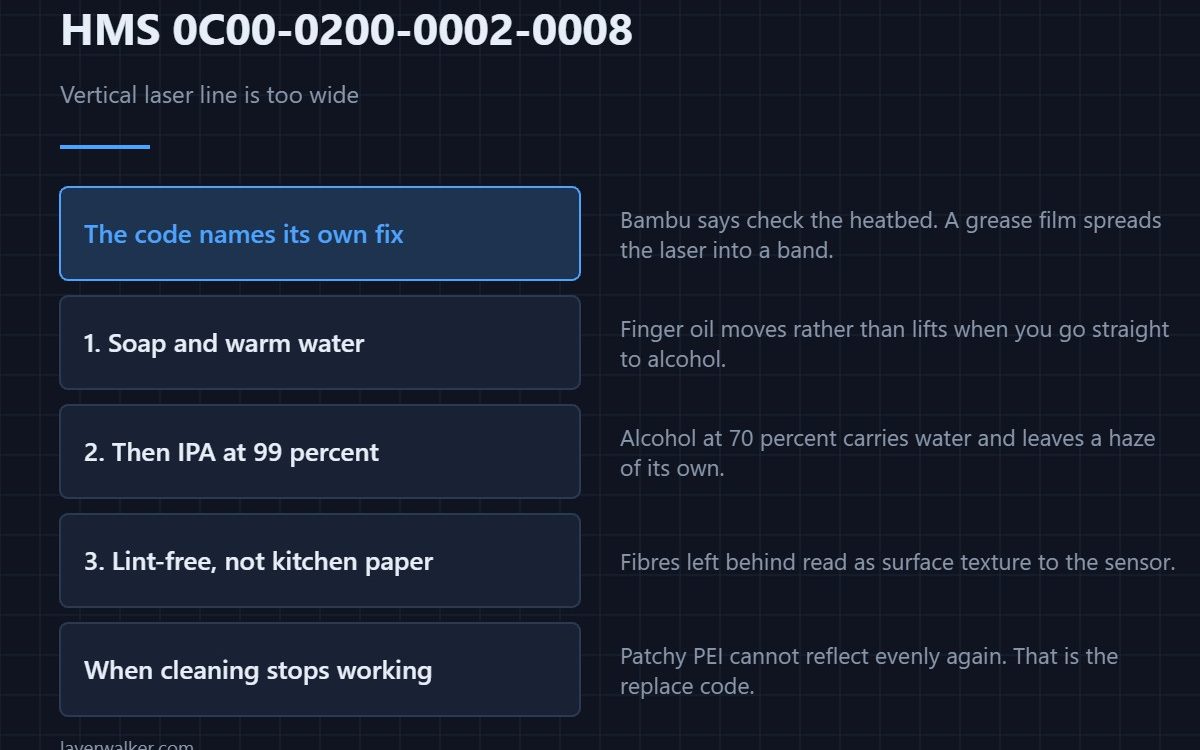
HMS 0C00-0200-0002-0008 means the laser line the Micro Lidar projects onto the plate came back wider than it should, and Bambu tells you the cause directly in the message: check whether the heatbed is dirty. A film of grease or release agent scatters the line, and that scatter is what the sensor is objecting to.
This is one of the few codes that names its own fix. Do exactly what it says before looking anywhere else.
Where to buy


What a wide line actually means
The lidar reads a narrow, sharply defined stripe. A clean surface reflects it as one line; a contaminated one spreads it into a soft band, because the light is bouncing off a film rather than off the plate. The sensor cannot measure a band, so it stops and tells you.
Clean it properly, once
Warm water and a drop of dish soap removes finger oil, which alcohol alone only smears around. Dry it, then wipe with isopropyl alcohol at 99 % to lift what is left. Alcohol at 70 % carries enough water to leave a haze of its own, which is the usual reason a cleaned plate still fails. Finish with a lint-free wipe rather than kitchen paper.
The things that keep re-contaminating it
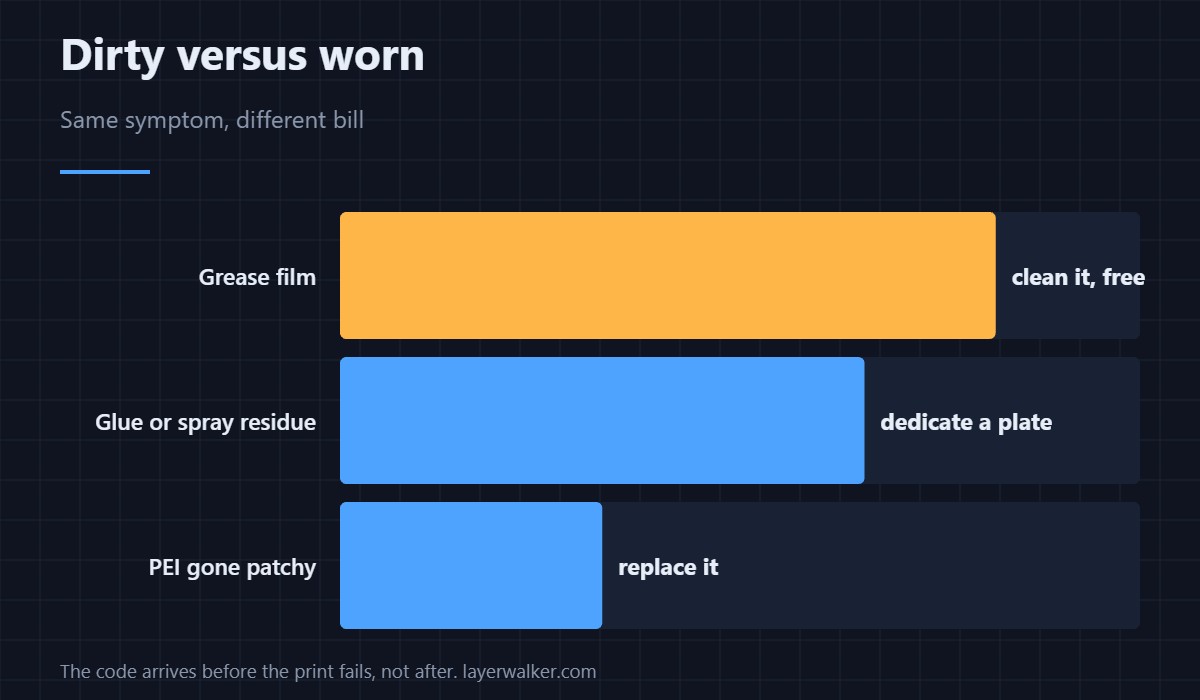
Handling the printing surface with bare hands puts the film straight back. Glue sticks and adhesion sprays do the same deliberately, which is why a plate that needs glue for one material should not be the plate you use for lidar-checked first layers. Surface differences are set out in Bambu build plates.
When cleaning stops working
PEI wears. Once the coating has gone patchy, no amount of cleaning restores an even reflection, and you will see this code alongside parts that lift at the same spots every time. That is the point at which the surface is consumed rather than dirty — the related code is HMS 0C00-0200-0002-0009, which asks you to replace it outright.
What HMS 0C00-0200-0002-0008 is protecting you from
A contaminated plate does not hold a first layer. The code arrives before the print fails rather than after, and the failure it prevents is the one described in a first layer that will not stick. Treating it as a nuisance to clear costs you the plate it was warning you about.
HMS 0C00-0200-0002-0008 FAQ
Can I clean a textured plate the same way?
Yes, but it needs more agitation. A soft brush gets soap into the profile; a flat wipe only touches the peaks.
Is acetone safe on PEI?
No. It attacks the coating. Soap, water and high-strength isopropyl alcohol are the whole toolkit.
Why does it pass cold and fail once warm?
A warm plate releases oils that are invisible when cold. If it only fails hot, the surface is contaminated rather than worn.
Does the lidar lens need cleaning too?
Sometimes, and it is worth checking once the plate is definitely clean. A fogged lens produces its own codes, covered in bed levelling sensors.

LayerWalker
Print defect diagnosis, calibration procedures and parts that actually fit. Corrections welcome through the contact page.