HMS 0C00-0200-0002-0009: Vertical Laser Not Bright Enough at Homing
LayerWalker is a participant in the Amazon Services LLC Associates Program. We may earn a commission when you buy through links on our site, at no extra cost to you.
HMS 0C00-0200-0002-0009 means the laser reflection the Micro Lidar reads at the homing position came back too dim, and Bambu asks you to clean or replace the heatbed if the message keeps appearing. That last word is the important one: a repeating version of this code is the machine telling you the surface is worn out, not soiled.
Most codes ask you to fix something. This one eventually asks you to buy something, and it is unusually honest about it.
Where to buy


Why the homing position wears first
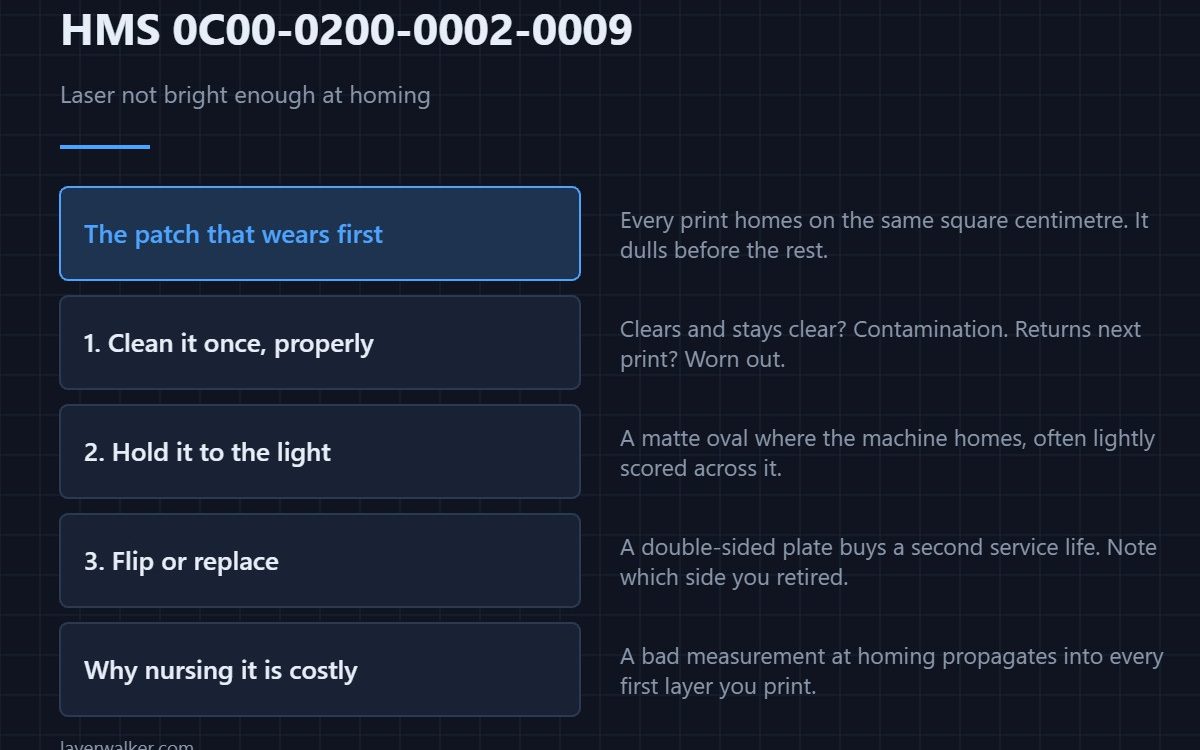
The lidar reads the same small patch at the start of every print. That patch takes every nozzle wipe, every purge, and every homing touch the machine has ever made. It is the most used square centimetre of the plate, and it dulls long before the rest of the surface looks tired.
Clean it once, properly, to settle the question
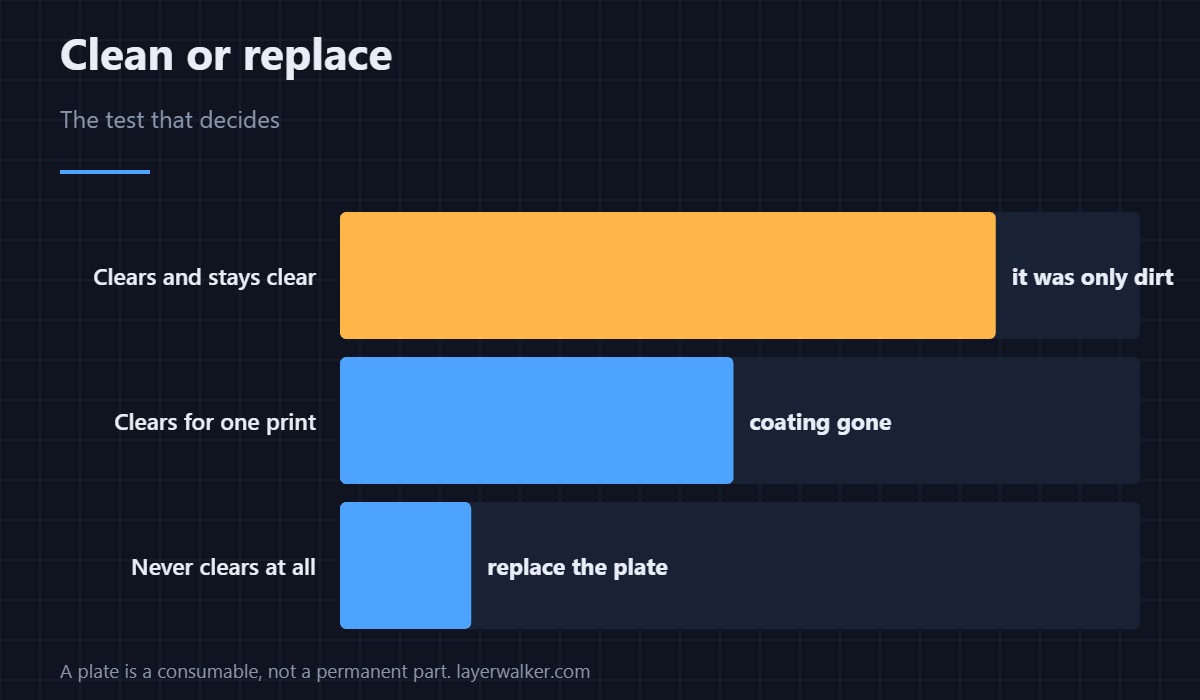
Soap and warm water, then isopropyl alcohol at high strength. If the code clears and stays clear, it was contamination and you are done. If it clears for one print and returns, the coating in that patch has lost its reflectivity and cleaning cannot bring it back. The distinction between the two outcomes is the whole diagnosis, and the contamination-only version of this fault is HMS 0C00-0200-0002-0008.
What a worn patch looks like
Hold the plate at a low angle to a window. A healthy PEI surface returns an even sheen; a worn one shows a matte oval where the machine homes, often with faint scoring across it. Once you can see that oval, the measurement the lidar is complaining about is real.
Replacing rather than nursing it
A plate is a consumable with a service life measured in hundreds of prints, not a permanent part. Trying to extend a finished one costs you first layers across every job, which is far more expensive than the plate. What the surface options actually differ on is covered in PEI build plates, and the Bambu-specific sizes are in Bambu build plates.
What HMS 0C00-0200-0002-0009 predicts if you leave it
A dim return at homing means the machine starts every print with a bad measurement, and a bad measurement propagates into the whole first layer. You will see it as prints that fail in the same region of the plate regardless of what you place there — the material-specific angle is in the best build plate for PETG.
HMS 0C00-0200-0002-0009 FAQ
Can I just move the print away from that spot?
No, because the machine always homes there. Moving the model changes where it prints, not where it measures.
Does flipping the plate over help?
On a double-sided plate, yes, and it buys you a second service life. Note which side you have retired so you do not go back to it.
How many prints should a plate last?
It depends far more on how you remove parts than on hours printed. Metal scrapers and cold removal shorten it dramatically.
Could the lidar itself be dim?
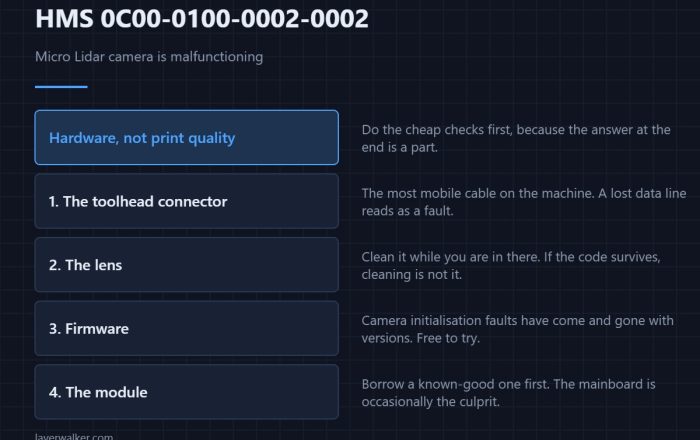
It can, and that produces its own hardware codes rather than this one. The LED failure case is HMS 0C00-0100-0001-000A.

LayerWalker
Print defect diagnosis, calibration procedures and parts that actually fit. Corrections welcome through the contact page.