Creality K1 Error 2511: Cavity Temperature Exception
LayerWalker is a participant in the Amazon Services LLC Associates Program. We may earn a commission when you buy through links on our site, at no extra cost to you.
Creality K1 error 2511 means the chamber temperature sensor reported a value outside the range the printer accepts. On an enclosed machine the chamber is deliberately warm, which is why ABS and ASA print well on it, but there is a ceiling. Above it the electronics in the base, the belts and the filament in the path all suffer.
The fault is either a genuinely overheating chamber or a sensor reporting nonsense, and those need opposite responses.
Where to buy
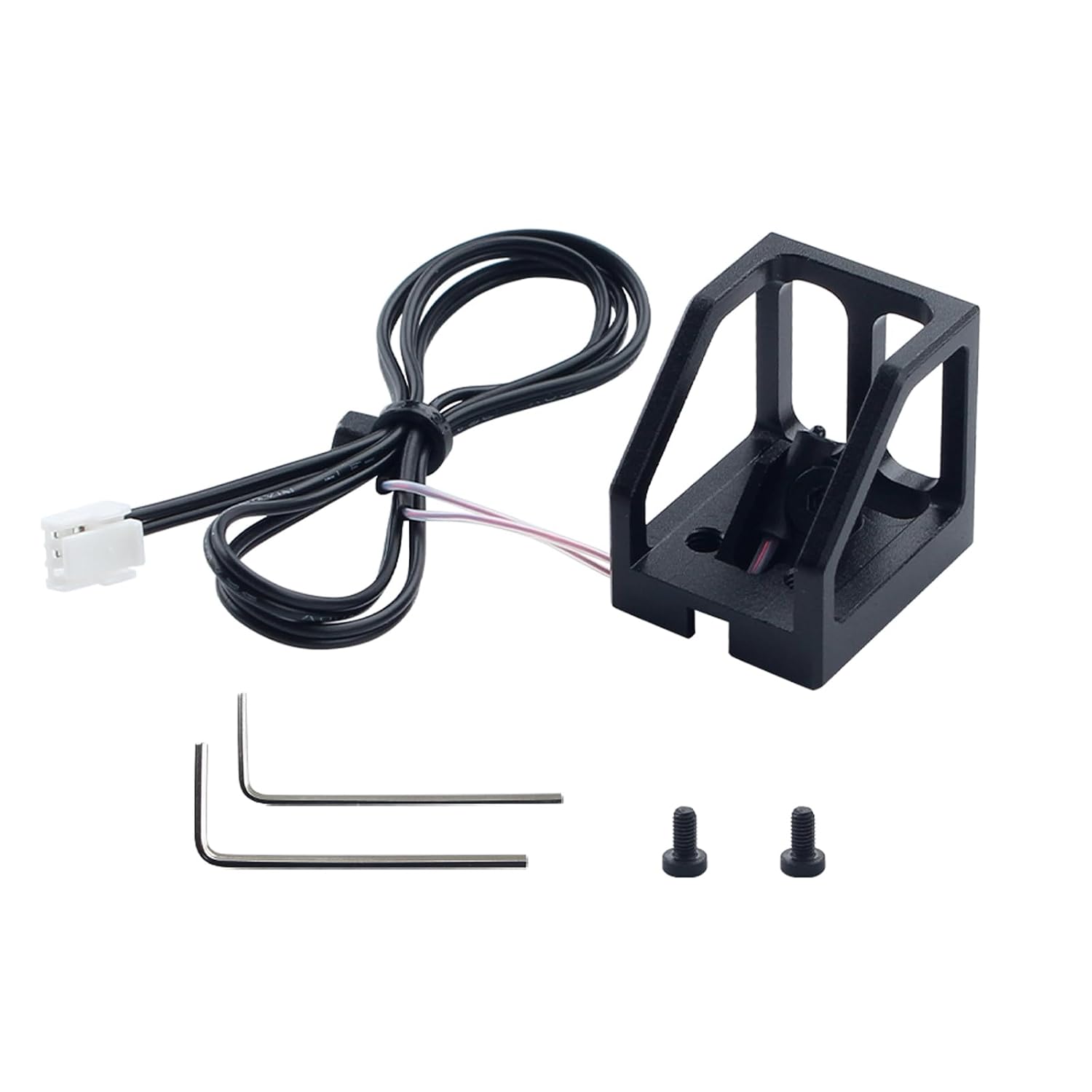


Is the chamber actually hot?
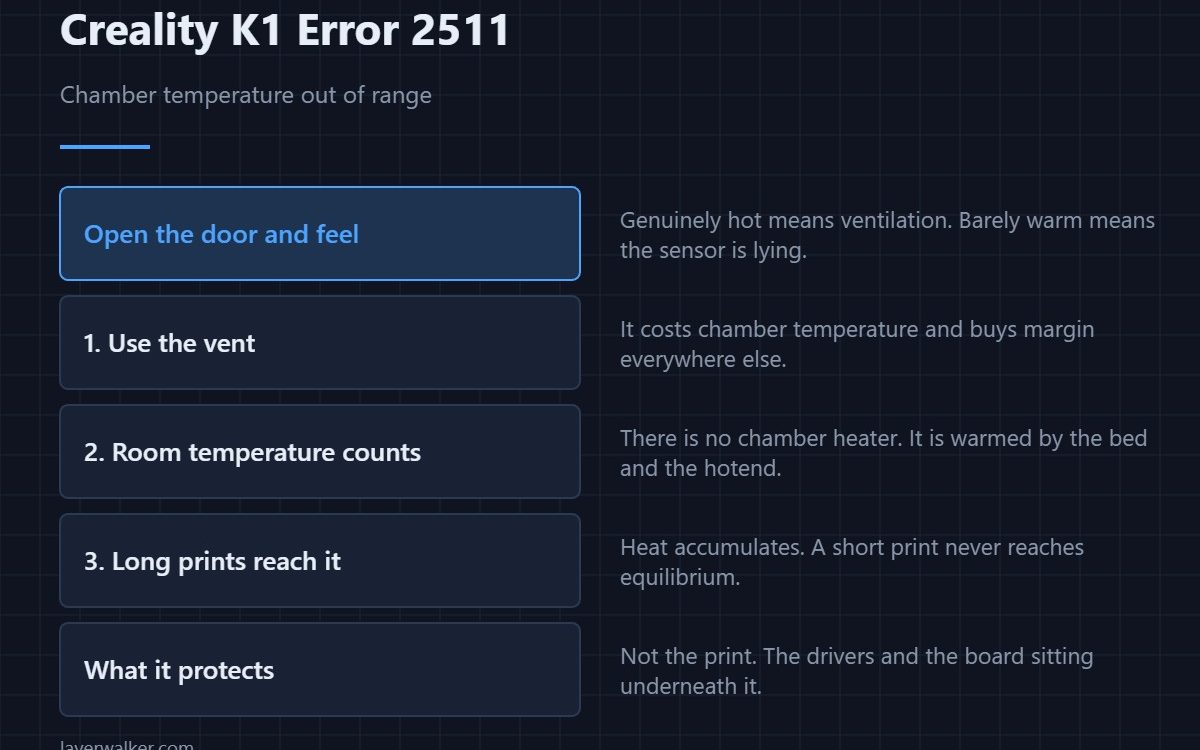
Open the door and feel. A chamber that is uncomfortably hot after a long ABS print with the vent closed is a real reading, and the answer is ventilation. A chamber that is barely warm while the printer insists otherwise is a sensor fault, and opening the door achieves nothing.
When it is genuinely too hot
Three things push it there: printing a high-temperature material with the top vent closed, a room that is already warm, and long unbroken print times with no chance to shed heat. The vent is the first control you have — opening it costs you some chamber temperature and buys margin everywhere else. Active extraction goes further and is covered in exhaust fans.
Why a hot chamber matters below the print
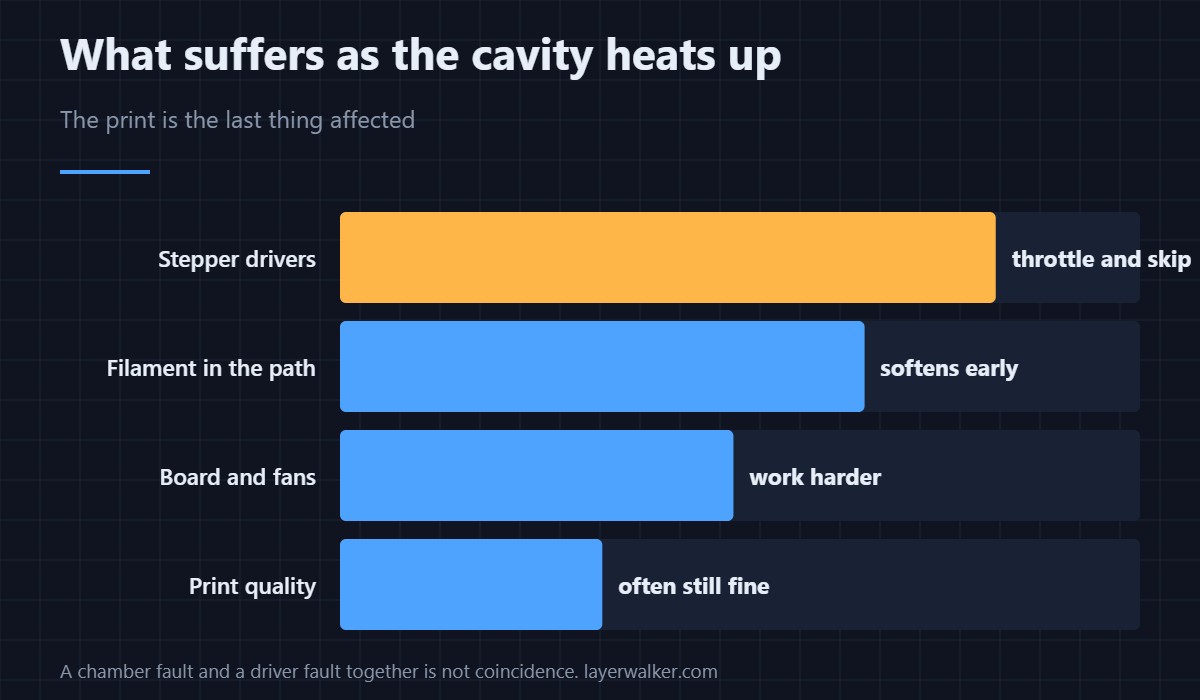
Everything in the base sits under that heat. Drivers throttle, the board fan works harder, and filament waiting in the path softens before it reaches the extruder. A chamber fault and a driver fault arriving together is not a coincidence, and the driver side is 2505.
When it is the sensor
Chamber sensors are small, cheap and exposed to exactly the conditions that age components. A reading that is implausible rather than merely high — wildly above ambient on a cold machine, or not moving at all — means the sensor or its wiring rather than the air. The same open-circuit and short logic applies as on the other sensors, with the bed version at 2510.
Filtration and airflow are the same conversation
If your answer to a hot chamber is to run it open, you lose the containment that made the enclosure worth having for ABS. The compromise most people land on is ventilation plus filtration, which is what HEPA filters for 3D printers covers. Which K1 variant you own changes how much headroom you have, and that is discussed in the K1C review.
Creality K1 Error 2511 FAQ
Should I just leave the door open?
For PLA, that is often the right answer anyway. For ABS and ASA it trades warping for temperature, so use the vent rather than the door.
Does the chamber have its own heater?
No. It is warmed passively by the bed and the hotend, which is why ambient room temperature has such a large effect.
Why does it only happen on long prints?
Because heat accumulates. A short print never reaches equilibrium; a twelve-hour one does, and that is where the ceiling gets tested.
Can I ignore it if the print looks fine?
The print is not what the sensor is protecting. The electronics underneath it are, and they fail later and less visibly.
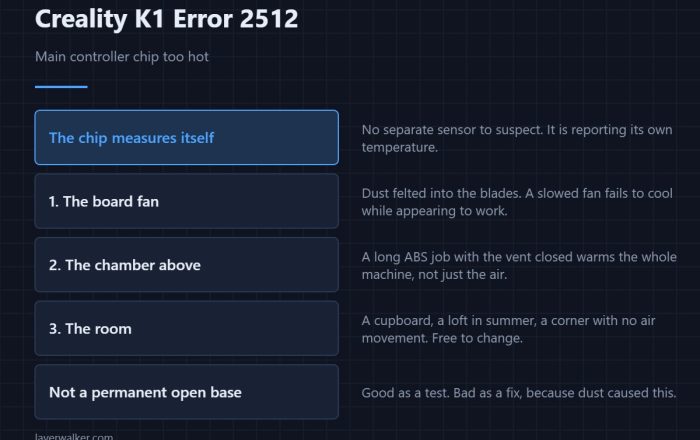
The chamber warms everything below it, including the controller. When the chip flags its own temperature, the code is Creality K1 error 2512 and the board fan is the first thing to check.

LayerWalker
Print defect diagnosis, calibration procedures and parts that actually fit. Corrections welcome through the contact page.