Bambu P1S vs Elegoo Centauri Carbon: Ecosystem or Price
LayerWalker is a participant in the Amazon Services LLC Associates Program. We may earn a commission when you buy through links on our site, at no extra cost to you.
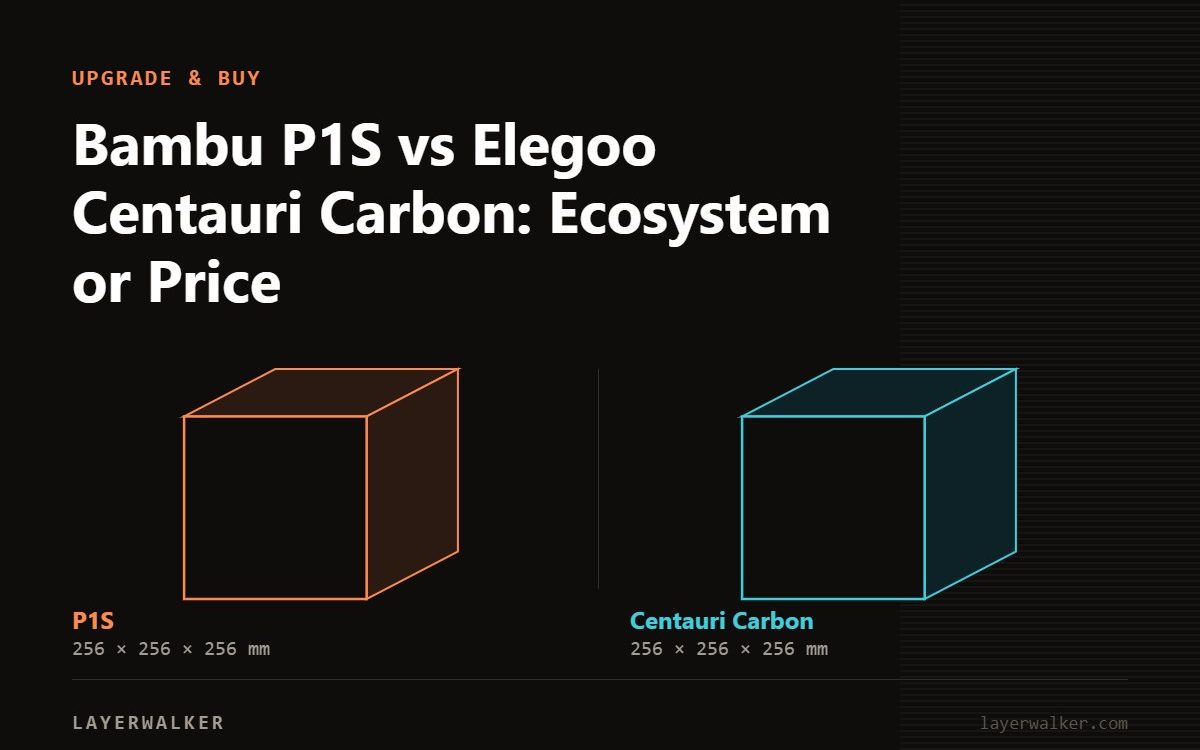
On paper the Centauri Carbon beats the P1S: 320 °C versus 300 °C, 110 °C versus 100 °C bed, hardened nozzle standard, better camera, lower price. The P1S wins on multi-colour with the AMS, on software maturity and on spares. Single-material engineering users should take the Centauri Carbon; multi-colour users should take the P1S Combo, or better, the P2S.
Where to buy


Side by side
| Spec | Bambu P1S | Elegoo Centauri Carbon |
|---|---|---|
| Build volume | 256 × 256 × 256 mm | 256 × 256 × 256 mm |
| Max nozzle temperature | 300 °C | 320 °C |
| Nozzle standard | Stainless | Hardened steel |
| Max bed temperature | 100 °C | 110 °C |
| Speed / acceleration | 500 mm/s / 20000 mm/s² | 500 mm/s / 20000 mm/s² |
| Max flow | Approx. 32 mm³/s | 32 mm³/s |
| Enclosure | Passive, carbon filter | Passive, regulator fan, mineral filter |
| Camera | 720p low frame rate | Chamber camera |
| Multi-material | AMS, up to 16 spools | None (Carbon 2 Combo: filament system) |
| Slicer | Bambu Studio | Elegoo Slicer (OrcaSlicer fork) |
What the spec sheet does not show
- Ecosystem depth. P1S hotends, plates, AMS parts and third-party mods are everywhere. The Centauri Carbon is catching up but a broken part can mean waiting on Elegoo. See Centauri Carbon upgrades.
- Calibration. Both auto-level; Bambu’s flow and resonance calibration is more thorough, so the P1S needs less manual flow tuning.
- Abrasives. The P1S needs a hardened nozzle first; the Centauri Carbon ships with one.
The P2S changes the question
The P2S replaced the P1S with a 1080p camera, tool-less hotend and 110 °C bed, which removes most of the Centauri Carbon’s spec advantages while keeping the AMS. If the budget stretches to the P2S, compare that instead; see P1S vs P2S. If it does not, the Centauri Carbon is the stronger single-material machine and the P1S Combo the stronger multi-colour one.
The units in the box
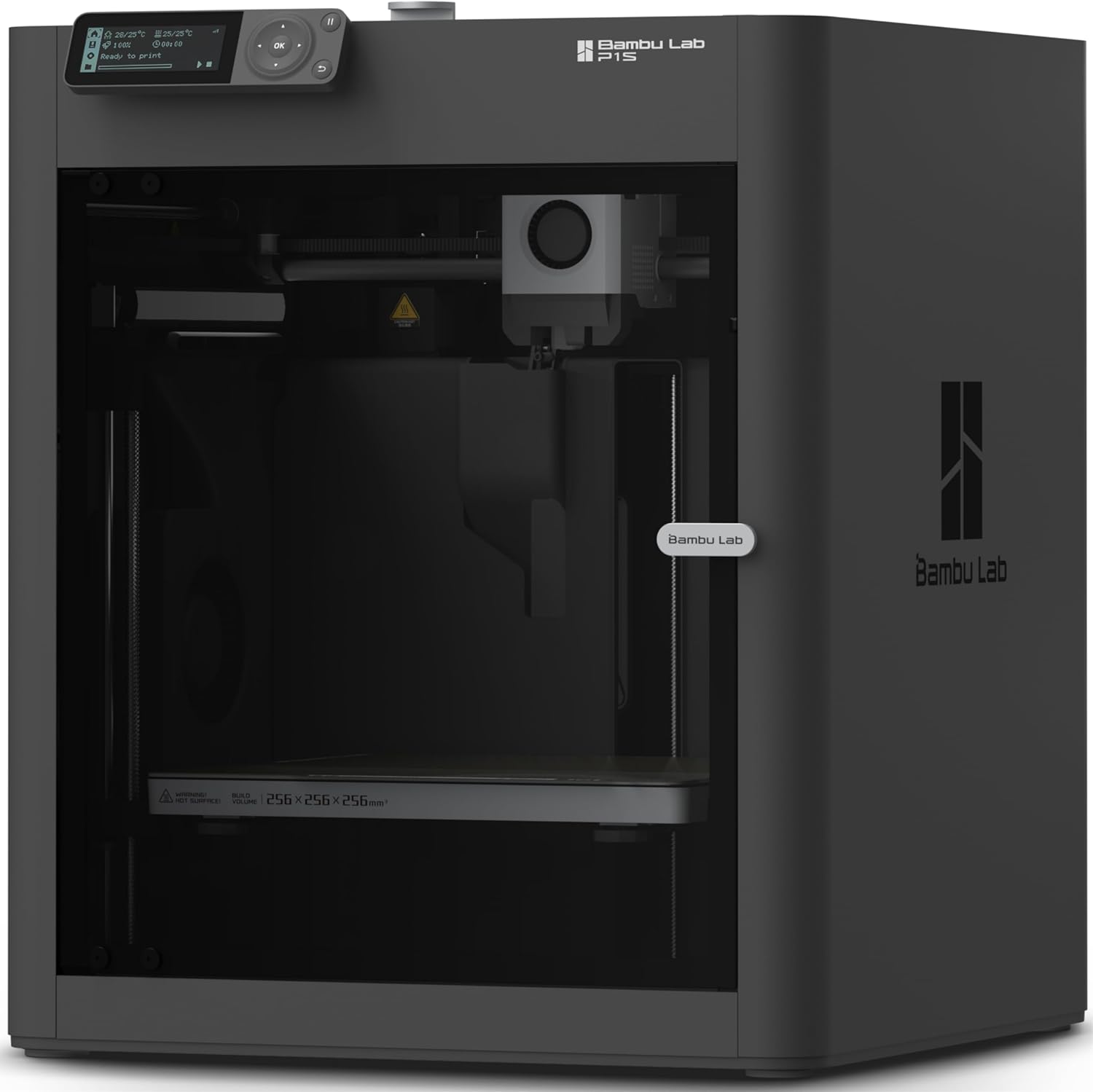
The listings are the P1S alone, the Centauri Carbon and the P1S Combo with AMS.
Bambu P1S vs Elegoo Centauri Carbon FAQ
Can the Centauri Carbon use Bambu Studio?
Not officially; Elegoo Slicer and OrcaSlicer support it.
Do P1S plates fit the Centauri Carbon?
Same size class; verify tab layout.

LayerWalker
Print defect diagnosis, calibration procedures and parts that actually fit. Corrections welcome through the contact page.