3D Printer Resin: Standard, ABS-Like or Water-Washable, and What Each Is For
LayerWalker is a participant in the Amazon Services LLC Associates Program. We may earn a commission when you buy through links on our site, at no extra cost to you.
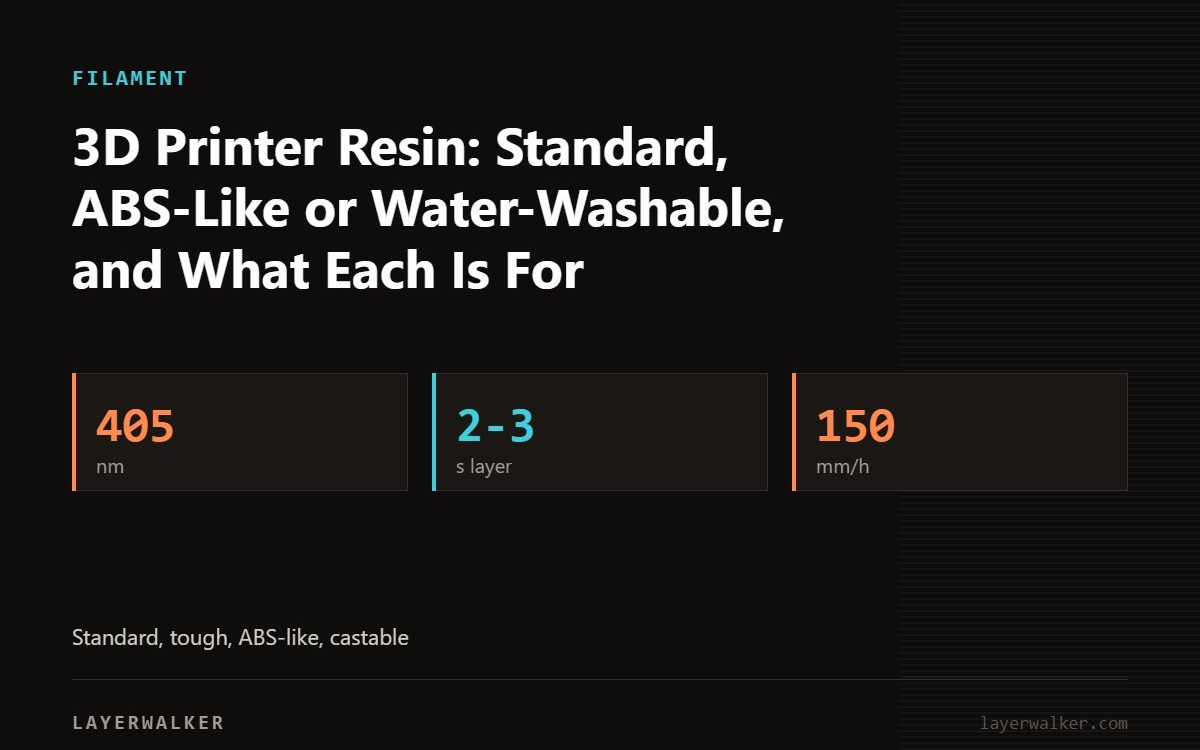
Start with a standard 405 nm resin for miniatures and detail, move to an ABS-like or tough resin the first time a printed part snaps in use, and treat water-washable resin as a convenience that trades some strength and detail for skipping the alcohol wash. All of them need gloves, ventilation and a proper cure.
Resin printing swaps the filament roll for a bottle of photopolymer that a UV LCD hardens layer by layer. The result is detail that no filament printer can match, which is why miniatures, jewellery masters and dental models are resin jobs. The trade is that liquid resin is a skin sensitiser and a mess, uncured parts are brittle, and the material you pour in decides most of the outcome before the slicer does.
Where to buy

ANYCUBIC 3D Printer Resin, 405nm SLA UV-Curing Resin with High Precision and Quick Curing & Excellent Fluidity for LCD 3D Printing (Grey, 1kg)


The three families
- Standard resin. Highest detail, fastest cure, cheapest. Brittle: a thin sword on a miniature snaps if you drop it. This is the right first bottle.
- ABS-like or tough resin. Additives make the cured part flex before it breaks and take screws and snap-fits. Slightly softer detail, a little slower to cure, and it is the right choice for anything functional.
- Water-washable resin. Rinses in tap water instead of isopropyl alcohol. Convenient, but cured parts absorb moisture and go brittle over months, and the rinse water is still contaminated and must not go down the drain uncured.
What to look for on the bottle
- 405 nm wavelength. Every consumer LCD printer uses it; a 385 nm resin will not cure.
- Published exposure settings for your printer. Brands that publish a table for common machines save you a full exposure-calibration print.
- Low odour formulation. Not odour free, but the difference between printing in a spare room and needing an enclosure with a vent.
- Bottle size. One kilogram is about 900 ml and lasts many miniature prints. Buy one bottle of a new resin, not a bundle, until you have dialled it in.
The bottles in the box
Anycubic’s standard resin is the reference point: cheap, well documented on every slicer’s preset list, and predictable. The bundle is the same resin in quantity for when you know it works on your machine. The ABS-Like Resin 2.0 bundle is the tough option for parts that get handled, and it is where to go once a standard print has broken in your hands.
Safety that is not optional
- Nitrile gloves every time you touch liquid resin or an uncured print. Latex does not stop it.
- Ventilate. A window fan or a carbon purifier in a closed enclosure. Never print resin in a bedroom.
- Wash in isopropyl alcohol at 90 % or above, two baths, then cure under UV for the time your resin brand states. Under-cured parts stay tacky and keep off-gassing.
- Cure all waste. Paper towels, failed prints and used alcohol go into sunlight until hard before they go in the bin. Liquid resin is hazardous waste.
Settings that matter most
Bottom layers at 25 to 40 seconds so the raft welds to the plate; normal layers at the brand’s figure, typically 1.5 to 3 seconds on a monochrome screen. Warm the resin to 25 °C in a cold room; cold resin under-cures and fails at the supports. If supports tear the surface or the base spreads like an elephant’s foot, the fix is exposure time, not a different bottle.
When resin is the wrong tool
Large parts, anything that lives outdoors, anything that must not shatter when dropped, and anything a child will handle. Those are filament jobs. Keep the resin printer for the small and the detailed.
Resin for printing FAQ
Can I mix resins?
Same brand and same type, yes, to use up a bottle. Different types only if you re-run exposure calibration.
How long does an opened bottle last?
About a year in the dark at room temperature. Shake it before every print; pigment settles.
Is water-washable resin safe to pour down the sink?
No. Cure the rinse water in the sun until the resin precipitates, filter, and dispose of the solids.

LayerWalker
Print defect diagnosis, calibration procedures and parts that actually fit. Corrections welcome through the contact page.