How Long to Cure Resin Prints: Times by Size, and Why Over-Curing Ruins Them
LayerWalker is a participant in the Amazon Services LLC Associates Program. We may earn a commission when you buy through links on our site, at no extra cost to you.

How long to cure resin prints depends on three things and not on a single number: the size of the part, the resin, and how much UV your curing setup actually puts out. As a starting point, small miniatures need two to four minutes in a turntable station, medium parts five to eight, and large or clear parts around ten with the part turned partway through. Then adjust by result, not by the clock.
Where to buy


Wash properly first, or none of the times apply
Curing sets whatever is on the part, including the film of uncured resin left from printing. Cure a part that has not been washed and you lock a sticky layer into the surface permanently. Wash in isopropyl alcohol for three to five minutes, agitated, then let the part dry completely before any UV reaches it.
Water-washable resin follows the same rule with water instead of alcohol, and it is fussier: it needs longer in the bath and it absorbs a little moisture, which is why parts from it often need a minute or two more under the lamp.

Times by size, and how to tell when it is done
Miniatures and small detail parts: two to four minutes. These have thin sections and a lot of surface area, so they cure fast and over-cure faster.
Medium parts, up to a hand’s width: five to eight minutes, turned halfway if your station has no turntable.
Large parts and anything clear: around ten minutes, turned at least once. Clear resin needs the longest because the light has to travel through the part rather than stop at the surface.
The test is touch and sound, not time. A properly cured part is hard, has no tack at all, and gives a slight click rather than a dull thud when tapped with a fingernail. If it is still slightly sticky anywhere, it needs more; if the surface has gone chalky or the part has yellowed, it has had too much.
Why over-curing is the more expensive mistake
Under-curing is obvious and fixable: the part is tacky, you put it back under the lamp. Over-curing is silent and permanent. The polymer keeps cross-linking past the point where it has the properties you wanted, so the part gets harder and more brittle, thin sections snap instead of flexing, clear parts yellow, and dimensions creep as the resin shrinks slightly.
That is why leaving parts in a station “to be sure”, or on a sunny windowsill for an afternoon, is worse advice than it sounds. Sunlight cures unevenly and endlessly, and the side facing the window ages faster than the side that does not.
What a station buys over a lamp in a box
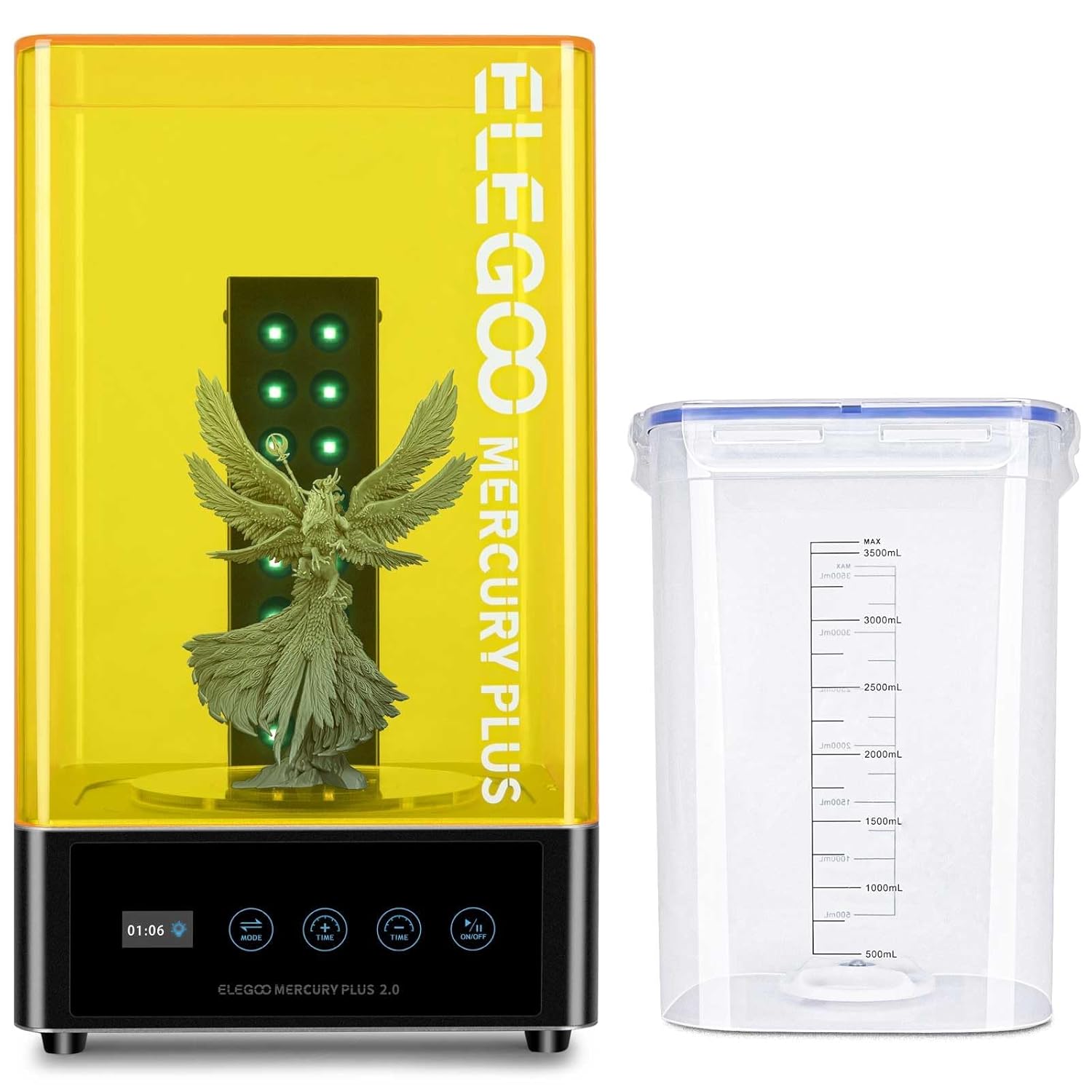
Three things. Even exposure, because the turntable means no face gets twice what another gets. A repeatable time, so your second batch matches your first. And containment, because both the UV and the alcohol fumes stay in the box rather than in the room.
Choose by plate size before anything else. A station that cannot take the plate from your printer means moving wet parts twice, which is exactly the mess the machine was supposed to remove. Our page on wash and cure stations compares the current models, and clear resin covers the one material where curing technique decides the whole result.
How long to cure resin prints FAQ
Can I cure resin prints in sunlight?
You can, but the exposure is uneven and never stops. It is the easiest way to over-cure a part without noticing.
How do I know a part is fully cured?
No tack anywhere, hard to the fingernail, and a slight click rather than a dull thud when tapped.
Does curing time change with resin type?
Yes. Tough and ABS-like resins generally want a little longer; water-washable wants longer still because it has absorbed some moisture.
Should I cure in water?
Submerging a part in water while curing keeps oxygen off the surface and gives a less tacky finish. It works, but it is not necessary with a proper station.
What happens if I cure a part twice?
It carries on cross-linking. Two full cycles will noticeably embrittle a thin part, so cure once and test rather than repeating for safety.

LayerWalker
Print defect diagnosis, calibration procedures and parts that actually fit. Corrections welcome through the contact page.