How to Paint 3D Prints: Primer First, Thin Coats, No Layer Lines
LayerWalker is a participant in the Amazon Services LLC Associates Program. We may earn a commission when you buy through links on our site, at no extra cost to you.
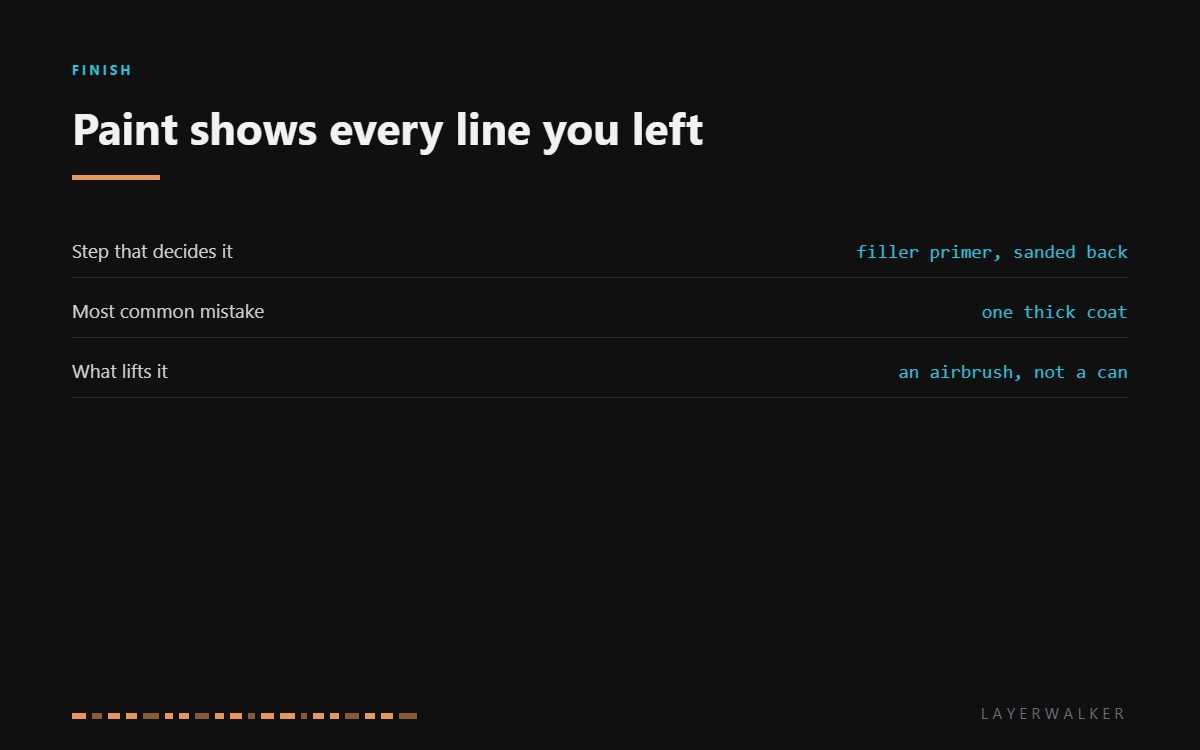
The hard part of how to paint 3D prints is not the paint. It is that paint is a thin, glossy, unforgiving layer that shows every step you skipped underneath it. Sand, prime with a filler primer, sand the primer back, and only then paint. Skip the primer stage and the best paint in the world will sit in the layer lines and point at them.
Where to buy


Prime first, and use the right primer
Ordinary primer is a thin key coat. What a printed part needs is a filler primer, which carries solids that settle into the valleys between layers. Two or three light coats, each one dry before the next, and the surface goes from ridged to merely textured.
Then sand the primer, not the plastic. This is the step almost everyone skips. Wet sand at 600 grit until the high points go matte and the low points stay glossy, which shows you exactly where the lines still are. Re-prime, sand again at 800, and stop when the whole surface is one even sheen. Our page on sanding and priming covers the grit order in detail.
Grey primer is the useful default because it shows defects better than white or black. If the final colour is light, finish with a white primer coat; if it is dark or metallic, black underneath will save you two coats of the expensive paint.
Thin coats, and why the first one looks wrong
The single most common mistake is trying to reach the final colour in one pass. A thick coat pools in the layer valleys, dries slowly, stays soft, and reintroduces the texture you just removed. Three thin coats always beat one thick one, and the first will look patchy and streaky. That is correct. It is a base, not a finish.
Acrylics are the sensible choice for printed parts: they are water-based, they do not attack PLA or PETG, and they clean up without solvents. Enamels give a harder shell but take a day to cure properly and need white spirit for every mistake. Never spray a solvent-heavy paint directly onto bare PLA; without primer between them it can soften the surface.
Brush, rattle can or airbrush
Brush is right for detail and small areas, and for anything you are painting once. A set of acrylics and two good brushes will take you further than people expect, as long as you thin the paint slightly and build it up.
Rattle cans are right for primer and for single-colour base coats on large pieces, especially cosplay armour. They are wasteful on small parts and you have almost no control over the amount that lands.
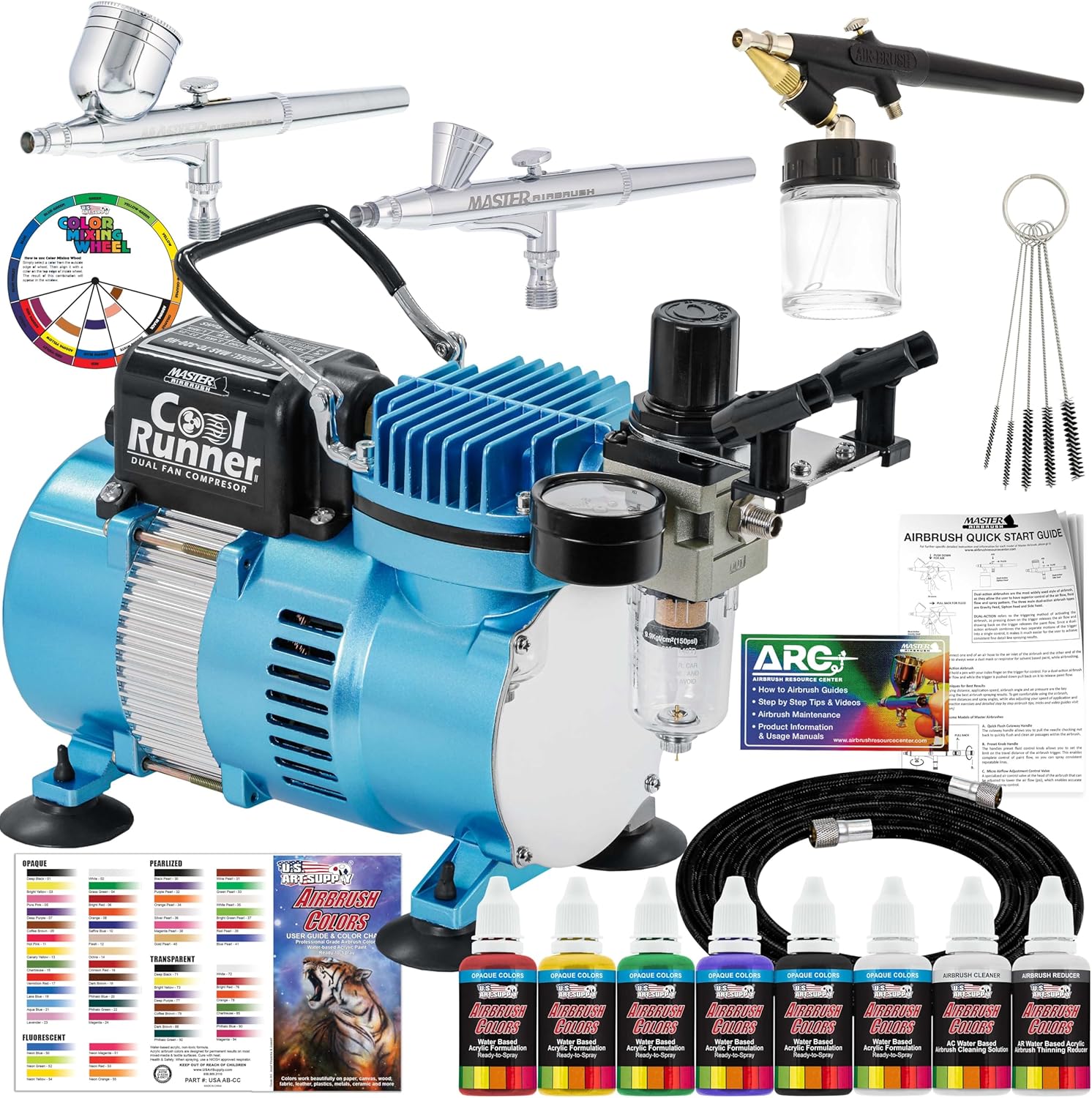
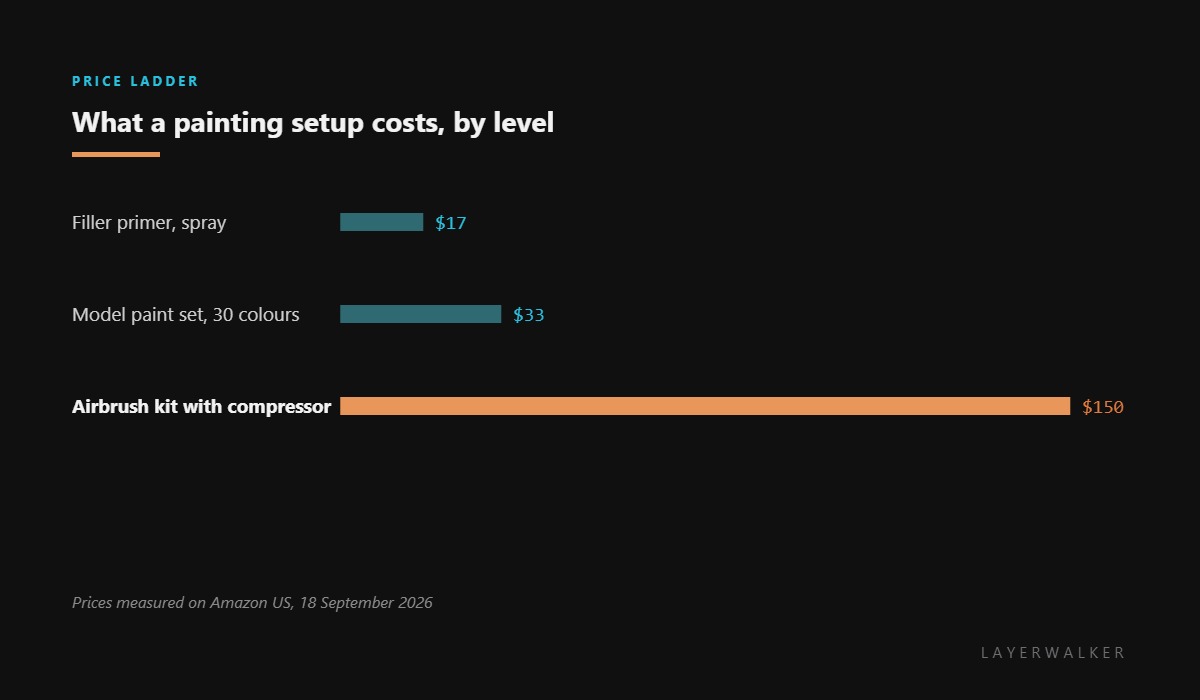
An airbrush is what changes the result. It puts down coats thin enough that texture never builds, it does gradients and shading that a brush cannot, and on miniatures it is the difference between a painted object and a finished model. It is also the one purchase here with a real learning curve: expect an evening of practice on scrap prints before anything good comes off it.
Sealing, and when to stop
Finish with a clear coat. Matt for miniatures and props, satin for most display pieces, gloss only where you want a wet look. The clear coat protects the paint from handling and, just as usefully, evens out the difference in sheen between colours that dried differently.
Let each stage cure properly rather than to the touch. Acrylic feels dry in twenty minutes and is not fully hard for a day, and clear coating over paint that has not cured is how you get a cloudy finish that cannot be rescued.
How to paint 3D prints FAQ
Do I have to sand before painting?
For anything you want to look finished, yes. Filler primer hides small texture but it cannot hide layer lines on its own.
Can I paint PLA without primer?
Acrylic will stick reasonably, but you will see every line and the paint chips more easily. Primer is the cheapest improvement available.
What paint works best on 3D prints?
Water-based acrylics. They are safe on PLA, PETG and resin, and they thin with water for an airbrush.
Is an airbrush worth it for one model?
No. It pays off once you are painting regularly, or once you want gradients a brush cannot give you.
How do I paint resin prints differently?
Wash and cure them fully first. Residual resin stops paint curing, and no amount of primer fixes a tacky surface.

LayerWalker
Print defect diagnosis, calibration procedures and parts that actually fit. Corrections welcome through the contact page.