How to Make Money With a 3D Printer: What Actually Sells
LayerWalker is a participant in the Amazon Services LLC Associates Program. We may earn a commission when you buy through links on our site, at no extra cost to you.
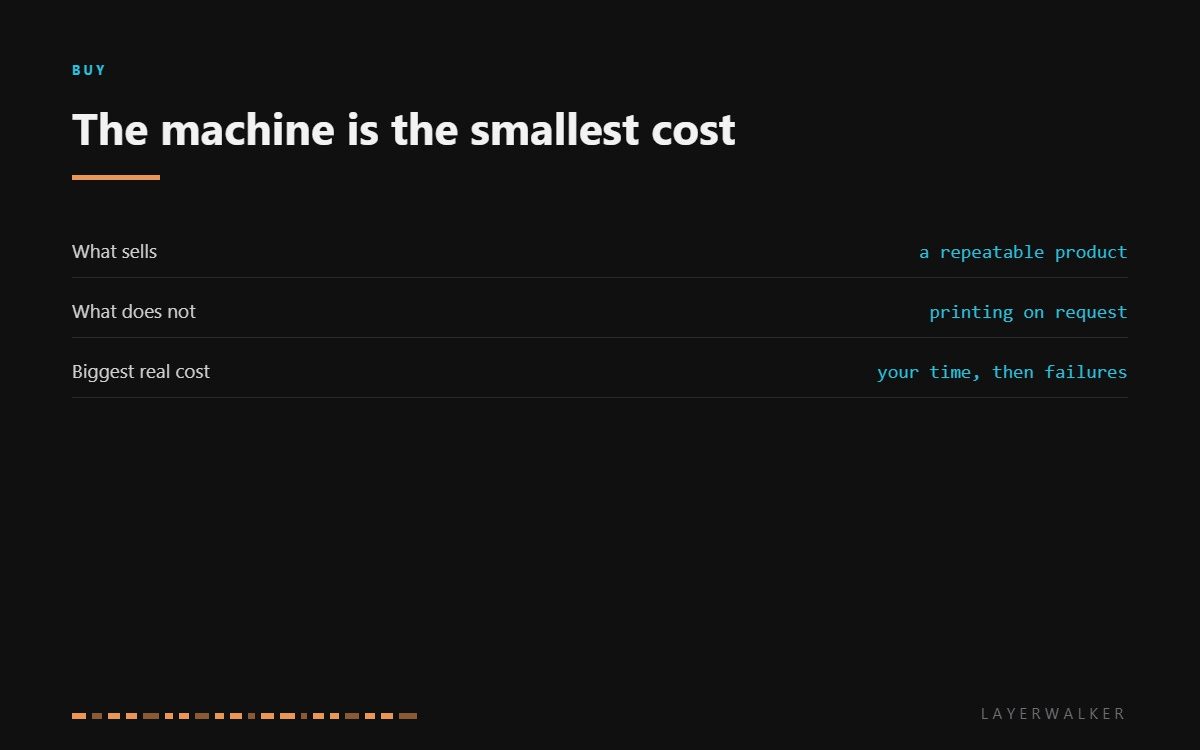
The honest version of how to make money with a 3D printer is this: almost nobody does, and the ones who do are not selling prints. They are selling a product that happens to be printed, to people who never think about the machine. If you are picturing an income from printing whatever strangers send you, stop there. That market pays less than minimum wage once you count failures.
Where to buy


Why printing on request does not pay
Quote a one-off part and you are competing with a hundred people who own the same machine and have not worked out their costs. The price collapses to filament plus a little, which ignores the thing that actually costs you: the twenty minutes of setup, the slicing, the failed first attempt, the packing and the postage. A part that prints in four hours can easily absorb an hour of your attention, and nobody pays for that hour.
The businesses that work invert it. They design one thing, tune it once, and then print it hundreds of times with no decisions left to make. The per-unit labour falls to putting a part in a bag.
The three kinds of product with a real market
Parts that fix something. Replacement knobs, brackets, clips, adapters and jigs for machines people already own. Small, cheap to post, and the buyer is looking for a solution rather than comparing prices. This is the most reliable of the three and the least glamorous.
Things people collect. Miniatures, display models, articulated toys, cosplay parts. Resin is what this market expects, because the detail is visible at arm’s length and FDM layer lines are not. Margins are decent and the competition is about sculpting, not printing.
Short-run production for local businesses. Fixtures, prototypes, signage, packaging inserts. The money here comes from turnaround rather than price: a shop that needs ten of something by Friday will pay properly for it, and you keep the customer.
What the gear really costs
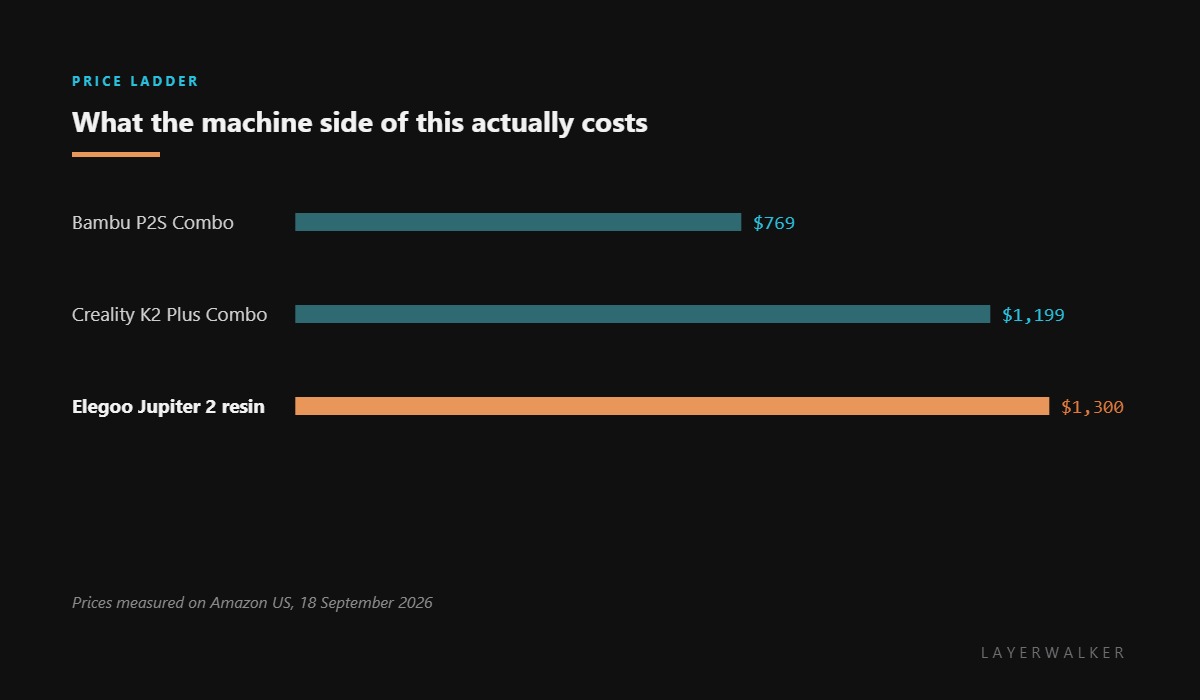
The printer is the cheap part. A machine that can run unattended and reliably, like the P2S Combo, costs less than a month of the time you will spend if you buy something that needs supervision. The dear parts are filament in quantity, failed prints, postage, and the hours you do not bill.
The second machine matters more than the first. One printer means one failed print is a missed deadline. Two of the same machine means you can absorb a failure without telling anybody, and that is the difference between a hobby with invoices and something you can promise to a customer. If the product is miniatures, the second machine is a resin printer rather than another FDM one.
Before you spend anything
Sell ten of something first, printed on whatever you already own. If you cannot sell ten, a better printer will not fix that, and you have learned it for the price of a spool. If you can sell ten easily, you now know exactly which machine to buy, because the product will have told you whether you need speed, size, detail or colour.
Work out your real hourly rate on those ten. Total everything you spent, including the failures, and divide by the hours you actually spent. Most people are shocked, and the shock is what turns a printing hobby into a product business.
How to make money with a 3D printer FAQ
Can one printer pay for itself?
Yes, on a repeatable product. On made-to-order work it usually pays for its filament and nothing else.
Is resin or filament better for selling?
Resin for anything collected and looked at closely. Filament for anything functional, large or posted cheaply.
How many machines do I need to take deadlines?
Two of the same model. The second one is insurance against a failed print, not extra capacity.
What is the most common mistake?
Buying a bigger printer before finding a product. The market decides the machine, never the other way round.
Do I need a business licence?
That depends entirely on where you live and what you sell. Check locally before you take money, not after.

LayerWalker
Print defect diagnosis, calibration procedures and parts that actually fit. Corrections welcome through the contact page.