Printing Building Bricks: Which Printer Makes Blocks That Actually Clutch
LayerWalker is a participant in the Amazon Services LLC Associates Program. We may earn a commission when you buy through links on our site, at no extra cost to you.
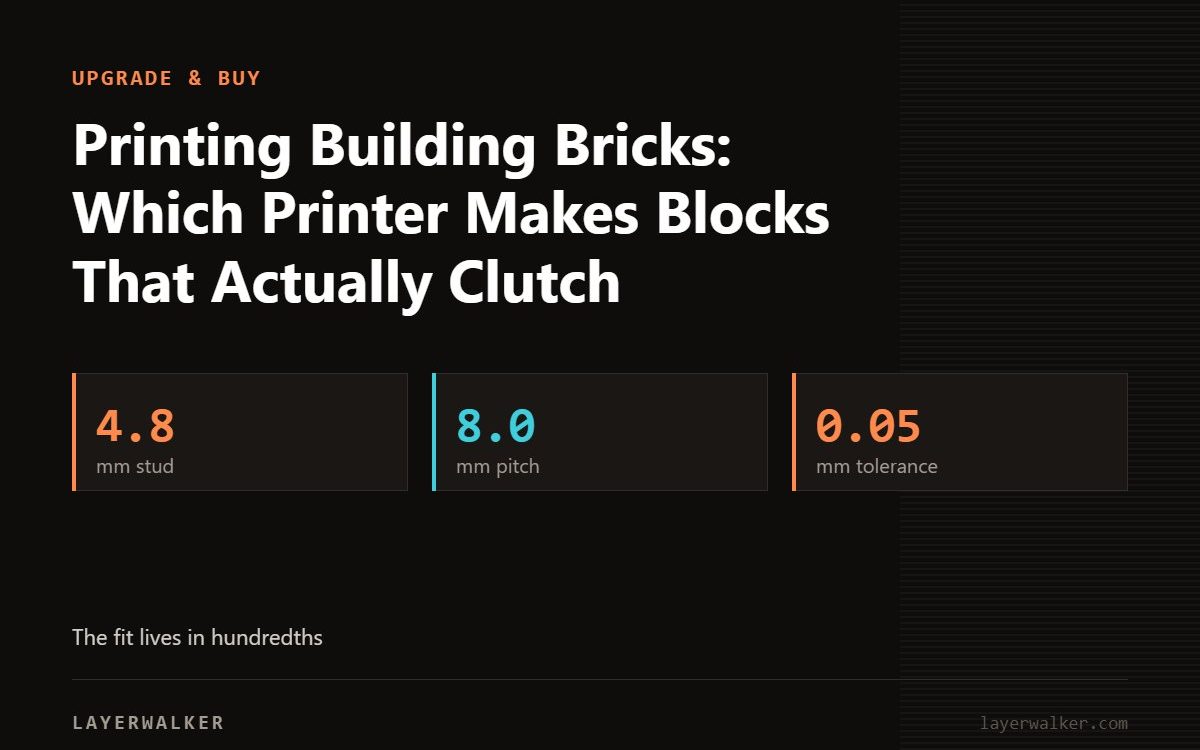
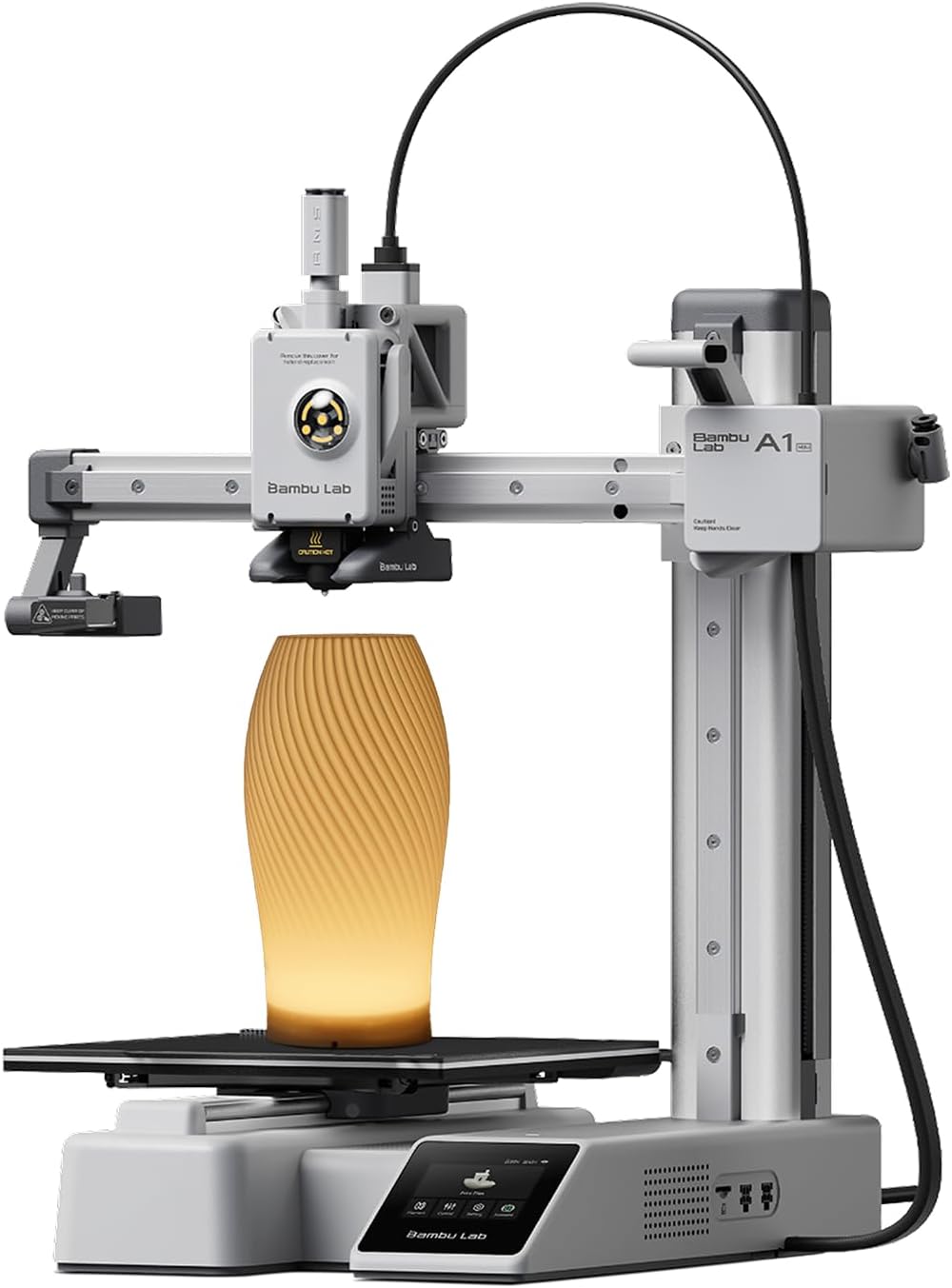
Any well-calibrated FDM printer can make bricks that clutch, but the margin is thin: stud diameter must hold within about 0.05 mm and the first layer must not squish. Auto-calibrating printers like the Bambu A1 mini get there without tuning; budget bedslingers need flow and Z-offset calibration first. Print in PLA or PETG, never resin for a child. Do not print or sell anything using a trademarked brand name or logo.
Nozzles run at 200 °C and beds at 60 °C. Enclosed printers keep fingers out; open printers need an adult present. PLA is the only filament to use around children; keep resin printers out of a child’s room entirely.
Where to buy


What makes a brick clutch
| Feature | Nominal | Tolerance | Printer requirement |
|---|---|---|---|
| Stud diameter | 4.8 mm | About ±0.05 mm | Calibrated flow; see below |
| Stud height | 1.7 mm | ±0.1 mm | Consistent layer height |
| Wall thickness | 1.2 to 1.6 mm | Even | No under-extrusion |
| Pitch | 8.0 mm | ±0.05 mm over length | Correct steps and belt tension |
| First layer | Flat, no flare | Zero elephant foot | Correct Z-offset |
Settings that matter
- Flow calibration. Over-extrusion by 3 percent makes studs too fat to fit. See flow rate.
- Elephant foot compensation. A flared first layer stops the brick seating; see elephant foot.
- Layer height 0.1 mm for stud tops, 0.2 mm elsewhere is fine.
- XY hole and contour compensation in the slicer, tuned once with a test brick.
Which printers
- Bambu A1 mini or A1: automatic flow calibration means printable bricks on the first try.
- Anycubic Kobra X or Creality Ender-3 V3 KE: capable after a flow and Z-offset pass.
- Ender-3 V3 SE: the budget route; expect an afternoon of calibration.
Legal and safety
Brick geometry is not protected; brand names, logos and minifigure designs are. Print your own designs or open-source compatible bricks. Printed bricks are small parts; PLA is the right material and small children should not chew them. See the step-by-step guide.
The units in the box
The listings are the Bambu A1 mini, the Anycubic Kobra X and the Ender-3 V3 SE.
Lego 3D printer FAQ
Resin for bricks?
Resin holds tolerance well but is brittle and not suitable for children’s toys.
Do printed bricks clutch as well as injection-moulded?
Close in PETG with tuned compensation; PLA is a little stiffer and wears.

LayerWalker
Print defect diagnosis, calibration procedures and parts that actually fit. Corrections welcome through the contact page.