3D Printer Lubricant: What Goes on Rails, Screws and Nothing Else
LayerWalker is a participant in the Amazon Services LLC Associates Program. We may earn a commission when you buy through links on our site, at no extra cost to you.
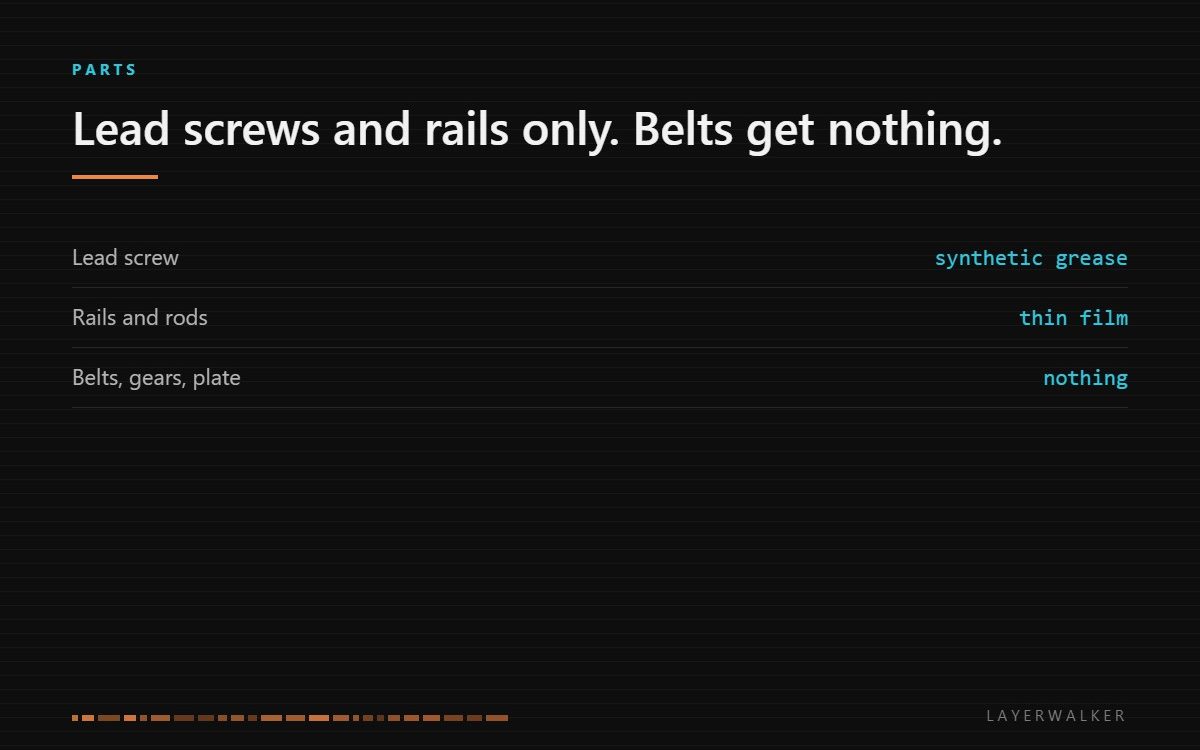
Lead screws want grease. Linear rails and smooth rods want a thin film of the same grease or a light machine oil. Belts, pulleys and the build plate want nothing at all. Most machines need this twice a year, not monthly.
Where to buy


What to look for
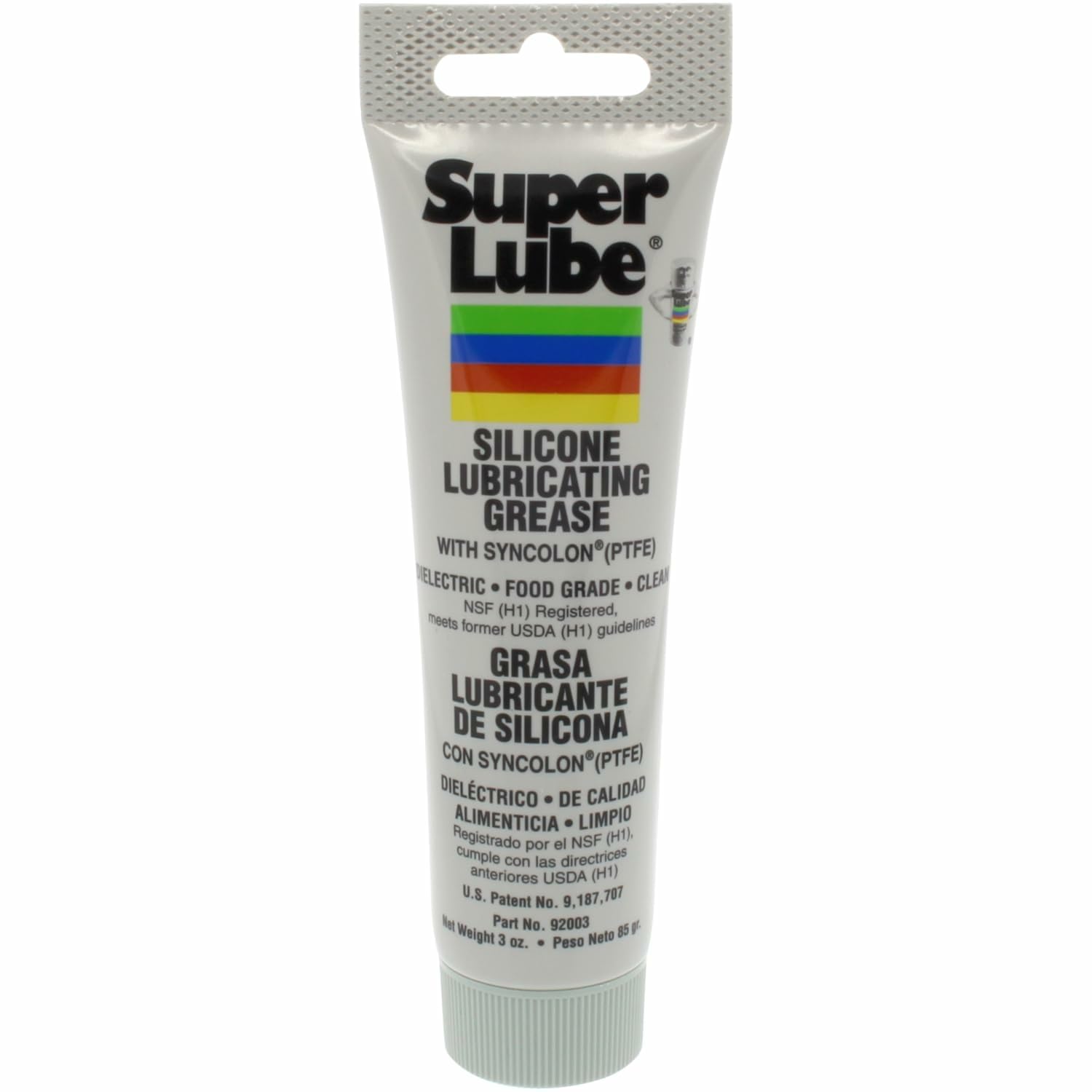
A small tube of purpose-sold printer grease covers every lubricated surface on a desktop machine, and the quantity matters more than the brand: you will use grams per year, so a large tub is waste. The important property is that it is a synthetic grease rather than a petroleum one, because petroleum-based products attack some plastics and several parts near the moving surfaces are printed or moulded.
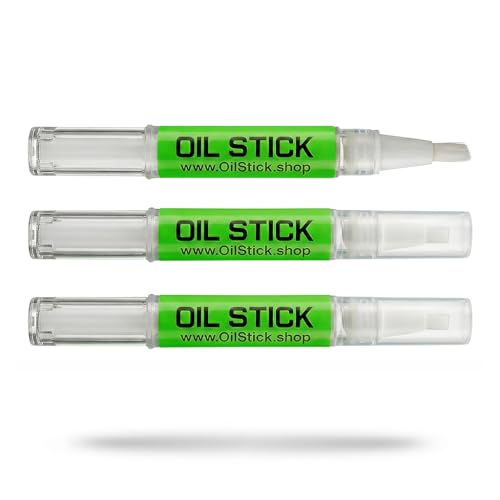
Lithium grease is the traditional answer for lead screws and works well. A PTFE-loaded synthetic grease is the safer general answer because it is plastic-compatible everywhere, which matters on a machine where a screw runs through a printed nut. An applicator brush or pen is a genuine convenience rather than a gimmick: the failure mode of lubricating a printer is applying far too much, and a brush meters it.
What goes where
| Part | Lubricant | Amount |
|---|---|---|
| Lead screw (Z) | Synthetic or lithium grease | Thin film along the thread |
| Linear rail carriage | Same grease, worked into the raceway | Very little; wipe the excess |
| Smooth rod and bushing | Light machine oil or thin grease | A film, not a coating |
| Belt and pulley teeth | Nothing | Grease collects grit and causes slip |
| V-wheels on extrusion | Nothing | They run dry by design; adjust eccentric nuts instead |
| Build plate, nozzle, hotend | Nothing | Contamination, not lubrication |
| Extruder gears | Nothing | Grease traps filament dust into a paste |
Why too much is worse than none
Grease is sticky, and a printer runs in a room with dust and shed filament particles. Excess grease on a rail becomes a grinding paste within weeks, and that paste wears the raceway far faster than running slightly dry would have. The visible symptom is a dark, gritty line along the rail; the audible one is a rail that got noisier a month after being lubricated.
The right quantity is less than looks right. Apply, run the axis through its full travel a few times to distribute it, then wipe the surface with a cloth. What stays in the raceway and the thread valleys is the lubrication; what sits on top is contamination waiting to happen.
Belts are the common mistake
People lubricate a noisy belt. Belt noise is tension or a worn pulley, and grease makes both worse: it lets teeth slip on the pulley, which produces exactly the positional errors the noise was warning about. If an axis has become noisy, our page on belt tension covers the actual causes.
The same logic applies to a screeching extruder. That is filament path resistance or a motor working against a blockage, not a dry gear, and grease in the extruder turns filament dust into a paste that grips the drive teeth. Our stepper motor page covers telling mechanical drag from electrical faults.
How often
Twice a year is enough for a hobby machine, or when an axis starts sounding different. There is no benefit to a schedule tighter than that, and each application adds contamination risk. A machine that prints daily for hours is worth checking quarterly; one that prints occasionally can go a year.
Clean before you lubricate. Wiping the old grease and the dust it collected off a lead screw with a dry cloth before applying new grease is most of the value of the job, and skipping it means you are mixing fresh grease into the abrasive paste you were trying to remove. Our lead screw page covers the Z axis specifically, where this matters most.
FAQ
Can I use WD-40? No. It is a water displacer and solvent, not a lubricant, and it strips what is already there.
Is white lithium grease safe on printed parts? Generally yes, but a PTFE synthetic is the safer default around plastics.
My Z axis clicks. Is that lubrication? Possibly, but check the coupler grub screws first. Clicking is usually a fastener.
Should I grease the rails on a new printer? Check them. Many ship with adequate factory grease and adding more just attracts dust.

LayerWalker
Print defect diagnosis, calibration procedures and parts that actually fit. Corrections welcome through the contact page.