3D Printers for Home Use: Noise, Fumes, Safety and the Machines That Fit a House
Short answer At home the printer competes with people for air, quiet and space. Print PLA and PETG, which emit least; ABS…
Which printer, which upgrade, and whether it is worth it: one-to-one comparisons and narrow buying questions. Never a generic best-of list.
Short answer At home the printer competes with people for air, quiet and space. Print PLA and PETG, which emit least; ABS…
Short answer The right hobbyist printer depends on what the hobby consumes. Tabletop gamers want a resin printer for figures and a…
Short answer A 3D printer is worth it if you have a recurring reason to make physical objects: repairs and replacement parts,…
Short answer Answer five questions in order. How big are your parts? Which filaments, honestly? Do you want multi-colour? How much do…
Short answer A “kit” means anything from an Ender that needs six bolts to a Voron that needs thirty hours and a…
Short answer “Auto levelling” now means two different things. Probe-based systems (BLTouch, CR Touch, inductive) measure the bed with a sensor next…
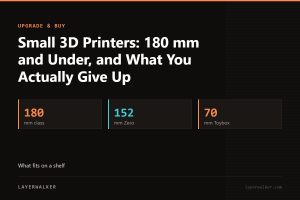
Short answer “Small” means a bed of 180 mm or less and a footprint that fits a shelf. The Bambu A1 mini…
Short answer Stepper motors went quiet a decade ago with silent drivers; today the noise is fans: part cooling, hotend, chamber and…
Short answer The biggest printer a consumer can buy new is the Elegoo OrangeStorm Giga at 800 × 800 × 1000 mm;…
Short answer Armour is the largest, lightest thing most people ever print, and every seam is an hour of filling and sanding.…