Nylon Filament: PA6, PA12 or Carbon-Fibre Nylon, and Which Spool to Buy First
LayerWalker is a participant in the Amazon Services LLC Associates Program. We may earn a commission when you buy through links on our site, at no extra cost to you.
Buy a carbon-fibre nylon (PA6-CF or PA12-CF) as your first nylon: the fibres stop the warping that makes unfilled nylon hard, and the part comes out stiff and flat. Buy unfilled PA6 or PA12 when you need maximum toughness and wear resistance, such as gears, and can enclose the printer. Both need a dryer and a hotend that holds 260 °C.
Nylon spools split into two worlds. Unfilled nylon is pure polyamide: the toughest, most wear-resistant thing you can print at home, and also the most hygroscopic and the most prone to lifting off the bed. Fibre-filled nylon adds 15 to 20 % chopped carbon or glass fibre, which stiffens the part, kills most of the warp and gives a matte, professional finish, at the cost of some toughness and a worn brass nozzle. Most people who think they want nylon actually want the filled kind.
Where to buy


Nylon Filament Black PA6 Nylon 6+66 3D Printer 1.75mm Polyamide 1KG

Polymaker Fiberon PA6-CF20 Carbon Fiber Nylon Filament 1.75mm, Black, 0.5kg
The grades
- PA6 and PA6/66 blends. Highest strength and wear resistance, highest water uptake, most warp. Gears, bushings, snap fits that get abused.
- PA12. Less water uptake and less warp than PA6, slightly softer. The easier unfilled nylon and the better choice for a first unfilled spool.
- PA6-CF and PA12-CF. Fibre-filled. Stiff, flat, matte, dimensionally stable. Need a hardened nozzle. The everyday engineering filament on any printer that can hold 270 °C.
What to look for on the spool
- Dried and vacuum packed with a fresh desiccant. Nylon arrives wet otherwise, and wet nylon prints white, foamy and weak.
- Fibre percentage for CF grades. 15 to 20 % is the sweet spot; more is stiffer but more brittle and more abrasive.
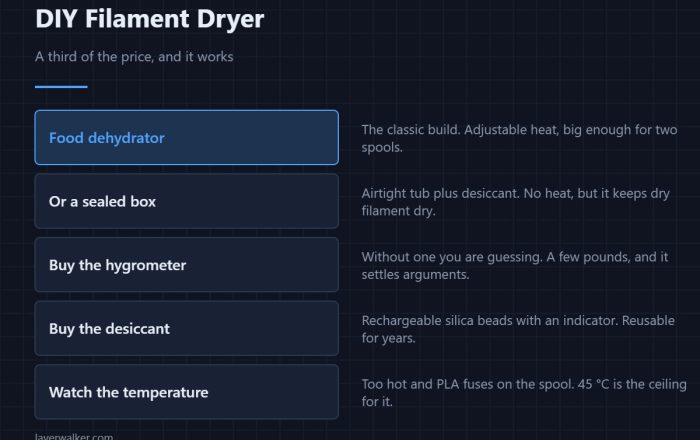
- Stated drying temperature and time. Serious nylon makers print it on the label; it is usually 80 °C for 8 to 12 hours.
- Spool size. Many CF nylons ship in 500 g spools because you use less by volume and a smaller spool spends less time absorbing water.
The spools in the box
Overture’s nylon is an unfilled PA with a wide printing window and tight tolerance, the fair first unfilled spool. The CHCKX PA6 and 6/66 blend is the gear-grade tough option. Polymaker’s Fiberon PA6-CF20 is the carbon-fibre nylon at 20 % fibre: stiff, low-warp, and the one to buy if the goal is a working part this week rather than an exercise in taming nylon.
Settings that work
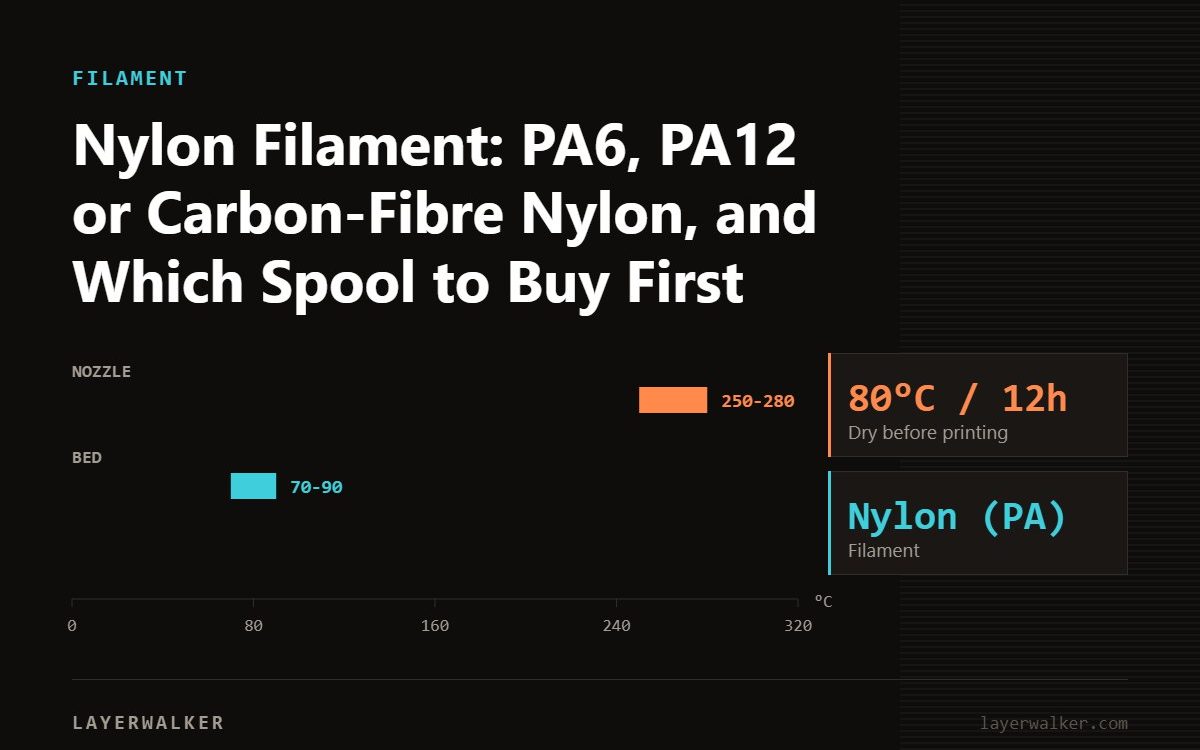
- Dry it: 80 °C for 8 to 12 hours, then print from the dryer. Nylon absorbs meaningful water in two hours of open air. The drying guide covers dryers that reach 80 °C.
- Nozzle 250 to 270 °C for unfilled, 260 to 290 °C for CF grades, on an all-metal or high-temperature hotend.
- Bed 70 to 90 °C on Garolite or PEI with a glue-stick layer; brim on anything flat.
- Fan 0 to 20 %; enclosure or dead-still room for unfilled grades.
- CF grades on a hardened steel nozzle, 0.4 or 0.6 mm; brass wears out in one spool.
When nylon is the wrong choice
Tight-tolerance parts measured straight off the bed: nylon swells slightly as it takes on water after printing. Parts that could be PETG: PETG is easier and needs no dryer feed. Anything on a printer that cannot hold 260 °C.
Nylon filament FAQ
Is CF nylon stronger than unfilled nylon?
Stiffer and more dimensionally stable, yes. More impact-tough, no; unfilled nylon absorbs shock better.
Can I print nylon without an enclosure?
CF grades, often, in a still room. Unfilled grades, rarely without lifting.
Why do my nylon parts look white and rough?
Water. Dry longer and feed from the dryer.

LayerWalker
Print defect diagnosis, calibration procedures and parts that actually fit. Corrections welcome through the contact page.