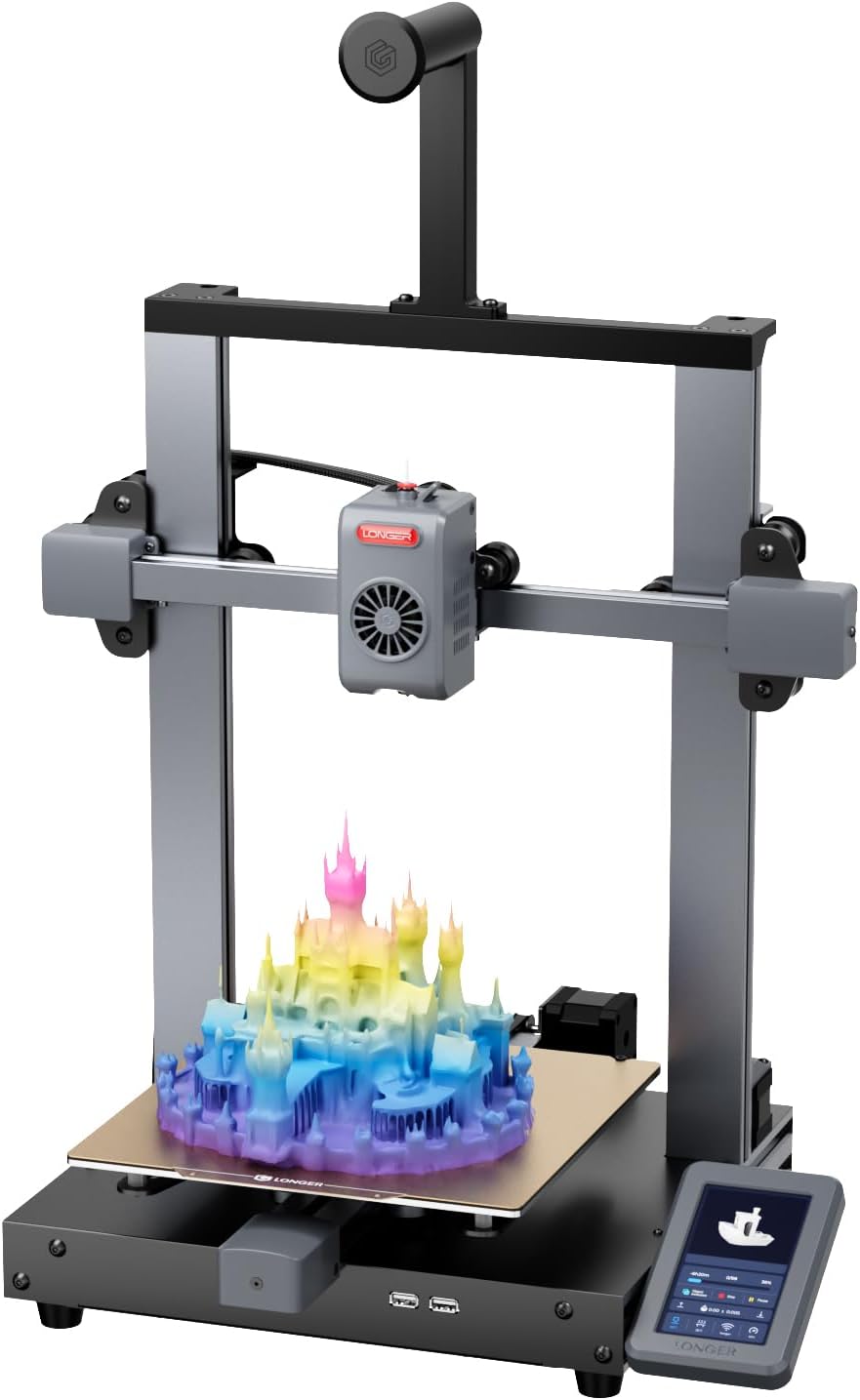
LONGER LK10 and LK10 Plus: Direct Drive CoreXY on a Budget
LayerWalker is a participant in the Amazon Services LLC Associates Program. We may earn a commission when you buy through links on our site, at no extra cost to you.
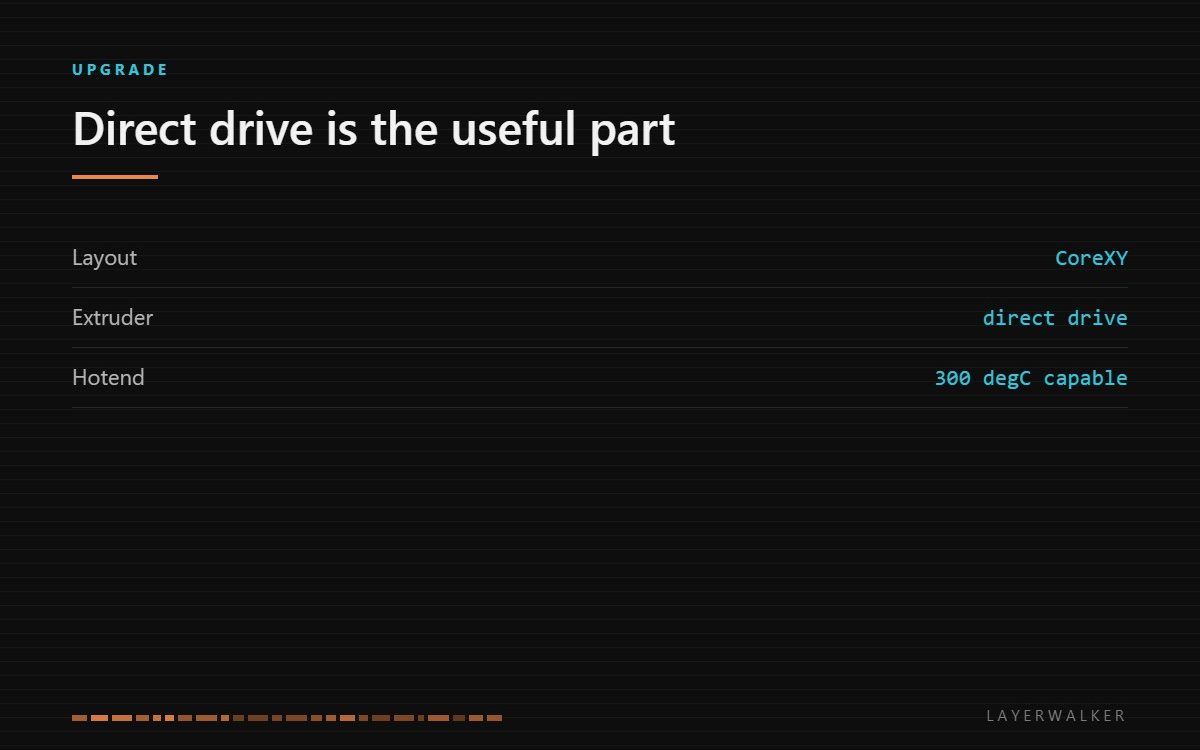
A budget CoreXY with a direct drive extruder and a hotend that reaches 300 degC. The direct drive is the feature worth paying attention to, because it is what makes flexible filament practical on a machine at this price.
Where to buy


Why direct drive matters here
On a Bowden machine the extruder pushes filament down a metre of tube before it reaches the nozzle. That works for rigid materials and fights you with flexible ones, because TPU compresses in the tube instead of advancing. Direct drive puts the gears on the toolhead, millimetres from the melt zone, which removes the problem.
It also shortens retraction dramatically, which makes stringing easier to tune. Our comparison of direct drive and Bowden covers the trade in both directions, because direct drive adds mass to the moving head and that is not free.
If flexible filament is a reason you are shopping, read printing TPU as well; the extruder is necessary but the settings matter as much.
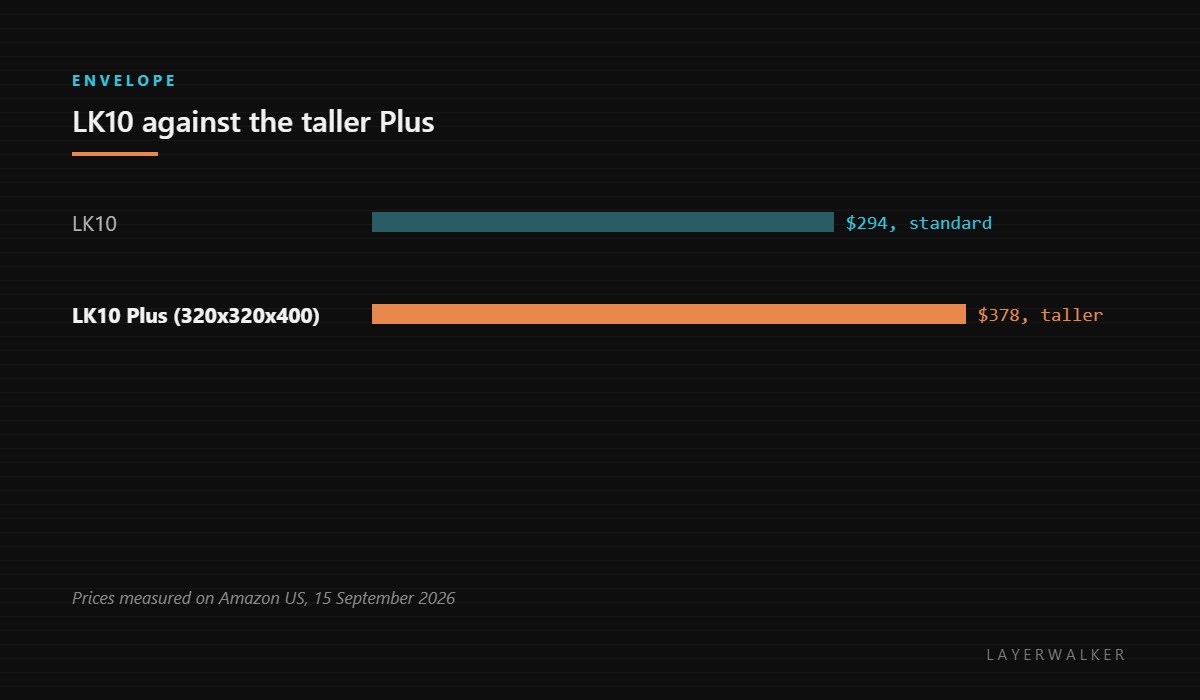
LK10 against LK10 Plus
Same concept, more Z height on the Plus along with a wider bed. If the parts you print are tall rather than large in footprint, that is a cheaper route to the size than stepping up a class, and tall parts are also where CoreXY holds its advantage over a bed slinger most clearly.
If the parts are wide rather than tall, think carefully: bed flatness gets harder as plates grow, and a flat 320 mm plate beats a dished 400 mm one on every print.
What to check at this price
The hotend temperature ceiling tells you the material range. 300 degC covers PETG, ABS and ASA comfortably and puts nylon within reach if you can keep the chamber warm; it does not reach the engineering materials that need 400.
Then check whether the frame is enclosed or open. An open frame at this size is a PLA and PETG machine in practice whatever the hotend can do, because warping is an air problem rather than a nozzle problem.
FAQ
Is direct drive always better? No. It adds mass to the toolhead, which costs a little speed. For flexibles it is decisive.
Does 300 degC mean it can print nylon? The nozzle can. Whether the part survives depends on chamber heat and on drying the filament.
Is the Plus worth the difference? If you need the height, yes. If you do not, the shorter machine is stiffer.
Can it print TPU well? Direct drive makes it possible. Slow speeds and minimal retraction make it good.

LayerWalker
Print defect diagnosis, calibration procedures and parts that actually fit. Corrections welcome through the contact page.