Anycubic Photon Mono M7 Max: A 13.6-Inch Resin Plate, and the Pixel Trade
LayerWalker is a participant in the Amazon Services LLC Associates Program. We may earn a commission when you buy through links on our site, at no extra cost to you.
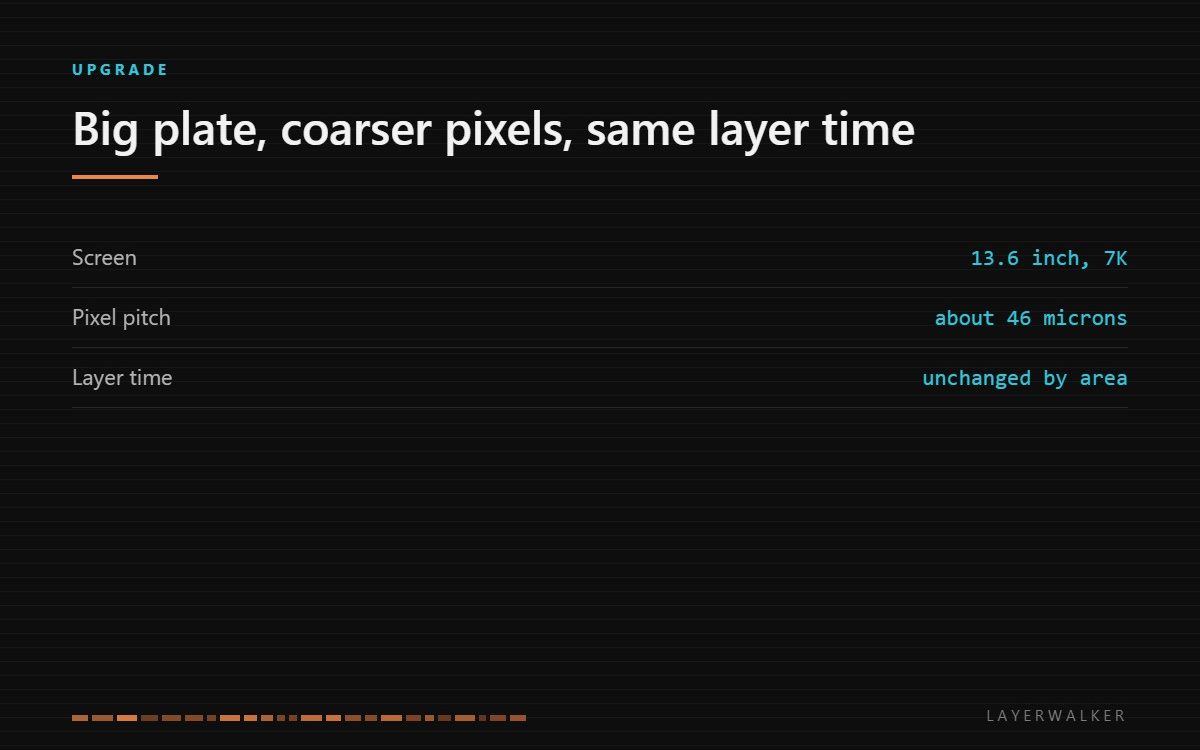
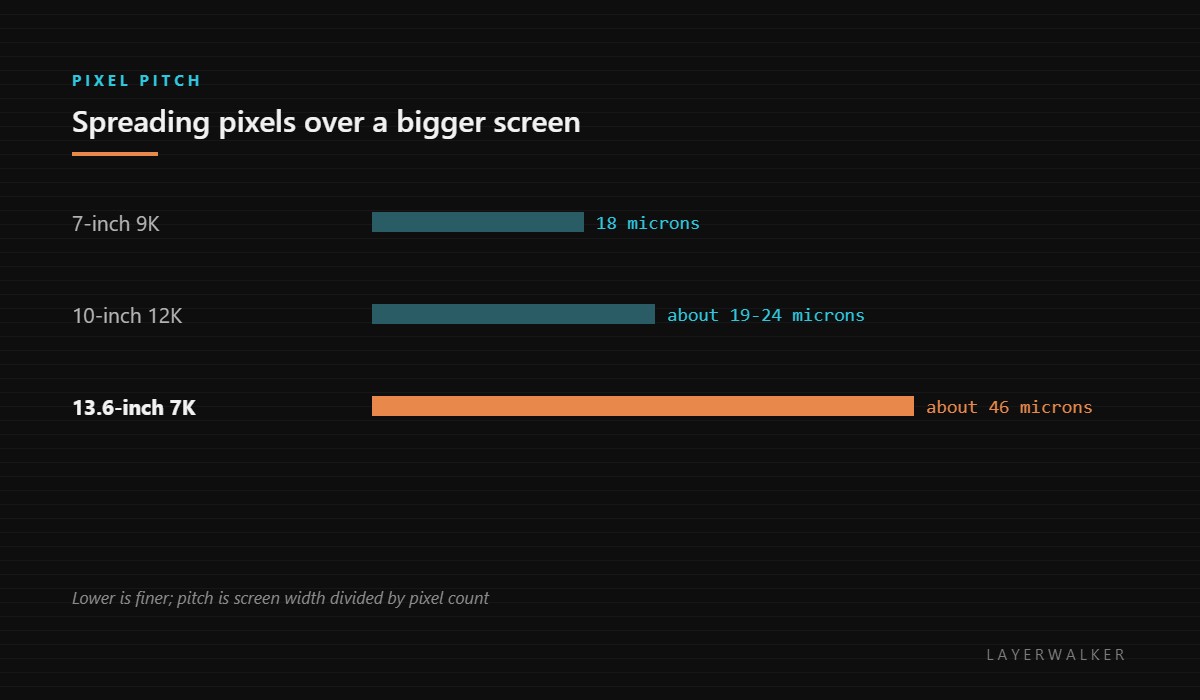
The M7 Max buys plate area, not detail. Spreading a 7K panel across 13.6 inches lands near 46 micron pixels, which is coarser than a 7-inch 9K machine costing a quarter as much. Buy it for size or for batch throughput, not for fine features.
Where to buy


The pixel arithmetic
Resolution on an MSLA machine is screen width divided by pixel count, and the K number on its own tells you nothing. A 7-inch 9K panel works out near 18 microns. Put a 7K panel across 13.6 inches and the same arithmetic gives roughly 46 microns. That is a visible difference on small features, and it is the single most important thing to understand before buying a large resin printer.
Our page on reading an MSLA specification works through that calculation properly, because manufacturers quote the number that flatters the machine.
Who the big plate suits
The genuine argument for a large resin printer is that an MSLA layer cures in one exposure regardless of how much of the plate is covered. Filling a large plate costs the same time as printing one part on it. For anyone producing batches, that is the whole economic case and it is a strong one.
The second argument is parts that simply do not fit: helmets, busts, large terrain. There the coarser pitch matters less anyway, because a 300 mm object is not judged on 40 micron features.
Where it is the wrong buy is single small detailed models. A miniature printer with a 7-inch screen gives finer detail for far less money, and our resin printer size guide lays out the classes.
What scales with the plate
Resin volume in the vat, which is money sitting in the machine. Failure cost, because a failed large print wastes all of it. Film replacement cost, because the tank film is larger. And the wash and cure station, which has to be big enough for what you printed or the workflow stops at the last step.
Budget for the bench, not just the printer. That is the most common way large resin purchases disappoint, and our large-format resin page covers it.
FAQ
Is 7K worse than 12K? Not on its own. Divide by screen width; that number is what you see.
Does a full plate print slower? No. Each layer is one exposure, so time tracks height only.
Can it print miniatures? It can, but a smaller machine prints them better and cheaper.
What is the hidden cost? Resin volume, film size and the wash and cure station you will need to match.

LayerWalker
Print defect diagnosis, calibration procedures and parts that actually fit. Corrections welcome through the contact page.