Inland Filament: Micro Center’s Own Label, and What It Is Good For
LayerWalker is a participant in the Amazon Services LLC Associates Program. We may earn a commission when you buy through links on our site, at no extra cost to you.
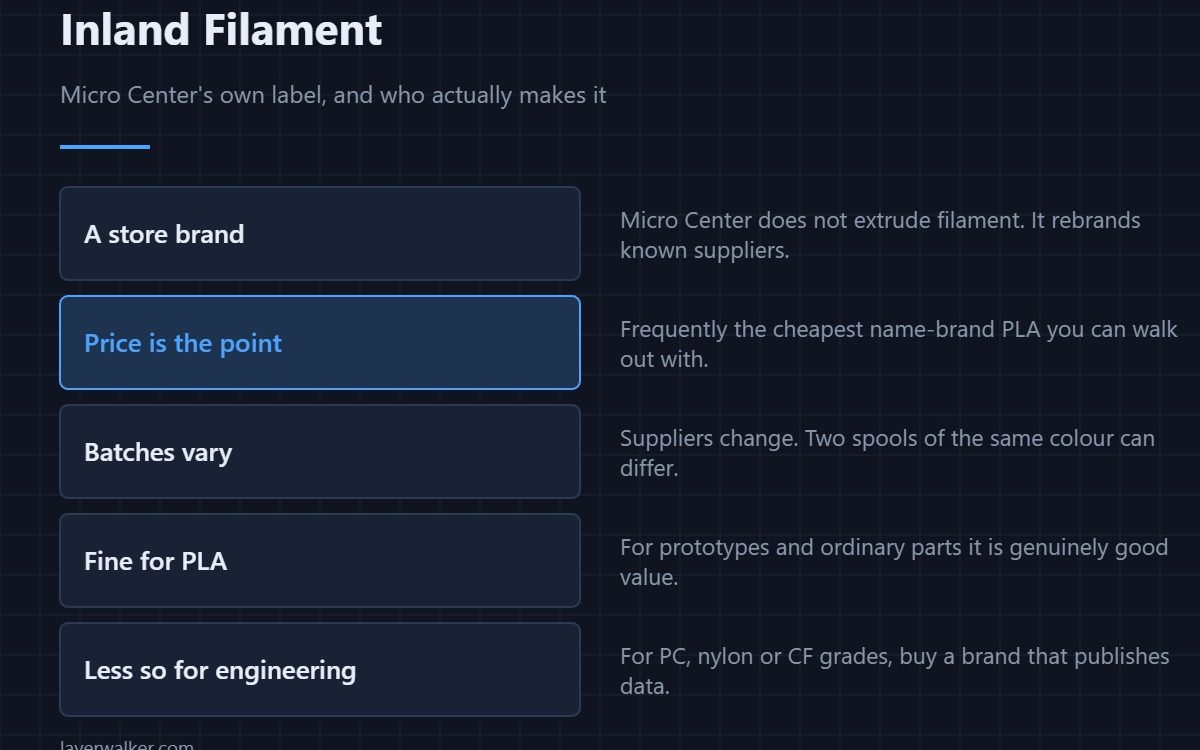
Inland filament is Micro Center’s store brand. Micro Center does not make filament — it rebrands spools from established suppliers, which is why quality is generally good and why it varies between batches when the supplier changes. For PLA and PETG at prototype prices it is one of the best-value options available. For engineering grades, buy a brand that publishes a datasheet.
Store brands in this industry are not the same as store brands in a supermarket. The filament extrusion business has a handful of large manufacturers and a great many labels, and a house brand is often the same spool with a different sticker at a lower margin.
Where to buy


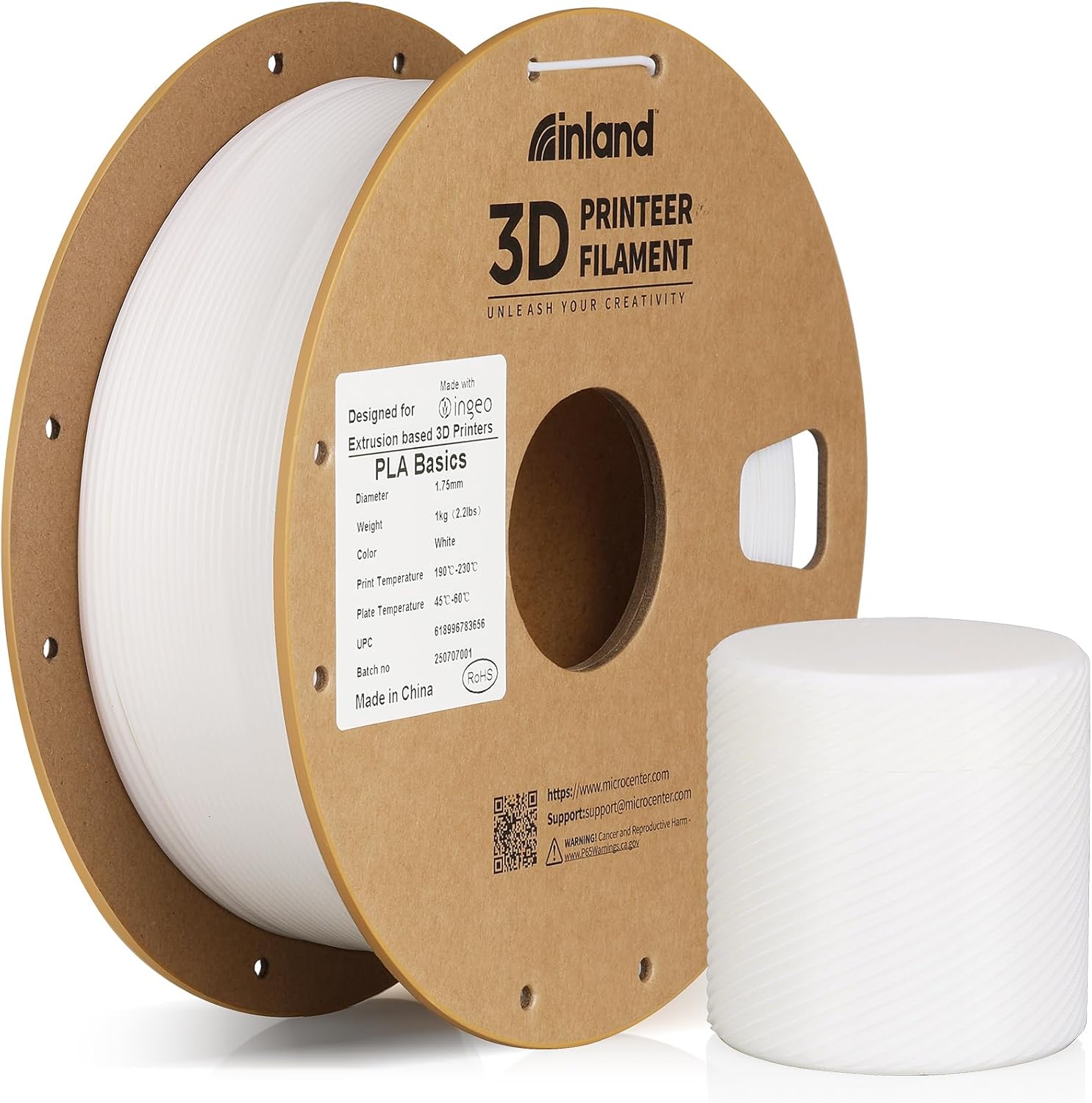
What you get
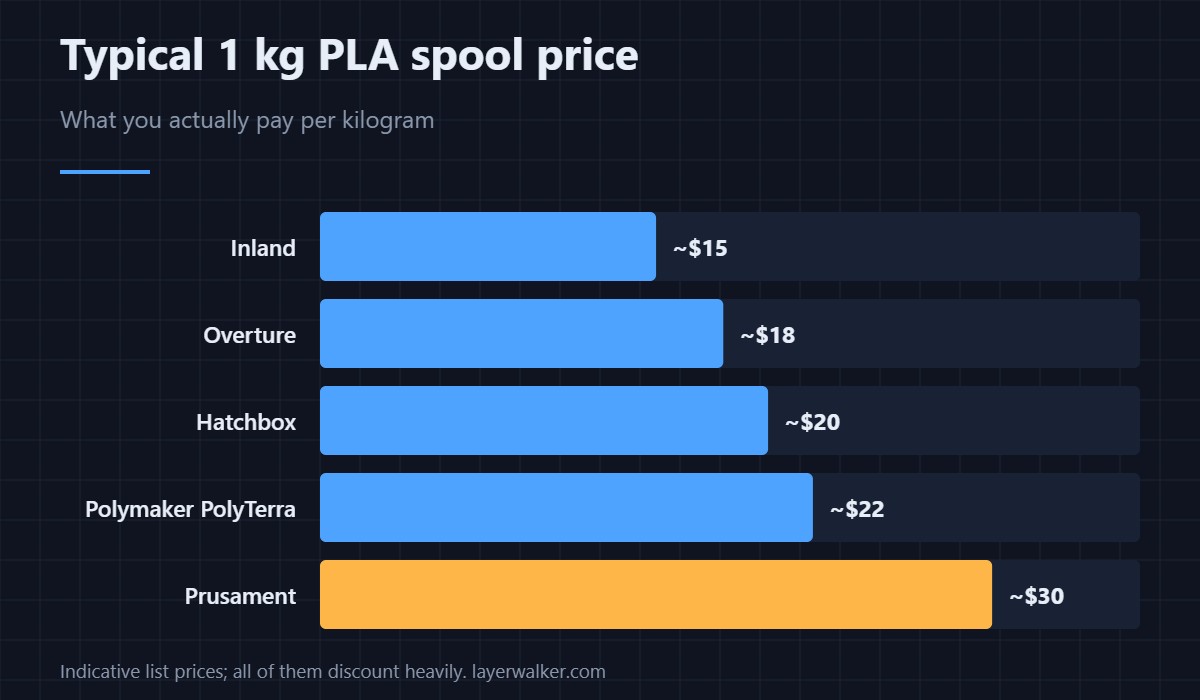
Consistently decent PLA at close to the lowest price you can pay for something with a name on it, sold in store, with a narrower selection listed online. Diameter tolerance is usually quoted around ±0.03 mm, which is respectable, and in practice most spools print without complaint on a stock profile.
What varies
Because the supplier is not fixed, two spools of the same colour bought a year apart can behave slightly differently — a shade off, a slightly different optimal temperature, occasionally different winding quality. For prototyping that is irrelevant. For a multi-part project in one colour, buy it all at once.
Where to spend more
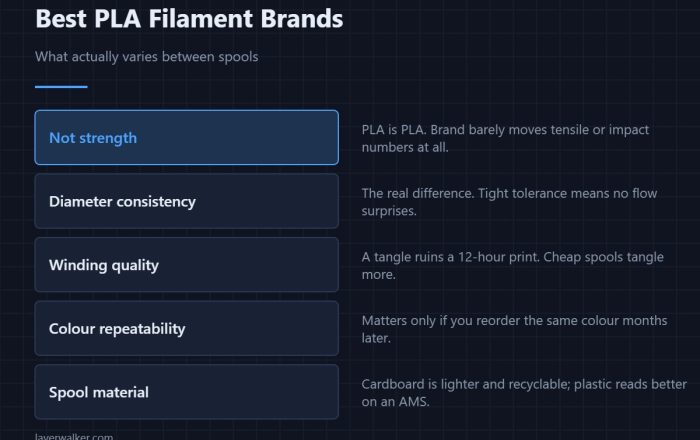
Move up a tier when the print is long enough that a tangle would hurt, when dimensions need to be repeatable, or when you are printing something in one go that you cannot easily redo. That is the argument for Polymaker and similar brands, and it is about consistency rather than strength — the full version is in best PLA filament brands.
For anything beyond PLA, PETG and ABS — carbon-filled grades, polycarbonate, nylon — published mechanical data starts to matter, and that is where house brands generally stop being the right answer. The broader comparison is in best filament brands.
Storage still applies
Cheap filament is not more hygroscopic than expensive filament, but people treat it more carelessly, which amounts to the same thing. A sealed box with desiccant costs a fraction of a spool; see filament storage.
Inland Filament FAQ
Who actually makes Inland filament?
Micro Center sources it from established manufacturers rather than extruding it itself, and the supplier is not guaranteed to be the same over time. That is the source of both the low price and the batch variation.
Is Inland PLA good enough for functional parts?
For ordinary brackets, jigs and enclosures, yes. PLA is PLA, and brand barely affects strength. What you are not buying is guaranteed batch-to-batch repeatability.
Can I buy Inland filament online?
It is primarily an in-store line, which is part of how the price works. Availability outside Micro Center’s own channels is inconsistent, so if you rely on a specific colour, buy enough of it.
Is Inland PETG as good as its PLA?
Generally serviceable, and PETG is more sensitive to moisture and temperature than PLA regardless of brand. Dry it and run a temperature tower rather than assuming the spool label is right.

LayerWalker
Print defect diagnosis, calibration procedures and parts that actually fit. Corrections welcome through the contact page.