HMS 0500-0300-0001-000D: The Induction Hotend Rack Is Malfunctioning
LayerWalker is a participant in the Amazon Services LLC Associates Program. We may earn a commission when you buy through links on our site, at no extra cost to you.
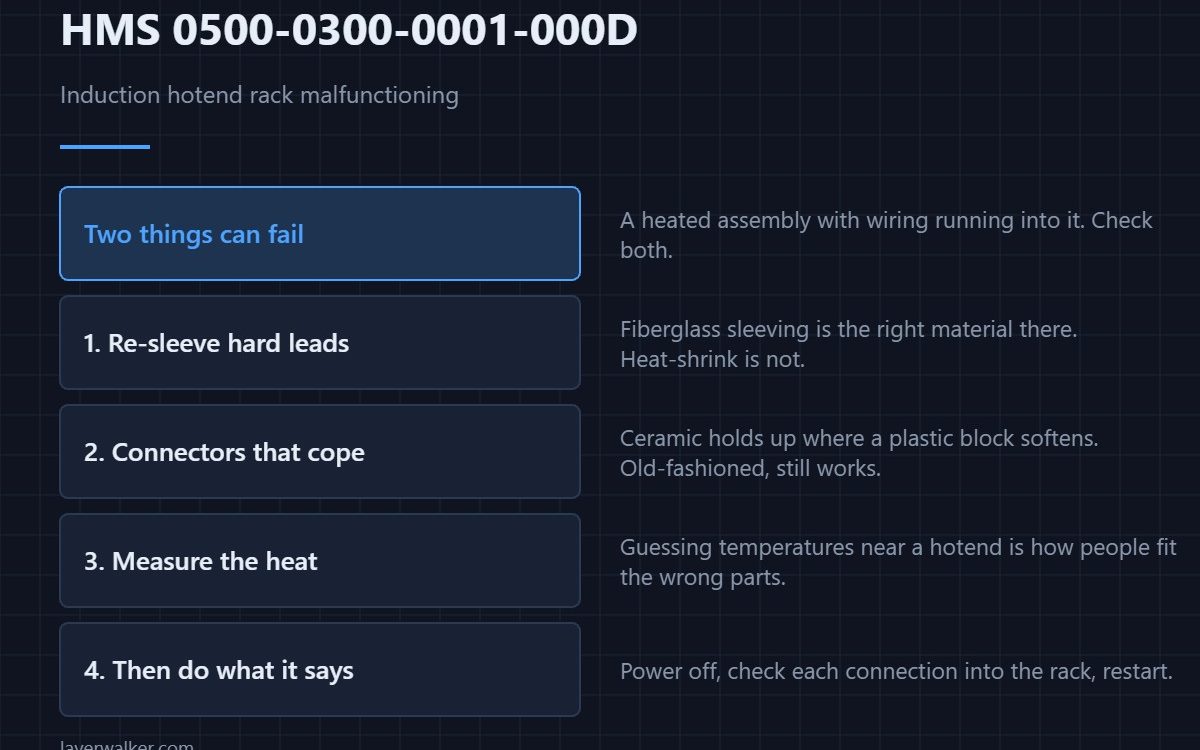
HMS 0500-0300-0001-000D means the induction hotend rack is malfunctioning, and asks you to power off, check the connection, and restart. It is a heated assembly with wiring running into it, so there are two different things in there that can fail.
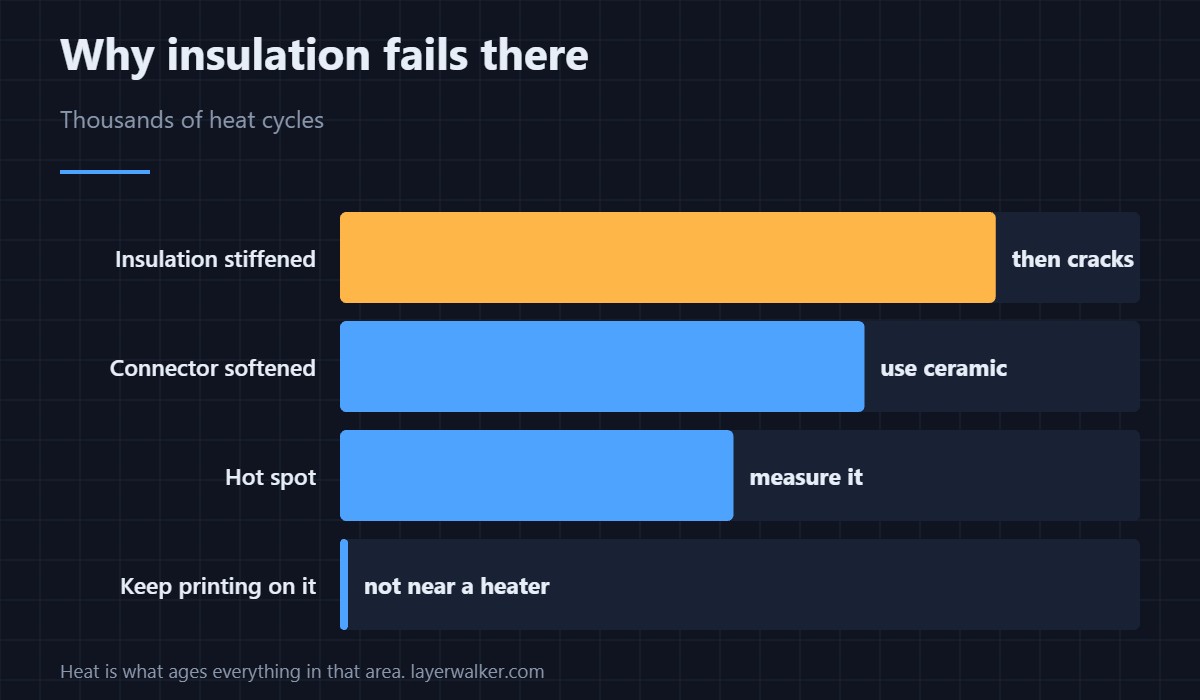
Everything in that area has been through thousands of heating cycles, and heat is what ages insulation.
Where to buy


Re-sleeve wiring that has gone hard
Fiberglass sleeving rated for high temperature slides over a lead whose insulation has stiffened and started to crack. It is the correct material for that spot, and ordinary heat-shrink is not.
Use connectors that tolerate the heat
Where a joint has to be remade close to the rack, ceramic high-temperature connectors hold up where a plastic block softens. They look old-fashioned; they also still work after a year in there.
Find out how hot it actually gets
An infrared thermometer pointed at the rack while the machine warms up tells you whether you are dealing with normal heat or a hot spot. Guessing at temperatures around a hotend is how people fit the wrong parts.
Then do what the message says
Power off, check each connection into the rack, restart. If it reports clean and stays clean through a full print, the connection was the fault.
How HMS 0500-0300-0001-000D differs from the controller code
The main controller reports HMS 0500-0300-0001-000C with the same wording about connections. The rack is a local assembly; the controller is the board that talks to it.
When the whole toolhead is named
A toolhead-level fault is HMS 0500-0300-0001-0002. The assembly itself is covered in the hotend guide, and blockage symptoms in clearing a clogged nozzle.
HMS 0500-0300-0001-000D FAQ
What is the induction hotend rack?
The heated assembly that carries the hotend and its wiring.
Why does insulation fail there?
Thousands of heat cycles. It stiffens, then cracks.
Can I use normal heat-shrink?
Not that close to the heat. Use fiberglass sleeving.
Is it safe to keep printing?
Not with suspect wiring near a heater. Check it first.

LayerWalker
Print defect diagnosis, calibration procedures and parts that actually fit. Corrections welcome through the contact page.