HMS 0500-0300-0001-0023: Chamber Temperature Control Fault
LayerWalker is a participant in the Amazon Services LLC Associates Program. We may earn a commission when you buy through links on our site, at no extra cost to you.
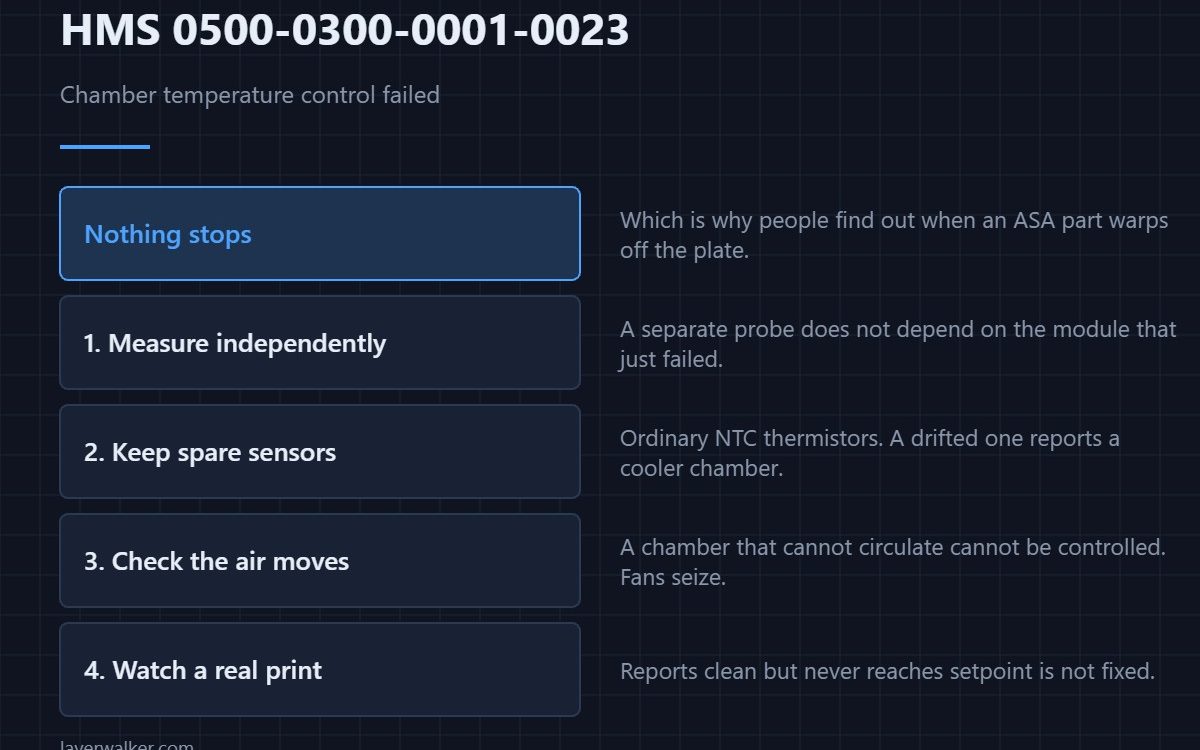
HMS 0500-0300-0001-0023 means the chamber temperature control module is malfunctioning and asks you to restart the device. Nothing stops immediately, which is why people ignore it: you find out it mattered when an ASA part warps off the plate.
Chamber control is a sensor, a controller and a fan or heater. Each of those is a cheap part on its own.
Where to buy


Know what the chamber is really doing
A standalone digital temperature controller with its own probe gives you a reading that does not depend on the module that just failed. Knowing the real chamber temperature is what turns this from a mystery into a measurement.
Keep spare sensors on the shelf
These systems use ordinary NTC thermistors, and a pack of the right value costs very little. A thermistor that has drifted reports a chamber that is cooler than it is, which is exactly the sort of fault that hides behind a module message.
Check that the air is actually moving
A chamber that cannot circulate air cannot be controlled. A replacement 80 mm fan in the right voltage costs very little, and a fan that has seized is both the commonest cause and the easiest to see.
Then restart and watch a real print
Run something that uses chamber control and watch the reported temperature follow the target. A module that reports clean but never reaches the setpoint has not been fixed.
How HMS 0500-0300-0001-0023 pairs with the cold-ambient code
If the room rather than the module is the problem, you get HMS 0500-0300-0001-0024 instead, which blocks printing outright.
What it costs you in practice
Materials that need a warm chamber are the ones that suffer — see ASA warping and printer enclosures. Plate temperatures are covered in bed temperature.
HMS 0500-0300-0001-0023 FAQ
Can I keep printing PLA?
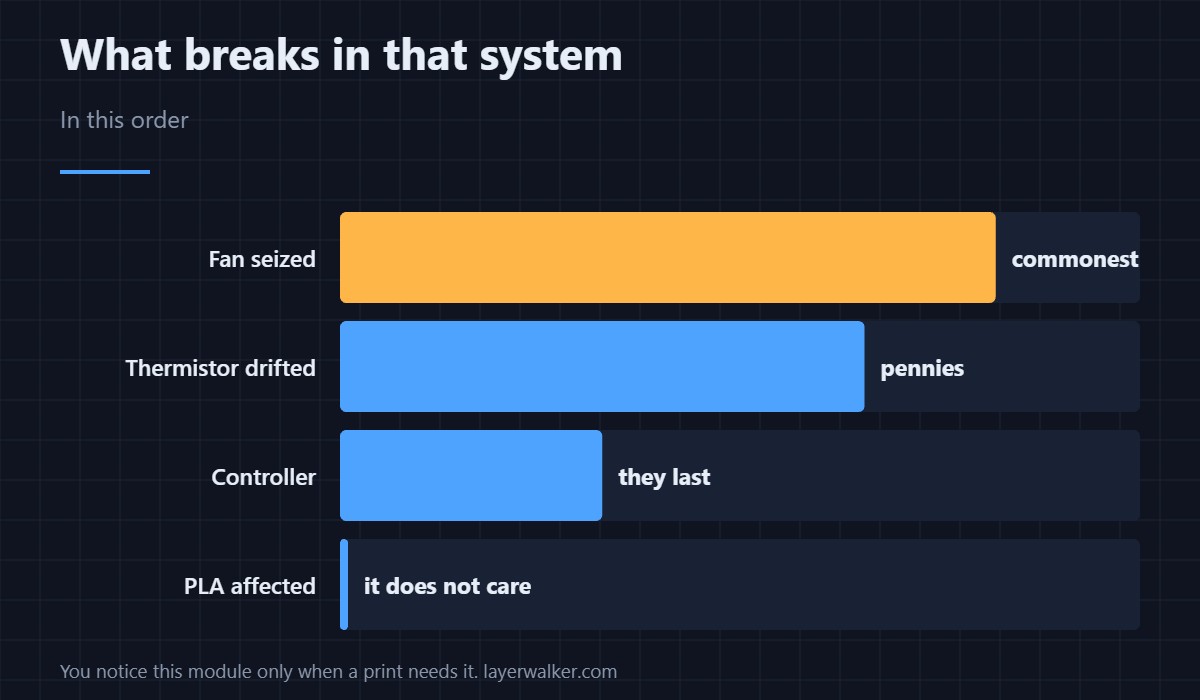
Yes. PLA does not need chamber control.
What breaks first in that system?
The fan, then the thermistor. The controller lasts.
How do I know the real temperature?
A separate probe. Do not trust the module that just failed.
Does a restart fix it?
Sometimes. If it returns, measure before replacing.

LayerWalker
Print defect diagnosis, calibration procedures and parts that actually fit. Corrections welcome through the contact page.