HMS 0300-9100-0001-0002: Chamber Heater Open Circuit
LayerWalker is a participant in the Amazon Services LLC Associates Program. We may earn a commission when you buy through links on our site, at no extra cost to you.
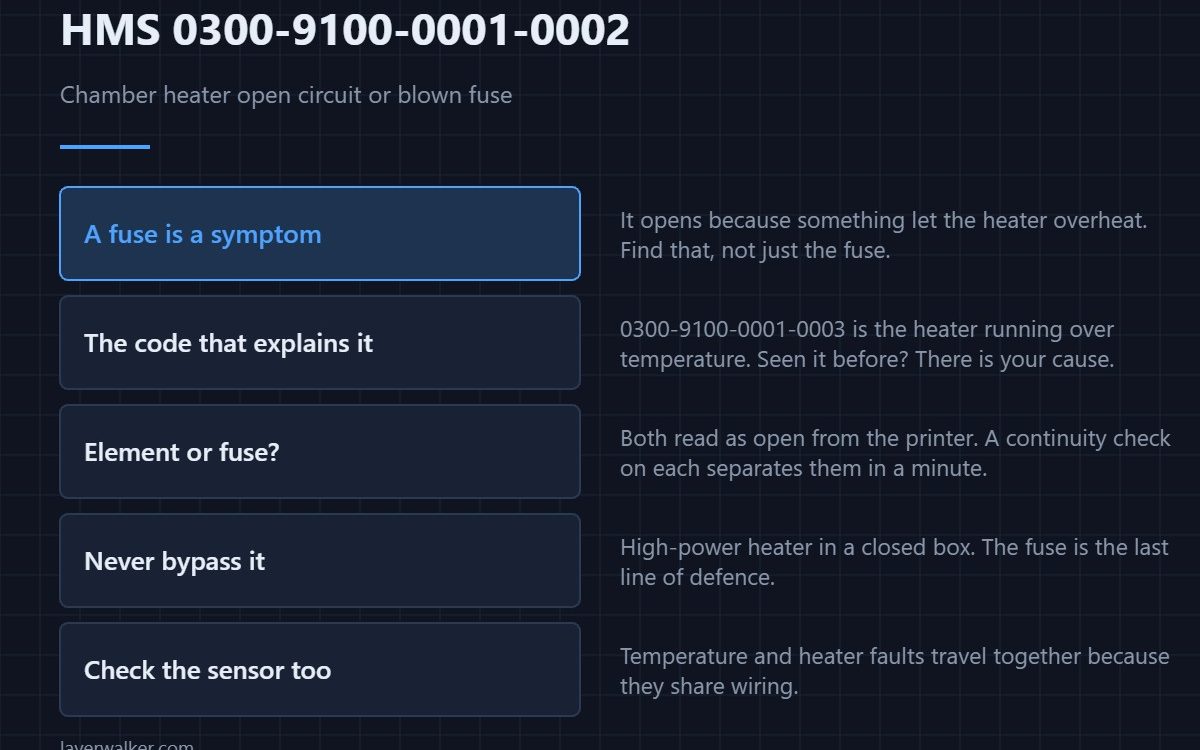
HMS 0300-9100-0001-0002 means the chamber heater temperature reads abnormal because the heater may have an open circuit, or its thermal fuse may have taken effect. Those two are not equivalent: a broken element is a failure, while a tripped fuse is a protective device doing its job because something else went wrong.
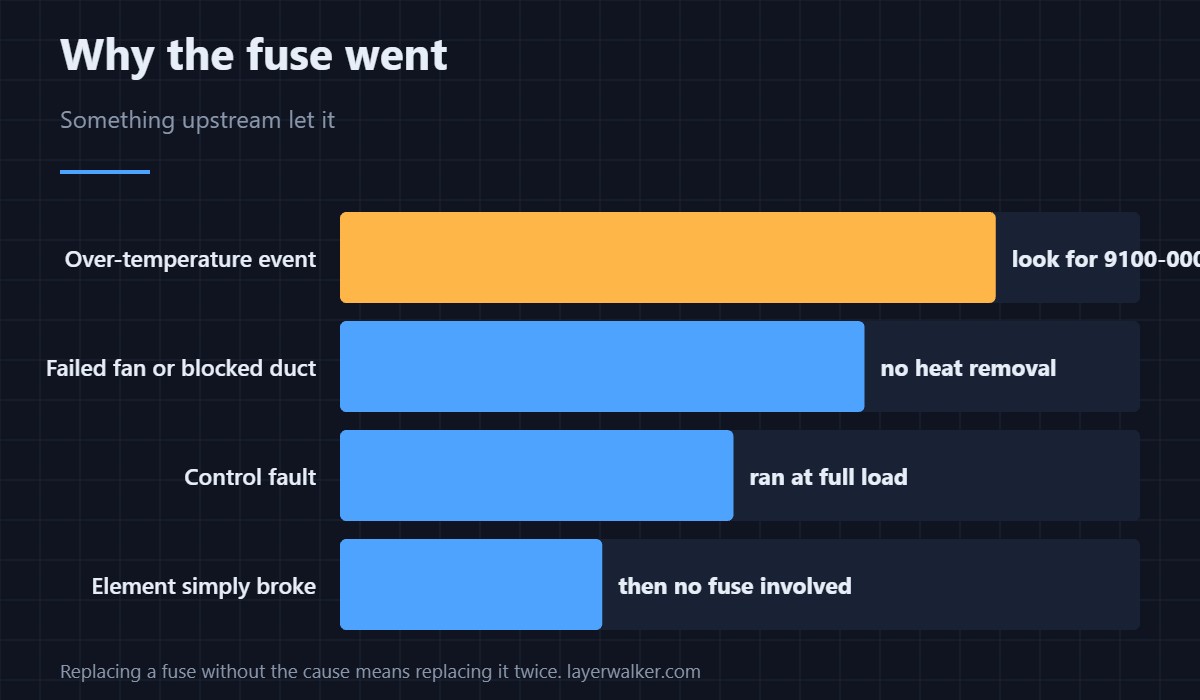
Replacing a fuse without finding out why it blew is how people replace the same part twice.
Where to buy


What a thermal fuse is protecting against
It opens permanently when the heater exceeds a safe temperature, and it is deliberately the weakest link. If yours has gone, something allowed the heater to overheat: a failed fan, a blocked duct, or a temperature control fault. Find that first.
The code that tells you why
The same group contains 0300-9100-0001-0003, where the heater temperature control is abnormal and the heater runs over temperature. If you have seen that one in the past, you have your explanation for the fuse, and fixing the control problem is the real repair.
Distinguishing a broken element from a blown fuse
Both read as an open circuit from the printer’s side, which is why one code covers them. With the machine unplugged, a continuity check across the element and separately across the fuse separates them in a minute. A healthy element shows continuity; a blown fuse shows none.
Why HMS 0300-9100-0001-0002 is a stop rather than a warning
Chamber heaters are high-power devices in an enclosed space. The printer refusing to continue when it cannot verify the heater is correct behaviour, and it is the same reasoning that applies to every other heating circuit on the machine — see the hotend explainer for how those parts relate.
Measuring the sensor while you are there
Temperature faults and heater faults travel together, because they share wiring. A reading that is implausible rather than merely high points at the sensor, and the measurement approach for every thermistor on the machine is the same — see 3D printer thermistors.
HMS 0300-9100-0001-0002 FAQ
Can I bypass the thermal fuse?
No. It is the last line of defence on a high-power heater in a closed box, and bypassing it removes the protection rather than fixing the fault.
Can I print PLA meanwhile?
The printer may allow it, since PLA needs no chamber heat. Do not leave a suspected heater fault unresolved on a long job.
Is this the same as the chamber failing to heat?
No. That is a performance complaint. This one is about the heater’s temperature reading being impossible.
How do I know the fuse is the part that failed?
Check continuity across the element and the fuse separately. Only one of them will be open, and a multimeter is the only tool needed — the same check applies to the fans in cooling fans.

LayerWalker
Print defect diagnosis, calibration procedures and parts that actually fit. Corrections welcome through the contact page.