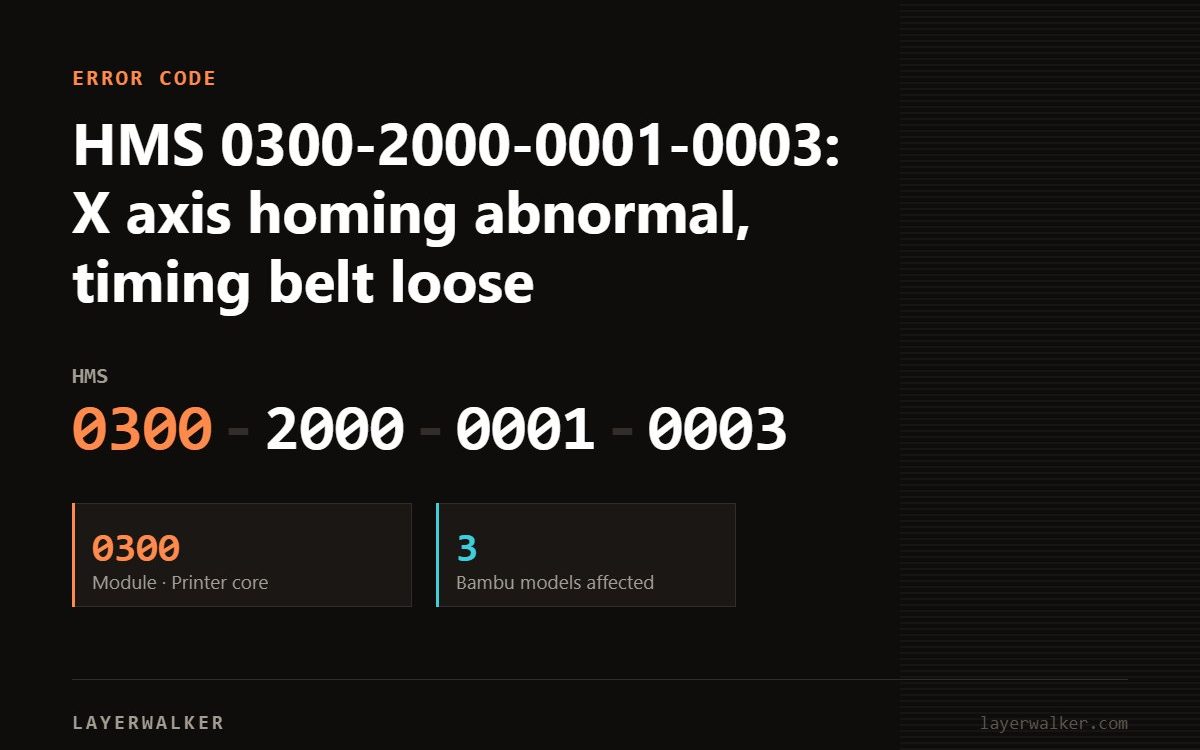
HMS 0300-2000-0001-0003: X axis homing abnormal, timing belt loose
LayerWalker is a participant in the Amazon Services LLC Associates Program. We may earn a commission when you buy through links on our site, at no extra cost to you.
The X belt is loose enough that the motor turns without the toolhead following. Tension it until it is firm and dead when plucked, not until it sings. Over-tightening causes a different set of problems that are harder to find.
Bambu reports abnormal X axis homing with the timing belt possibly loose. This is the sibling of the general homing error: that one is about friction, this one is about the belt losing its grip on the pulley.
Affected machines: H2, P2S, X2D and related.
Where to buy


HMS 0300-2000-0001-0003: how to tell loose from stiff
Both produce homing failures. The difference is what you feel by hand with the power off. A stiff axis resists steady pressure across its travel. A loose belt lets the toolhead move a few millimetres with a soft, springy feel before the motor takes up. Push the toolhead gently side to side — noticeable free play means belt.
Homing fails, or prints show layer shifts that always go the same direction
Timing belt tension too low, letting the belt skip teeth
- Power off and check free play by rocking the toolhead against the stationary motor.
- Locate the tensioner for the X belt on your machine and take up slack in small increments.
- Pluck the belt between pulleys. It should give a short, dead thud that stops immediately.
- Move the gantry through its full travel and re-check. Belts tension unevenly if the gantry is not square.
- Check the pulley grub screws. A loose grub screw on the motor shaft mimics a loose belt exactly and no amount of tensioning fixes it.
The grub screw nobody checks
If tensioning does not hold, look at the pulley on the motor shaft. Grub screws back out with vibration, and one that has loosened lets the pulley spin freely on the shaft. The symptom is identical to a slipping belt. Tighten onto the flat of the shaft, not onto the round.
Do not overtighten
An over-tensioned belt loads the motor bearings, increases positional error, and pulls the frame out of square over time. If you need to crank a belt hard to stop skipping, something else is wrong.
Wrong code? The full Bambu HMS code index lists all 588 codes with the subsystem each one points to and which printers show it.

LayerWalker
Print defect diagnosis, calibration procedures and parts that actually fit. Corrections welcome through the contact page.