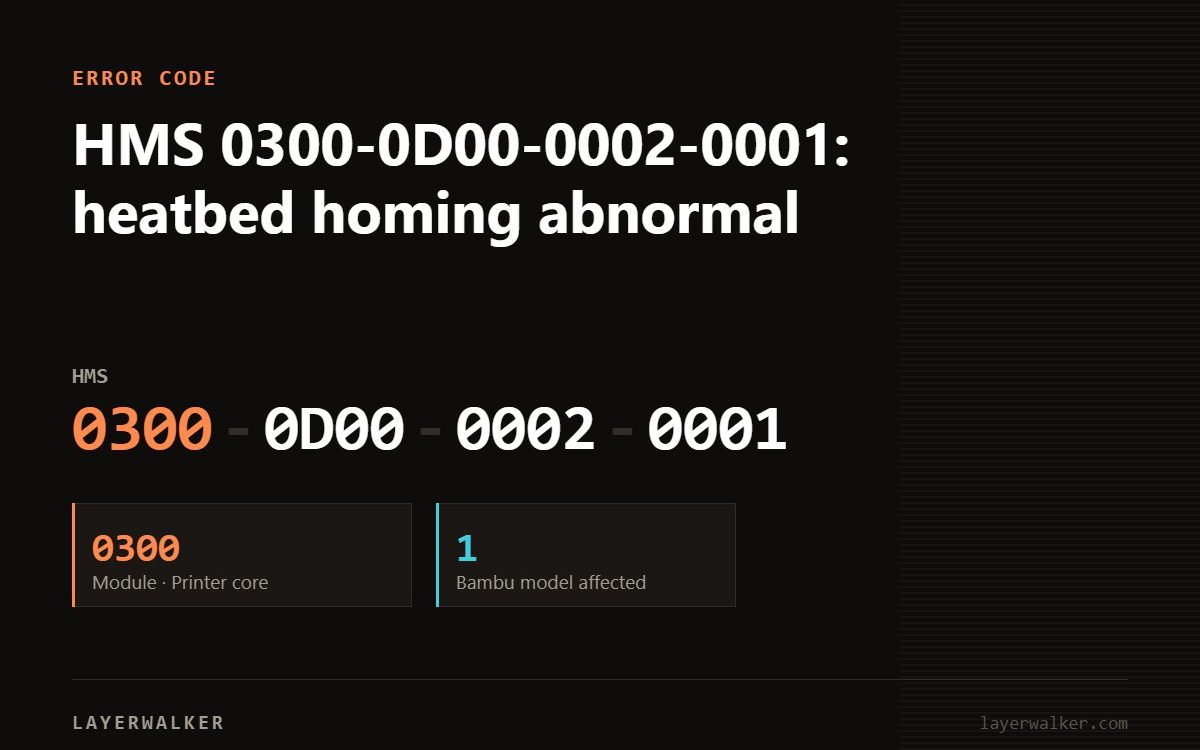
HMS 0300-0D00-0002-0001: heatbed homing abnormal
LayerWalker is a participant in the Amazon Services LLC Associates Program. We may earn a commission when you buy through links on our site, at no extra cost to you.
The printer probes the bed with the nozzle tip, so anything stuck to that tip makes the reading wrong. Wipe the nozzle clean at temperature and re-run the levelling before you start worrying about a bulged heatbed.
Bambu reports abnormal heatbed homing, noting there may be a bulge on the heatbed or the nozzle tip may not be clean. Those two causes are listed in the wrong order for how often they actually occur: the nozzle is the problem the overwhelming majority of the time.
Where to buy


HMS 0300-0D00-0002-0001: why a dirty nozzle breaks bed probing
These machines probe by touching the nozzle to the plate and sensing the contact. A bead of cooled filament on the tip means the machine touches down early, and by a different amount at each probe point as the blob deforms. The firmware sees an inconsistent mesh and refuses to continue.
Levelling fails partway through, or the mesh looks wildly uneven
Debris on the nozzle tip corrupting the probe reading
- Heat the nozzle to printing temperature so any stuck filament softens.
- Wipe the tip with a lint-free cloth. Do not use your fingers.
- For baked-on residue, use a brass brush with the nozzle hot, brushing away from yourself.
- Clean the build plate with IPA. Skin oils change how the plate reads and how the first layer sticks.
- Check the plate is seated flat with nothing under it — a stray piece of filament under a corner lifts the whole sheet.
- Re-run bed levelling from the machine menu.
If it really is the plate
Take the sheet off and lay it on a known-flat surface. A spring steel sheet that has been prised at with a metal scraper develops dents and raised edges around the damage. Those show up in the mesh as a local high spot in exactly the place you always remove prints from.
Glass and thick tooling plates stay flat; thin spring steel does not survive being levered. If you find damage, that sheet is consumable — replace it rather than trying to flatten it.
The nozzle is at 200 degC or more while you clean it. Use a brass brush with a handle, keep your other hand away, and never wipe a hot nozzle with a bare finger or a synthetic cloth that will melt onto it.
Wrong code? The full Bambu HMS code index lists all 588 codes with the subsystem each one points to and which printers show it.

LayerWalker
Print defect diagnosis, calibration procedures and parts that actually fit. Corrections welcome through the contact page.