Entry-Level 3D Printers: The First Printer That Will Not Teach You to Hate the Hobby
LayerWalker is a participant in the Amazon Services LLC Associates Program. We may earn a commission when you buy through links on our site, at no extra cost to you.
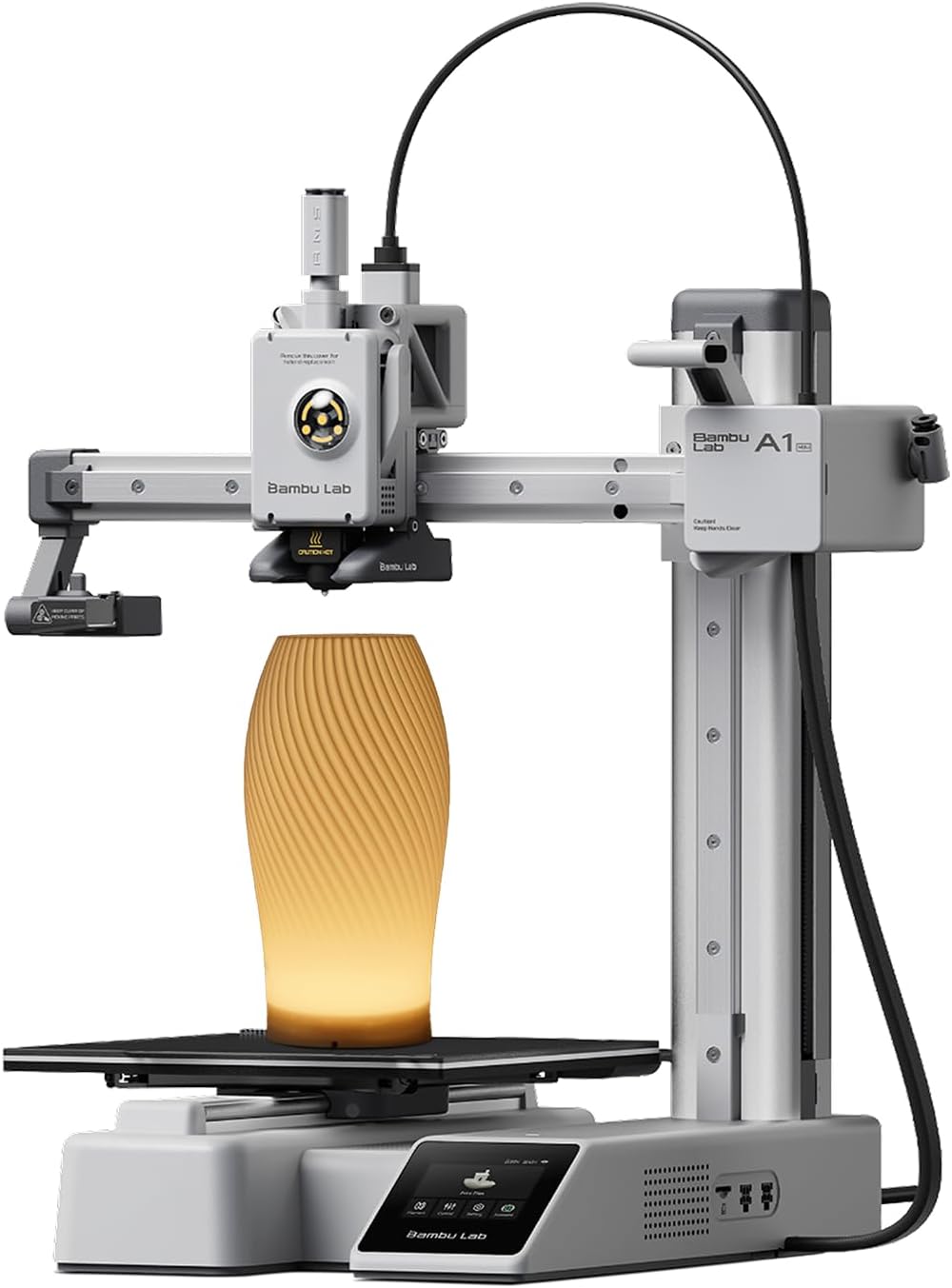
The test for an entry-level printer is whether the second print works as well as the first without you learning anything. In 2026 that means auto levelling, a direct-drive 300 °C hotend, input shaping and a brand with spares on Amazon. The Bambu A1 mini passes with the least effort; the Creality Ender-3 V3 KE passes with more openness; the V3 SE passes on price if you accept slow. Avoid anything with manual levelling or a Bowden extruder sold new.
Where to buy


Entry-level in 2026
| Printer | Build volume | Levelling | Hotend | Speed | Effort to first good print |
|---|---|---|---|---|---|
| Bambu A1 mini | 180 × 180 × 180 mm | Auto, no offset | 300 °C, quick swap | 500 mm/s | Minutes |
| Bambu A1 | 256 × 256 × 256 mm | Auto, no offset | 300 °C, quick swap | 500 mm/s | Minutes |
| Creality Ender-3 V3 KE | 220 × 220 × 240 mm | Auto, offset once | 300 °C direct drive | 500 mm/s | An hour |
| Creality Ender-3 V3 SE | 220 × 220 × 250 mm | Auto, offset once | 260 °C direct drive | 250 mm/s | An hour; slow prints |
| Flashforge AD5M | 220 × 220 × 220 mm | Auto | 280 °C, quick detach | 600 mm/s | Under an hour |
| Elegoo Neptune 4 / 4 Pro | 225 × 225 × 265 mm | Auto 121 points, offset once | 300 °C | 500 mm/s | An hour; firmware quirks |
What makes a printer beginner-proof
- No Z-offset to set. The most common beginner failure is the first layer; nozzle-probing printers remove it. See auto levelling explained.
- Direct drive. Bowden extruders string and struggle with TPU.
- Tuned profiles. Bambu Studio profiles print right first time; Creality Print is close.
- Spares. A nozzle or plate should be a two-day delivery.
What to avoid
Legacy Ender 3, 3 Pro and V2 sold new, unbranded clones, and any printer whose reviews mention “after some tuning”. Also avoid buying a resin printer as a first machine unless miniatures are the whole point; see resin for beginners.
Budget
All of these sit under about $300 list; see under $300. If you are still deciding whether to buy at all, read is a 3D printer worth it, then the buying guide.
The units in the box
The listings are the A1 mini, the Ender-3 V3 SE and the Ender-3 V3 KE.
Entry level 3D printer FAQ
Is the A1 mini too small for a first printer?
For most people, no; if you already know you want helmets, buy the A1.
Should a beginner build a kit?
Only if the build is the appeal; see kits.

LayerWalker
Print defect diagnosis, calibration procedures and parts that actually fit. Corrections welcome through the contact page.