Creality Ender 5 Max: The Cube Frame Approach to a Large Envelope
LayerWalker is a participant in the Amazon Services LLC Associates Program. We may earn a commission when you buy through links on our site, at no extra cost to you.
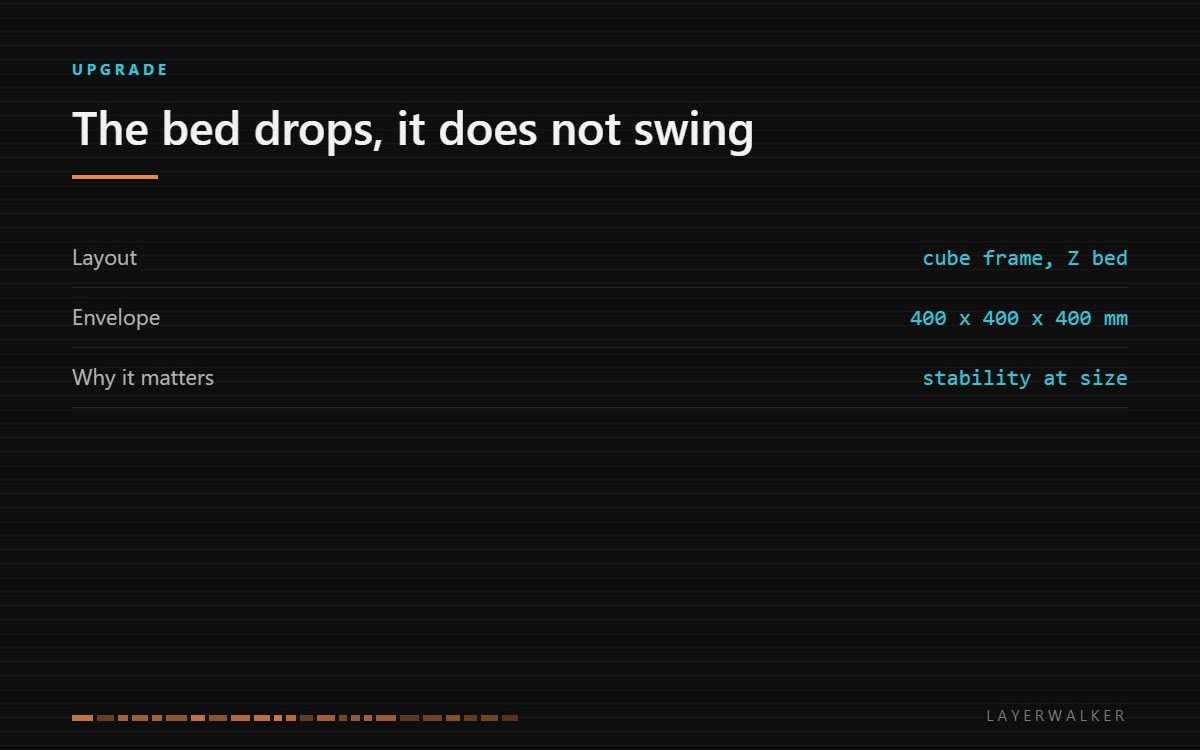
The Ender 5 layout puts the toolhead on a gantry inside a cube and moves the bed only downward. At a 400 mm envelope that matters more than any other specification, because a bed that size swinging back and forth would dominate what the machine could do.
Where to buy


Why the layout is the feature
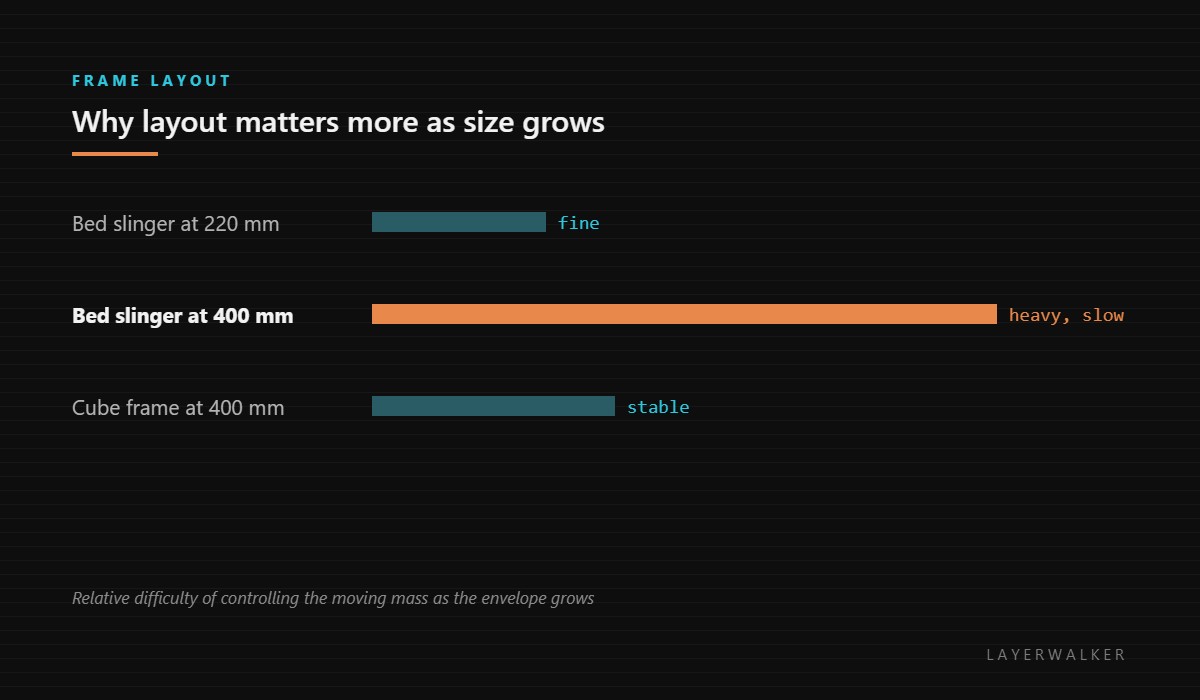
On the familiar bed slinger, the Y axis drags the part and the plate back and forth. That is fine at 220 mm. Scale the plate to 400 mm and you are accelerating a large sheet of aluminium plus whatever is printed on it, thousands of times per layer. Either the machine slows down or the print rings.
A cube frame removes that. The bed descends one layer at a time and the toolhead does the fast movement. The frame is also naturally a box, which means panelling it is straightforward, and at this size an enclosure is close to mandatory for anything that shrinks.
This is the same reasoning that makes CoreXY machines suit large envelopes, and the two layouts solve the same problem in different ways.
What to check before buying at this size
Bed flatness first. A 400 mm plate that is out by a few tenths across its diagonal will fight you on every first layer, and mesh compensation can only correct so much. This is the single most common complaint at this size and it is worth checking early in the return window.
Then frame rigidity. A tall cube flexes if the extrusions and the joints are not up to it, and flex shows up as ringing that no input-shaping calibration fully removes.
Then the thermal question. Ask what you intend to print. If the answer includes ABS or ASA, budget for an enclosure alongside the printer rather than after the first warped part, and read enclosed printers first.
Is the size what you need?
It is worth asking honestly. Most people print small parts most of the time, and a large machine costs more to heat, takes longer per print and fails more expensively. Buy the envelope when you have parts that need it, not in case. Our large format overview sets out where the threshold usually falls.
FAQ
Is the Ender 5 layout the same as CoreXY? No. Both keep the bed off the fast axes, but the belt arrangement and motor placement differ.
Does a big bed take long to heat? Yes, several minutes. Factor it into print times and into electricity if you print daily.
Can I print PLA at 400 mm without an enclosure? Usually yes. PLA shrinks little and prefers cool air.
What fails most at this size? First layers, because of bed flatness, and tall prints, because of time and warping.

LayerWalker
Print defect diagnosis, calibration procedures and parts that actually fit. Corrections welcome through the contact page.