Wood PLA: What the Fibre Does, Nozzle Size, and Why It Clogs
LayerWalker is a participant in the Amazon Services LLC Associates Program. We may earn a commission when you buy through links on our site, at no extra cost to you.
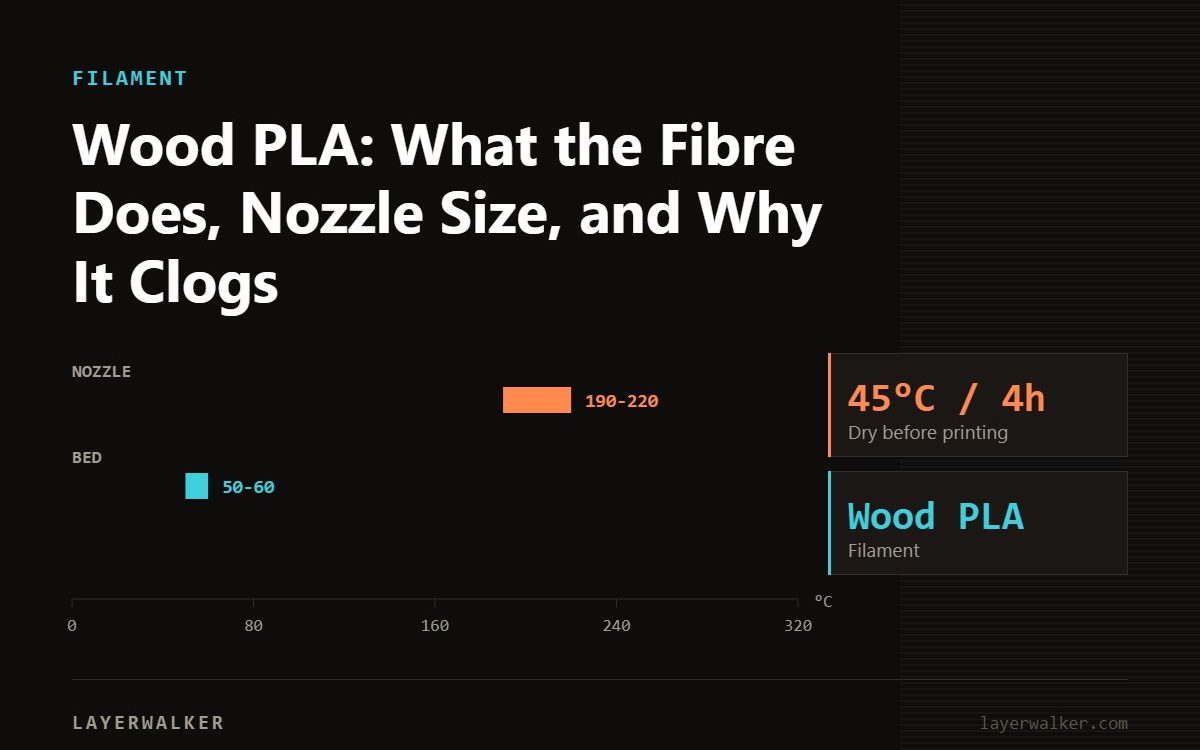
Wood PLA prints a matte, sandable surface that takes stain like real wood, and it is worth a spool for boxes, frames and decorative parts. Use a 0.5 or 0.6 mm nozzle, keep the temperature steady at 190 to 220 °C, and expect a brass nozzle to wear over a few spools because the fibre is mildly abrasive.
Wood filament is roughly 70 to 80 % PLA with real wood fibre or flour mixed in. The fibre does three things: it gives the surface a matte, slightly fuzzy texture that hides layer lines, it lets the part take stain and sanding like timber, and it changes colour with temperature, so a hotter nozzle prints darker. It also does two less welcome things: it wears brass, and it clogs small nozzles when fibres bunch at the orifice.
Where to buy

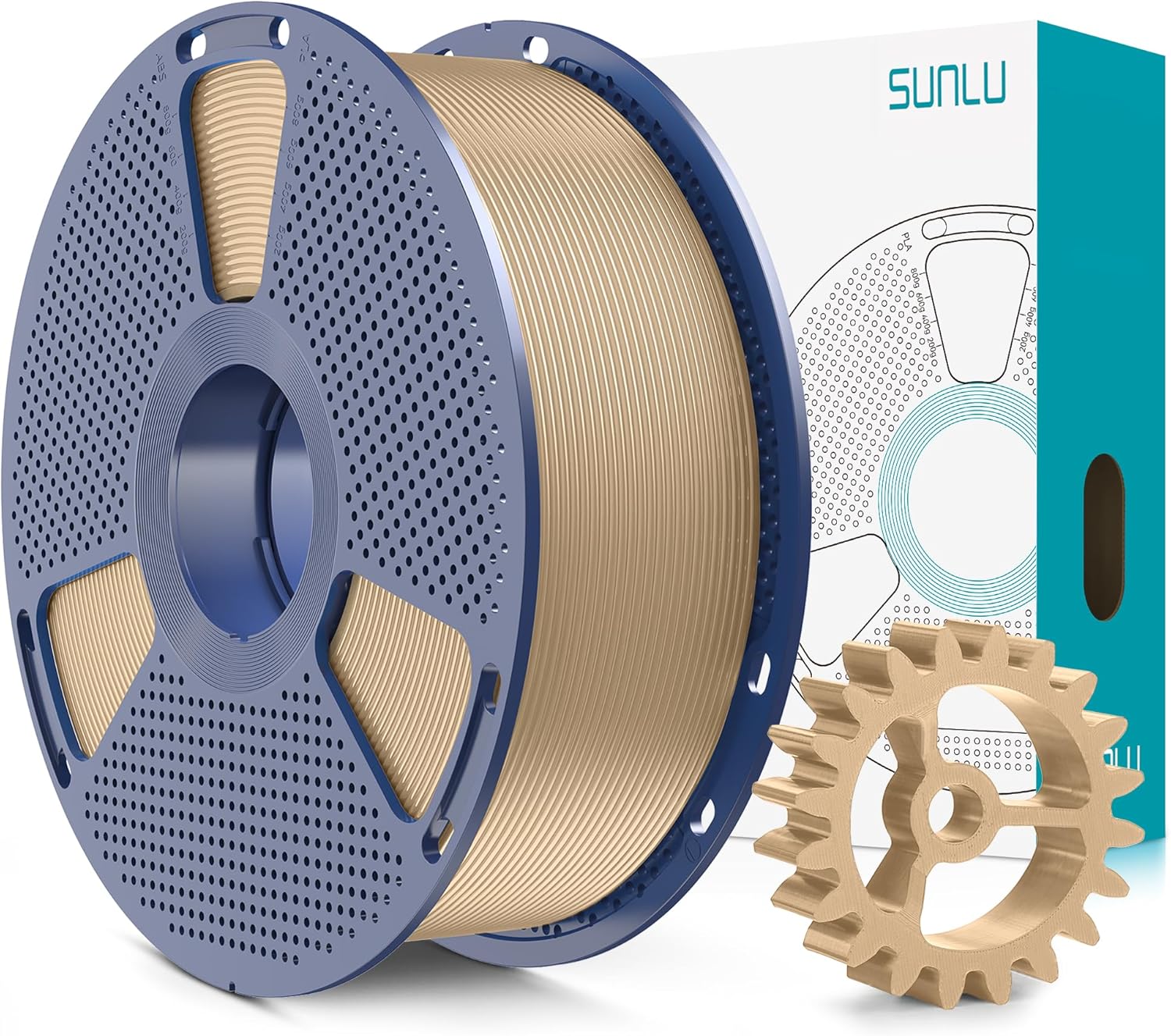

OVV3D Wood PLA 3D Printer Filament Bundle,Over 30% Real Wood Fiber,PLA 1.75
What to look for
- Fibre content stated. More fibre means a more wood-like finish and more clogging. 15 to 30 % is the common range.
- Tolerance ±0.03 mm. Filled filaments vary more; a stated figure matters.
- Vacuum sealed. Wood fibre absorbs water readily. Wet wood PLA pops and prints a rough, foamy surface.
- Species or tone. Light pine-like blends stain well; darker walnut-like blends look finished off the printer.
The spools in the box
Hatchbox Wood is the long-standing reference wood PLA with consistent fibre and diameter. The two other wood PLA spools are alternatives in different tones; check the stated fibre content and pick the tone you want to stain or leave as printed.
Nozzle and settings
- Nozzle 0.5 or 0.6 mm. A 0.4 mm brass nozzle prints wood PLA but clogs when fibres bunch; the larger orifice avoids it. Hardened steel is optional for one or two spools, sensible for regular use; see abrasive filaments.
- Temperature 190 to 220 °C, and steady. Colour darkens with heat, so vary temperature deliberately for a grain effect or hold it constant for an even tone. Avoid long pauses at temperature; the fibre scorches in the nozzle and comes out as dark blobs.
- Speed 40 to 60 mm/s. Slower than plain PLA keeps the flow even through the fibre.
- Bed 50 to 60 °C on textured PEI. It releases easily.
- Retraction shorter than plain PLA. Long retractions drag fibre back into the melt zone and cause jams.
Finishing
Sand at 120 then 220 grit; the surface takes it like soft wood. Water-based wood stain and oil both work, and they darken the fibre more than the PLA, which brings out a grain. Seal with a clear coat if the part will be handled.
When wood PLA is the wrong choice
Anything structural: the fibre weakens it below plain PLA. Anything with fine detail: the matte texture blurs it. Any printer with a 0.4 mm nozzle you do not want to swap.
FAQ
Does wood PLA smell?
Faintly of warm wood while printing. Pleasant, not a fume concern.
Do I need a hardened nozzle?
Not for a spool or two. For regular use, yes; see brass versus hardened.
Can I print wood PLA in a Bambu AMS?
It feeds, but its abrasiveness and clogging tendency make the external spool holder and a hardened nozzle the safer route.

LayerWalker
Print defect diagnosis, calibration procedures and parts that actually fit. Corrections welcome through the contact page.