HMS 0700-4000-0002-0004: filament buffer signal abnormal
LayerWalker is a participant in the Amazon Services LLC Associates Program. We may earn a commission when you buy through links on our site, at no extra cost to you.
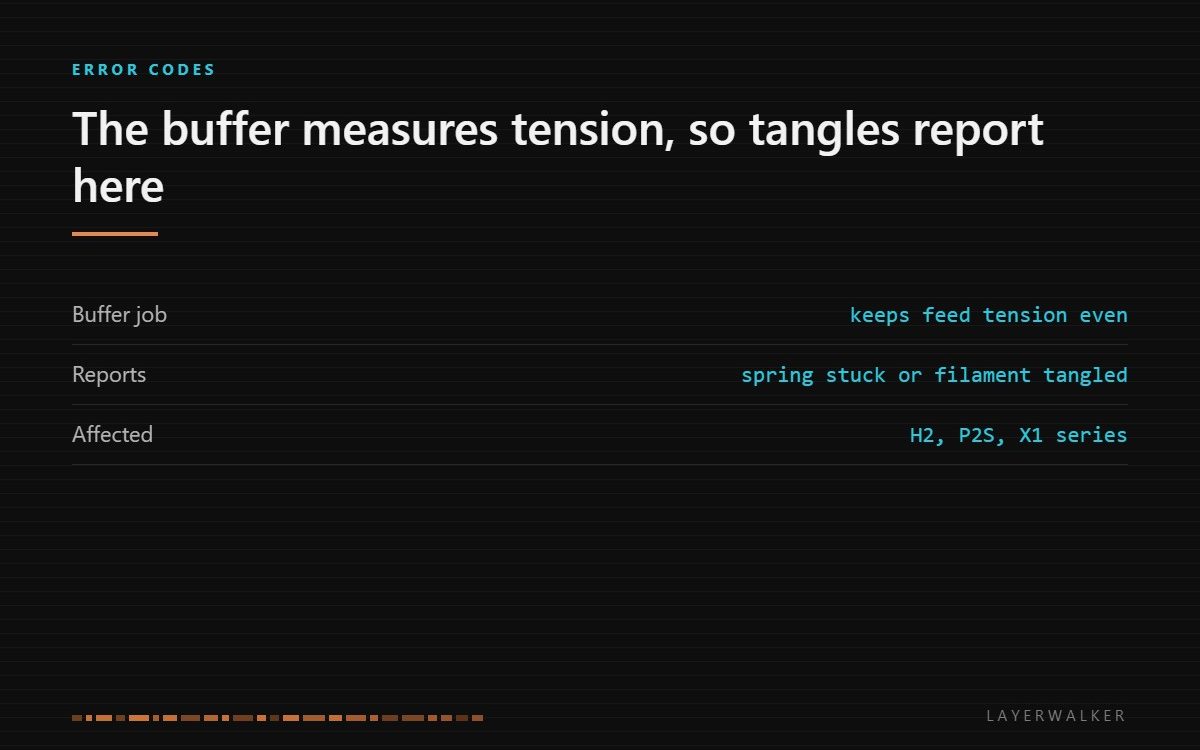
The buffer is reporting a signal the controller does not trust. The two named causes are a stuck spring and a tangled spool, and the tangle is far more common. Check the spool before opening the buffer.
Affected machines: H2, P2S, X1 series. The buffer sits between the filament unit and the toolhead and absorbs the difference between how fast filament is pulled and how fast it is fed.
Where to buy


The buffer is a tension gauge, not a storage box
It is easy to think of it as a loop of slack. Functionally it is a sensor: a spring-loaded lever whose position tells the machine whether the feed is keeping up. When the lever sits somewhere it should not, or stops moving, the controller cannot tell what the feed is doing and stops.
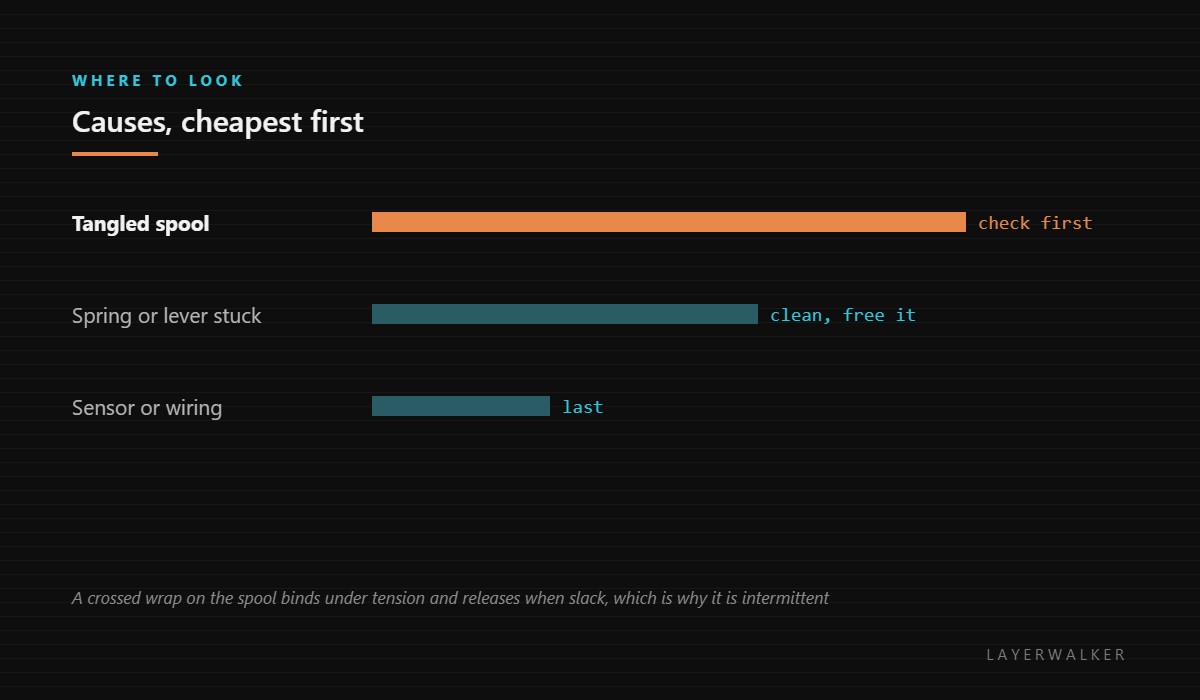
That is why a tangled spool reports here rather than at the spool. A crossed wrap binds, the feed stalls, the lever pulls to one end, and the buffer is the thing that notices.
Code appears during a load, a colour change, or part-way through a print using the filament unit
Crossed wrap on the spool, stuck buffer spring or lever, or a sensor fault
- Pause or stop the print, then open the filament unit and inspect the spool for a crossed wrap under the outer layers.
- Unwind a metre by hand and feel for the point where it binds; a tangle that binds under tension often looks fine at rest.
- Check the PTFE path between the unit and the buffer for a kink or a tight bend.
- Open the buffer and check the lever moves freely through its range and returns under spring pressure.
- Clear filament dust from around the lever pivot, since accumulated debris stiffens it.
- Reload the filament and watch the lever move during the first feed.
Spools that have been rewound by hand, or that have been left with the end unclipped, account for a large share of these. Clipping the end into the spool rim every time is the cheapest prevention available.
Our page on multi-material feeders covers how the whole path works and the settings that affect feed reliability. Drying filament matters here too, because damp filament swells and feeds unevenly, and the troubleshooting index covers the rest.
FAQ
Why does it happen mid-print? A tangle only binds when it reaches the outer layer being pulled, which can be hours in.
Can damp filament cause this? Indirectly. Swollen filament feeds unevenly and loads the buffer abnormally.
Do I need a new buffer? Rarely. Check the spool and the lever first.
How do I prevent tangles? Clip the filament end into the spool rim every time you remove it.

LayerWalker
Print defect diagnosis, calibration procedures and parts that actually fit. Corrections welcome through the contact page.