HMS 0300-0200-0001-0006: right extruder nozzle temperature sensor short circuit
LayerWalker is a participant in the Amazon Services LLC Associates Program. We may earn a commission when you buy through links on our site, at no extra cost to you.
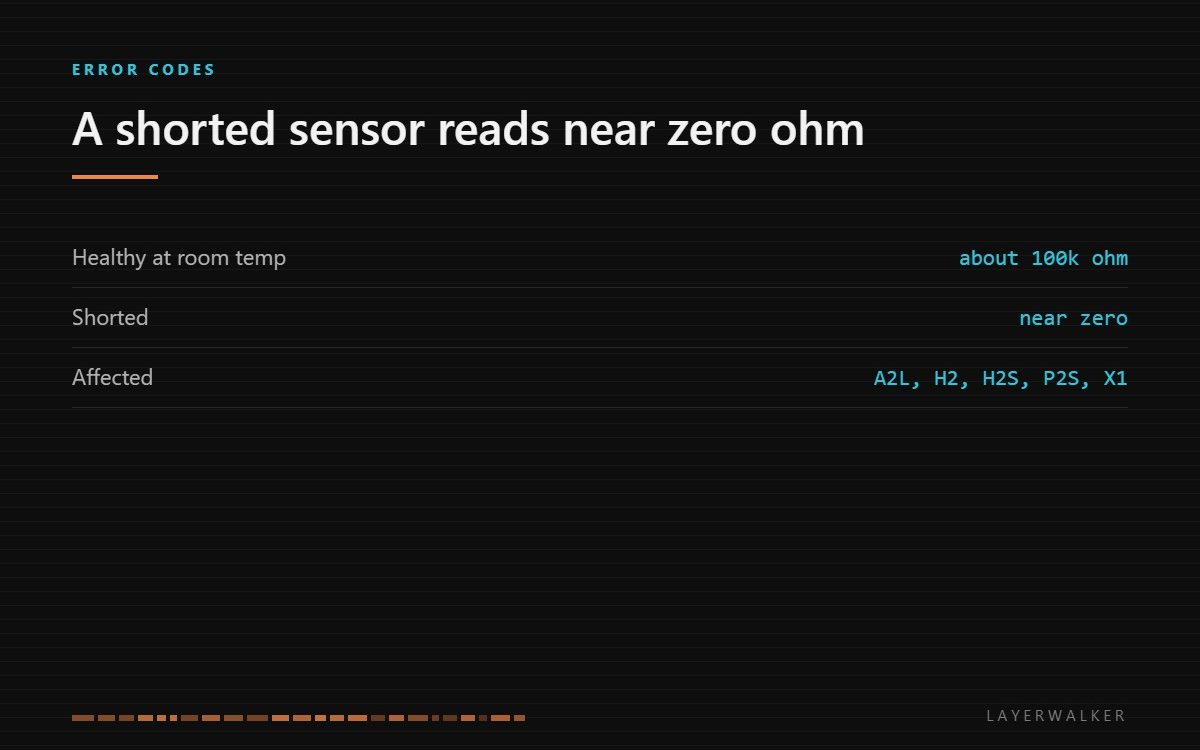
The printer measured the right nozzle temperature sensor as a short circuit. A healthy 100k NTC thermistor reads close to 100k ohm at room temperature; a short reads near zero. Check the connector at the toolhead before replacing anything.
Affected machines: A2L, H2, H2S, P2S, X1 series. On a dual-nozzle machine the code names which side is reporting, and that matters: it tells you which hotend to open and saves you dismantling the wrong one.
Where to buy


Genuine Bambu Lab Hotend with Nozzle for P1S P1P X1C X1 Carbon 3D Printer .4mm Hardened Steel

2 Pack 0.4mm A1 Mini/A1/A2L Hotend Kit Hardened Steel Nozzle for Bambu Lab

Why the connector fails before the sensor does
The thermistor itself is a small bead of semiconductor. It sits in the heater block, it does not move, and it rarely fails on its own. What moves is the pair of thin leads running from it back to the toolhead board, and those flex on every travel move for the whole life of the machine.
Two failure points account for nearly all of these codes. Insulation rubbing through where the leads pass a screw head or a cable tie, letting the two conductors touch. And a strand of stray wire or a blob of solder bridging the pins at the connector, usually left behind after someone swapped a nozzle.
Printer halts during heat-up and reports the code before the nozzle reaches temperature
Shorted thermistor lead, or bridged pins at the toolhead connector
- Power off at the wall and let the hotend cool completely before touching anything.
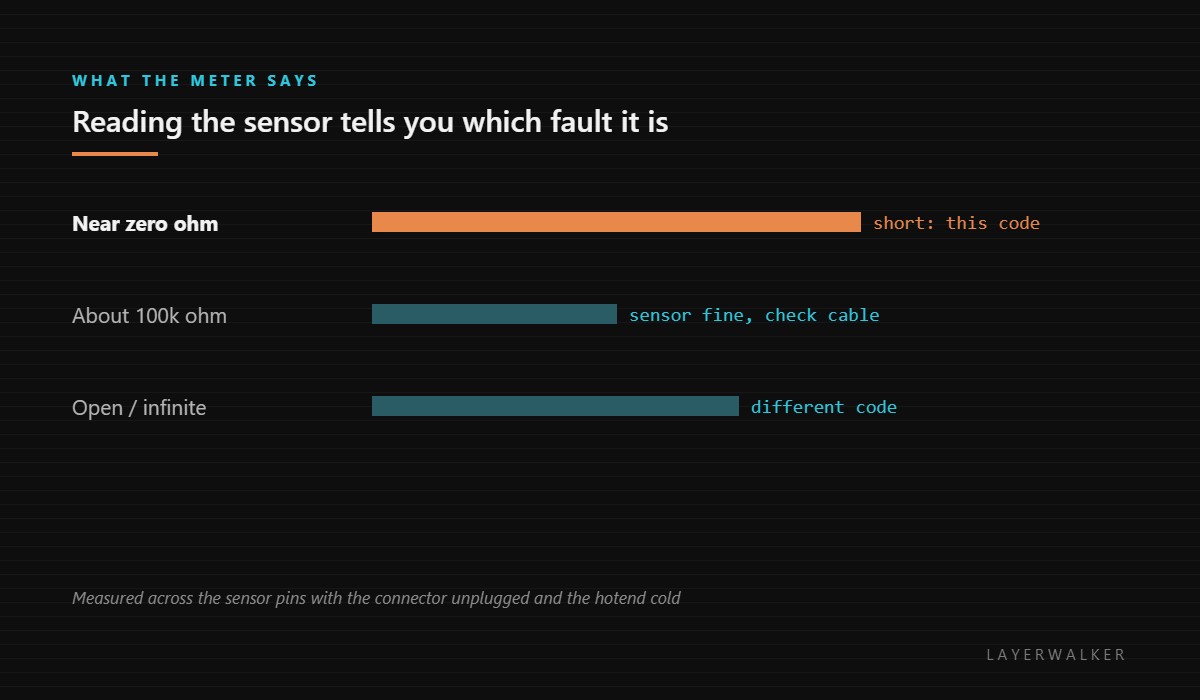
- Unplug the sensor connector and measure across its two pins. Roughly 100k ohm at room temperature is healthy; near zero confirms the short.
- If the reading is healthy, the fault is in the cable between the connector and the board. Inspect the loom where it flexes.
- Look for bridged pins at the connector housing and for a wire strand left from a previous repair.
- If the sensor itself is shorted, fit a replacement hotend assembly rather than trying to extract the bead.
On these machines the sensor is supplied as part of a complete hotend rather than as a loose thermistor, which is why the part listed below is an assembly. That is usually the faster repair anyway: the heater, the sensor and the nozzle all wear on similar timescales.
Our page on 3D printer thermistors covers how these sensors work and what the readings mean in general, and the troubleshooting index covers where temperature faults sit among the other families.
FAQ
Can I print with one nozzle while the other is faulty? The firmware halts on the fault, so no. Repair it before printing.
Is a shorted sensor dangerous? The controller cuts the circuit, which is exactly why you get a code instead of a runaway heater.
Why replace the whole hotend? Because the sensor is not sold separately for these machines and the assembly is quick to swap.
What if the meter reads normal? Then the sensor is fine and the short is in the cable or the connector. Inspect the flexing section.

LayerWalker
Print defect diagnosis, calibration procedures and parts that actually fit. Corrections welcome through the contact page.