HMS 0300-0100-0001-0001: heatbed heater short circuit
LayerWalker is a participant in the Amazon Services LLC Associates Program. We may earn a commission when you buy through links on our site, at no extra cost to you.
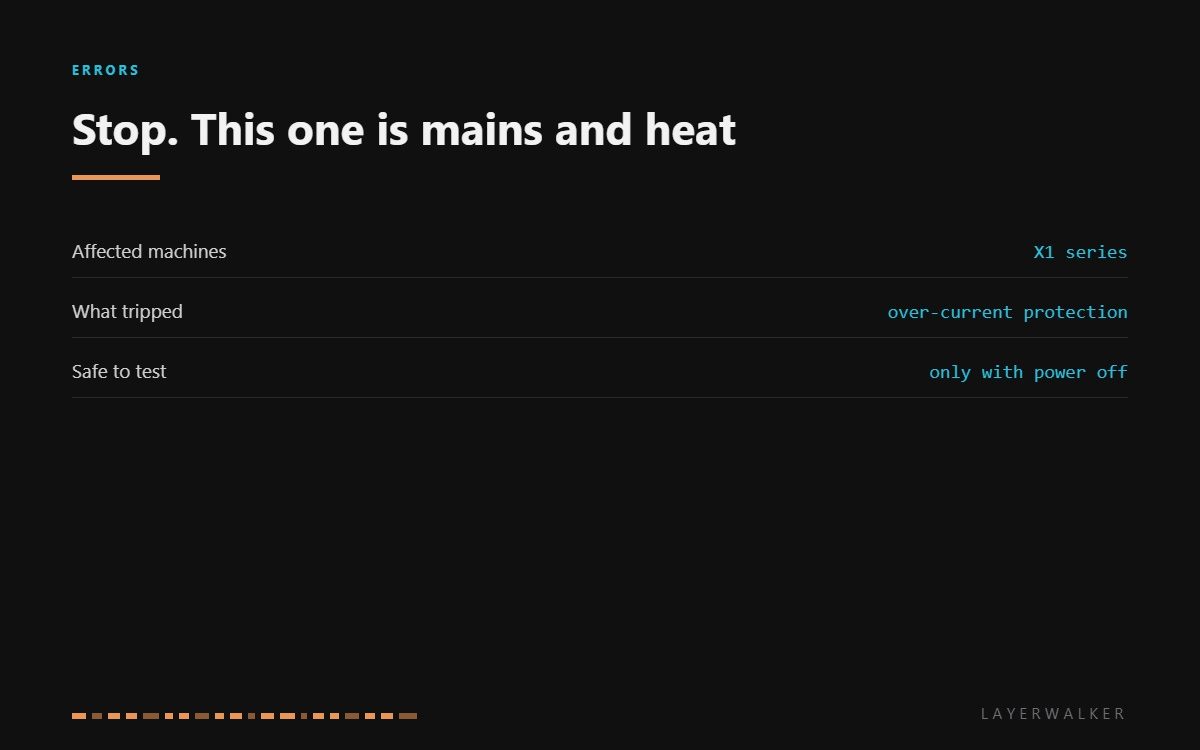
HMS 0300-0100-0001-0001 means the heatbed heater is drawing more current than its resistance should allow, and the printer has cut it off. Of every code on a 3D printer this is the one to take most seriously: the bed is the largest mains load in the machine, and a short in a mains heater is the failure with a genuine fire risk behind it.
Affected machines: X1 series. The bed heater is a resistive element bonded to the underside of the plate, fed from the AC board. Nothing in that chain is a user-replaceable part, which changes this from a repair into a diagnosis.
Where to buy


What you can establish, and where to stop
With the printer unplugged at the wall and left for several minutes, you can look. Check the heater leads where they enter the bed for discolouration, melted insulation or a browned connector. A short that has been developing usually leaves a mark, and finding one is enough to confirm the diagnosis without measuring anything.
Where to stop is just as important. Do not measure the heater with the machine powered, do not clear the code to see whether it holds, and do not open the AC board cover. The protection tripped because current went somewhere it should not, and the second attempt is the one that does damage.
Why this is not a reset-and-retry fault
Most HMS codes are the machine being cautious. This one is the machine catching something that was already going wrong. A shorted heater does not heal, and every power cycle puts full mains current into a fault path for as long as it takes the protection to act again.
Bed will not heat and the printer reports a heatbed heater short circuit
Short in the bed heater element or its wiring, occasionally a damaged connector
- Unplug the printer at the wall immediately and leave it unplugged.
- Wait several minutes before opening any panel so that mains-side capacitors can discharge.
- Inspect the heater leads where they enter the bed for discolouration, melting or a browned connector.
- Inspect the cable run under the bed for a pinch point, especially where it flexes as the bed moves.
- Do not power the machine on to test. Record the code and raise a support ticket.
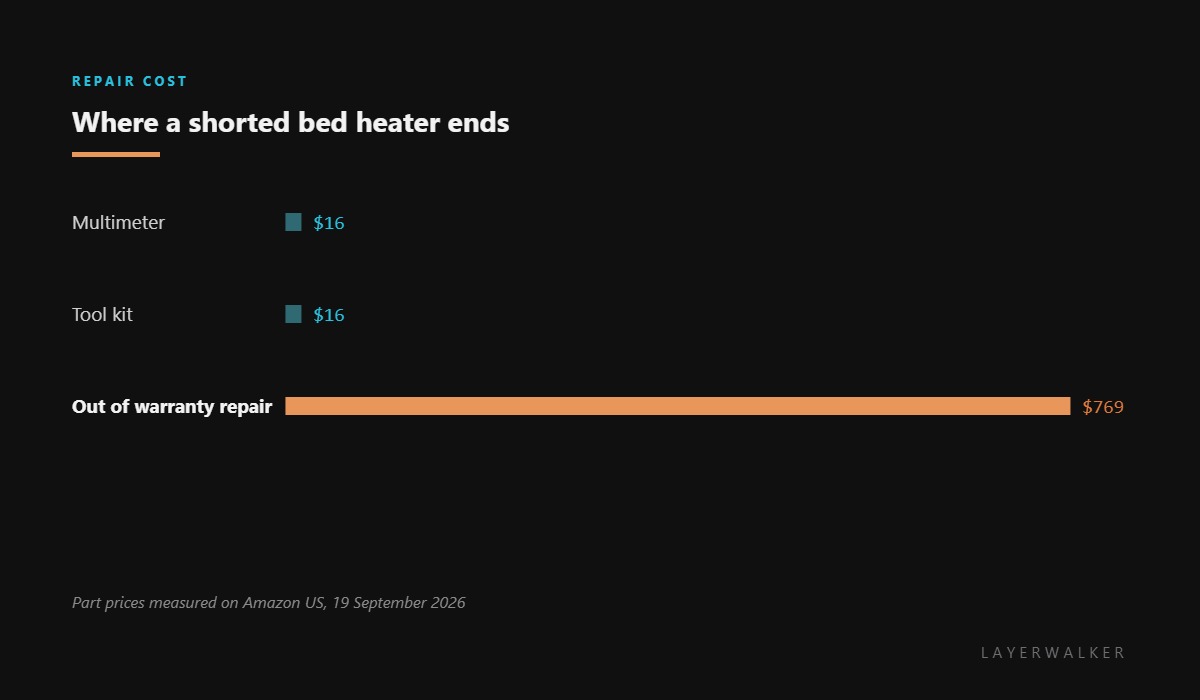
- If the machine is out of warranty, get a repair quote before deciding, because a bed assembly plus labour is substantial.
If you smell hot plastic or see scorching, stop entirely and do not run the machine again even briefly. That is the one symptom that turns this from a service call into a safety issue.
The control-side fault on the same bed is heatbed control abnormal, and the sensor version is heatbed sensor open circuit. Our page on bed temperature explains what the bed does, and the troubleshooting index covers the rest.
HMS 0300-0100-0001-0001 FAQ
Can I print without the bed?
No. Nothing sticks to a cold plate, and you should not be powering this machine at all until it is checked.
Can I replace the bed heater myself?
It is not sold as a user part, and the work is on the mains side. This is a service job.
Is it safe to clear the code once?
No. A short does not clear itself, and each retry energises the fault path again.
How do I know it is really shorted?
The protection tripping is the evidence. Confirming it properly means measuring at mains potential, which is why this goes to service.

LayerWalker
Print defect diagnosis, calibration procedures and parts that actually fit. Corrections welcome through the contact page.