3D Printer Kits: What Assembling It Yourself Actually Buys
LayerWalker is a participant in the Amazon Services LLC Associates Program. We may earn a commission when you buy through links on our site, at no extra cost to you.
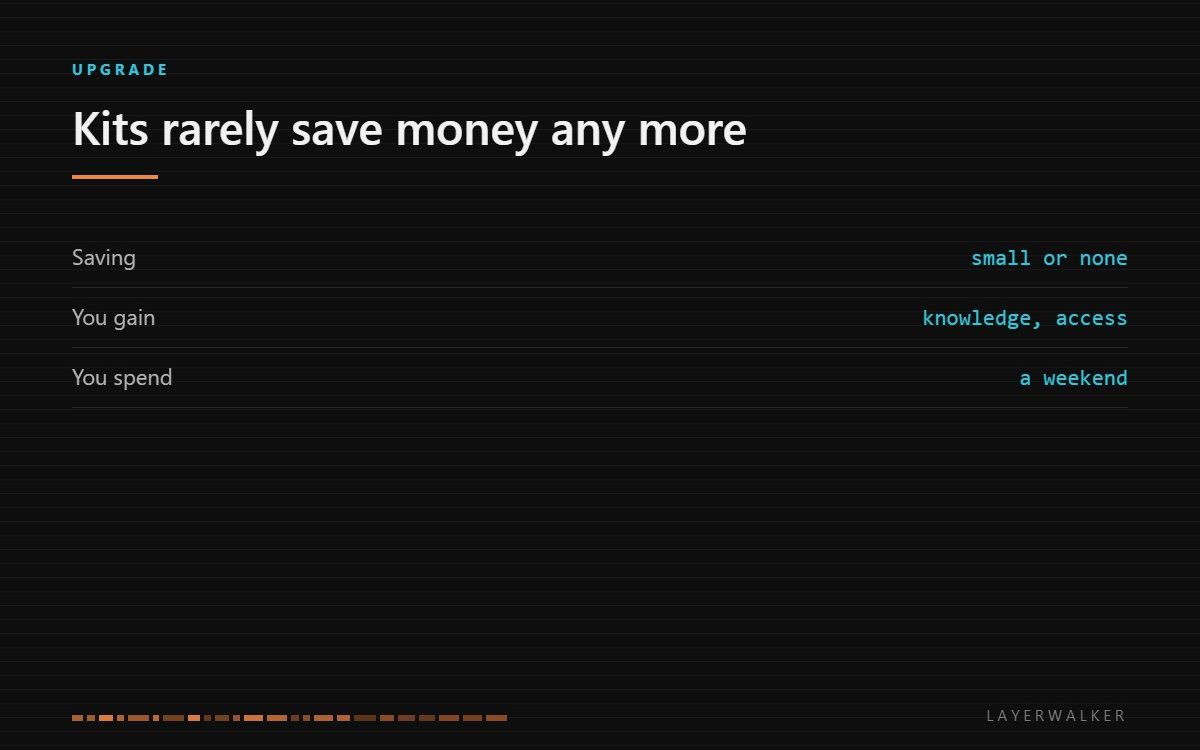
Kits used to be how you got a printer cheaply. They are not any more: the saving over the assembled version of the same machine is modest. Build one to understand the machine and to be able to fix it, not to save money.
Where to buy


The money argument has mostly gone
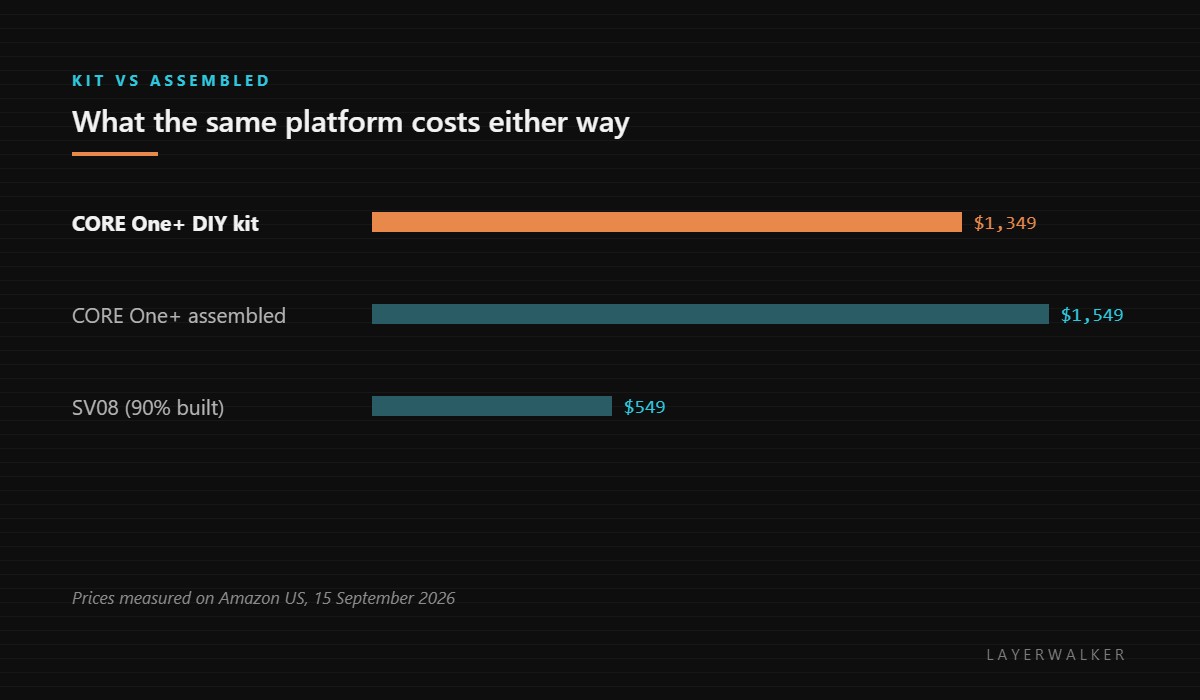
Compare a kit with the assembled version of the same platform and the gap is a few hundred dollars on a machine costing well over a thousand, or nothing at all at the budget end where everything ships mostly built. Manufacturing has got cheap enough that assembly labour is no longer the dominant cost.
So if the reason for the kit is budget, check the assembled price of the same model before committing a weekend.
What you genuinely gain
Knowledge, and it is not a consolation prize. Someone who has built the machine knows which belt runs where, what the extruder looks like inside, and which screw to reach for when the first layer goes wrong. That pays back every time the printer misbehaves, and it is why kits remain popular with people who could easily afford assembled.
Access is the second gain. Kit machines are designed to be taken apart, so parts are reachable and documented. On some assembled machines the same repair means removing half the printer.
The third is that self-sourced and open designs let you choose components rather than accepting a specification. That is the territory our DIY CoreXY page covers, where the build is the project.
What it costs you
Time, measured in a weekend for a well-documented kit and considerably more for a self-sourced build. Patience, because a mistake at step twenty shows up as a problem at step sixty. And a working assumption that the first prints will be tuning prints rather than parts.
There is also a warranty distinction worth reading: a fault you introduced during assembly is your problem in a way it would not be on an assembled machine.
Who should buy assembled
Anyone who needs the printer to be a tool rather than a project. Anyone buying for a classroom or a business, where downtime has a cost and the person operating it did not choose the hobby; our page on printers for students covers that case. And anyone whose honest answer to “do I want to spend Saturday on this” is no.
If speed of setup matters but you still want the open platform, the middle ground is a machine that arrives mostly assembled, which our CoreXY guide covers.
FAQ
Is a kit cheaper? Slightly, on the same model. Not enough to be the reason.
How long does a kit take to build? A weekend for a good one, longer if it is your first.
Will it print as well as assembled? Yes, if built correctly. That condition is the whole risk.
Good for a first printer? Only if the building is part of what you want. Otherwise buy assembled.

LayerWalker
Print defect diagnosis, calibration procedures and parts that actually fit. Corrections welcome through the contact page.