Qidi Plus 4 Upgrades: Bimetal Quick-Swap Nozzles, Spare Hotend, and What the Plus 4 Already Has
LayerWalker is a participant in the Amazon Services LLC Associates Program. We may earn a commission when you buy through links on our site, at no extra cost to you.
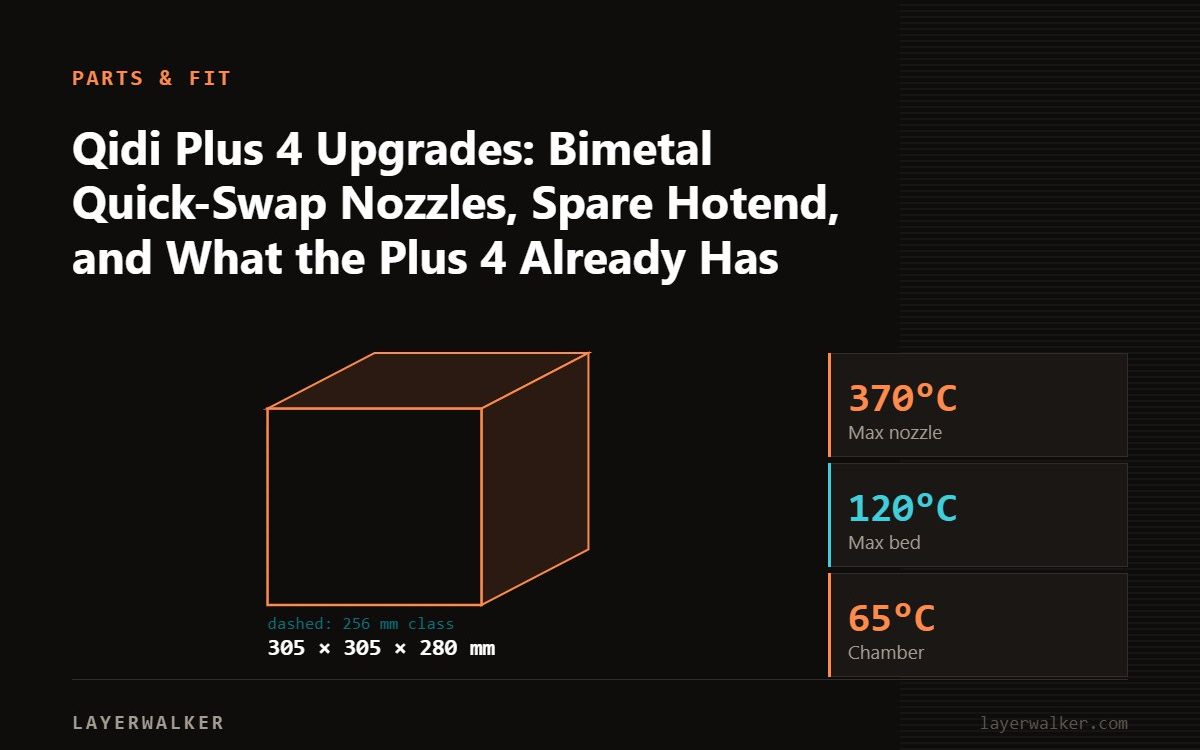
The Qidi Plus 4 arrives with a heated chamber and a hotend rated far above most printers, so the useful upgrades are about nozzles and spares: bimetal quick-swap nozzles in 0.2, 0.6 and 0.8 mm, a hardened variant for abrasive filament, a replacement hotend assembly for when a clog will not clear, and a dryer for the nylon and PETG the Plus 4 is bought to print.
The Plus 4 is an engineering-materials printer: heated chamber, high-temperature hotend, big bed. Owners buy it for PA-CF, PC and ASA, and those materials define the upgrades. Nozzles wear on fibre-filled filament, hotends clog on nylon left hot, and everything hygroscopic needs a dryer. The printer itself needs no help.
Where to buy


What is worth buying
- Bimetal quick-swap nozzles in other sizes: 0.6 mm for fast strong parts in CF materials, 0.2 mm for detail. Hardened tips for abrasives; see abrasive filaments.
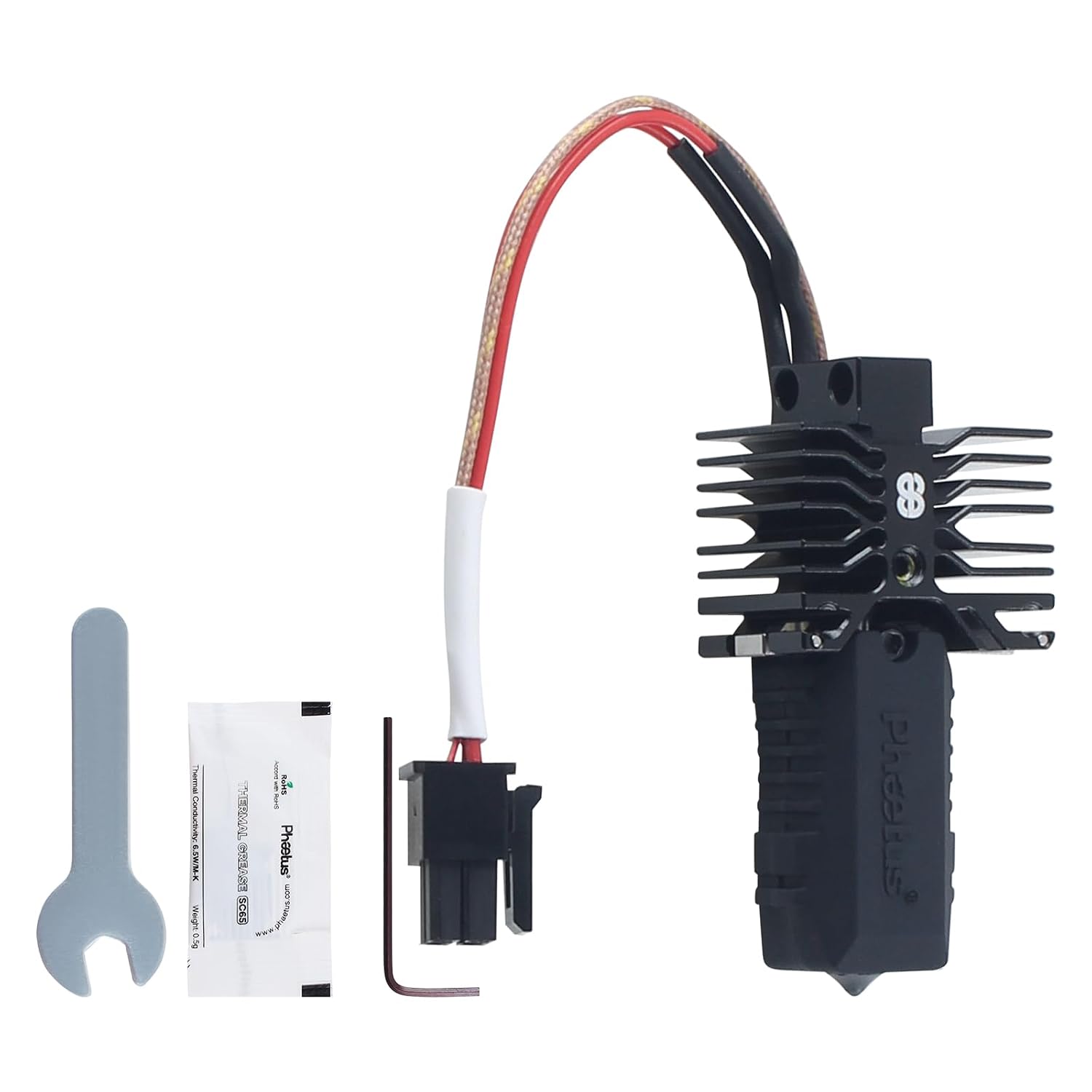
- A replacement hotend assembly. Nylon cooked in a hot nozzle produces clogs a cold pull will not shift; a spare avoids downtime.
- A filament dryer with print-through feed. The Plus 4’s materials all need one; see drying.
- Silicone socks as consumables at chamber temperature.
What to skip
- Chamber heater or enclosure mods; it has both.
- Toolhead cooling changes; tuned for the profiles.
- Hardened nozzles for PLA and PETG only.
The parts in the box
The two-pack of bimetallic quick-swap 0.4 mm nozzles for the Plus 4 is the everyday spare; the FYSETC replacement hotend assembly is the full-unit spare; the bimetal nozzle hotend for the Plus 4 is a third-party alternative. Confirm each listing names the Plus 4.
Fitting a hotend
- Cool the hotend and unload filament.
- Open the toolhead, disconnect the heater and thermistor, remove the old unit.
- Fit the new hotend, reconnect, close up.
- Run the printer’s PID or temperature calibration if offered, then a first-layer test. A clog straight after a swap is usually a connector not seated.
Qidi Plus 4 Upgrades FAQ
Do Q1 Pro nozzles fit the Plus 4?
Check the listing; the two printers share some hotend parts but not all.
Is a 0.8 mm nozzle sensible?
For large ASA and PC parts, yes; the Plus 4 has the flow and the chamber.
Why does nylon clog the Plus 4?
Left hot without extruding, nylon carbonises. Lower standby temperature and purge before pausing.

LayerWalker
Print defect diagnosis, calibration procedures and parts that actually fit. Corrections welcome through the contact page.