Creality PETG and Hyper PETG: Which Line for Which Printer, and How to Print It Clean
LayerWalker is a participant in the Amazon Services LLC Associates Program. We may earn a commission when you buy through links on our site, at no extra cost to you.
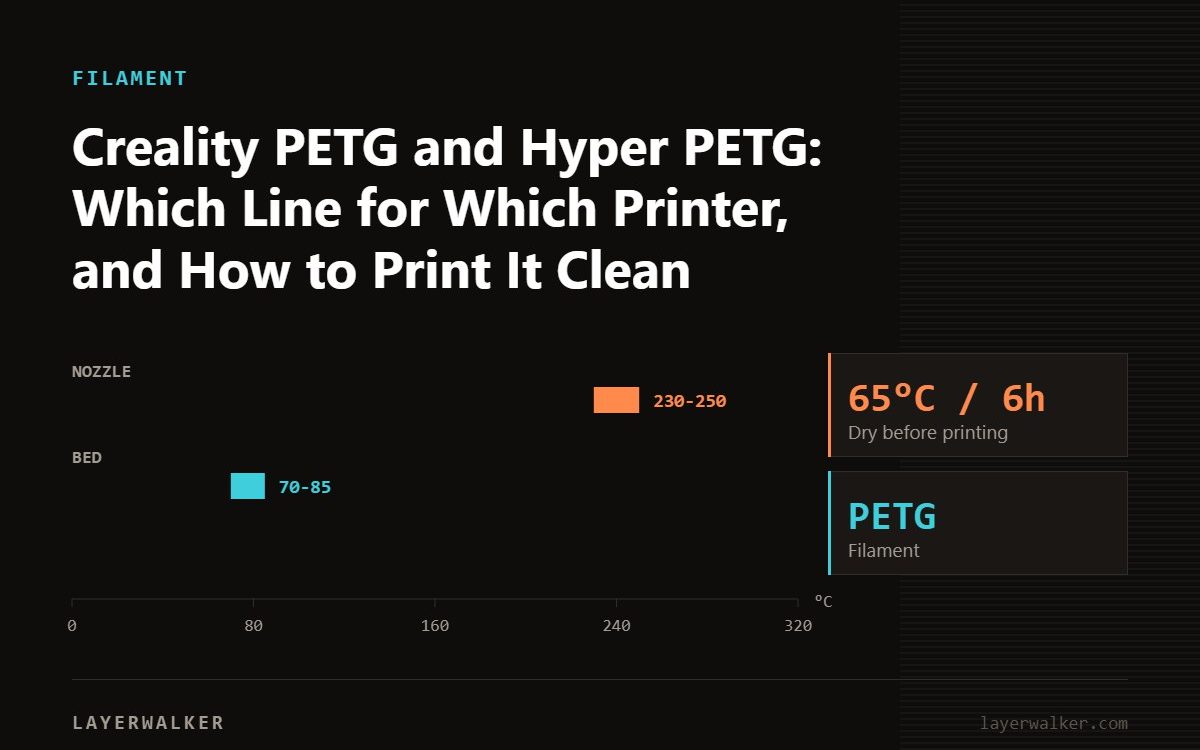
Creality’s standard PETG is a mid-range spool for bed-slingers at 230 to 245 °C; Hyper PETG is a low-viscosity blend for the K1 series and other fast CoreXY printers that keeps up at 200 mm/s and above. Both need drying at 65 °C before use and a textured PEI plate. Pick by printer speed.
PETG is the material Creality printers most often get moved to after PLA, for brackets and anything that sees heat. Creality’s own PETG comes in two lines that behave differently at speed. Standard PETG flows like any PETG and is happiest at 40 to 80 mm/s; Hyper PETG is formulated to melt faster so the K1’s high-flow hotend can push it at CoreXY speeds, and on a slow printer it strings slightly more in exchange. Neither needs a Creality printer.
Where to buy

Official CREALITY PETG Filament, 3D Printer Filament 1.75mm 1KG Black

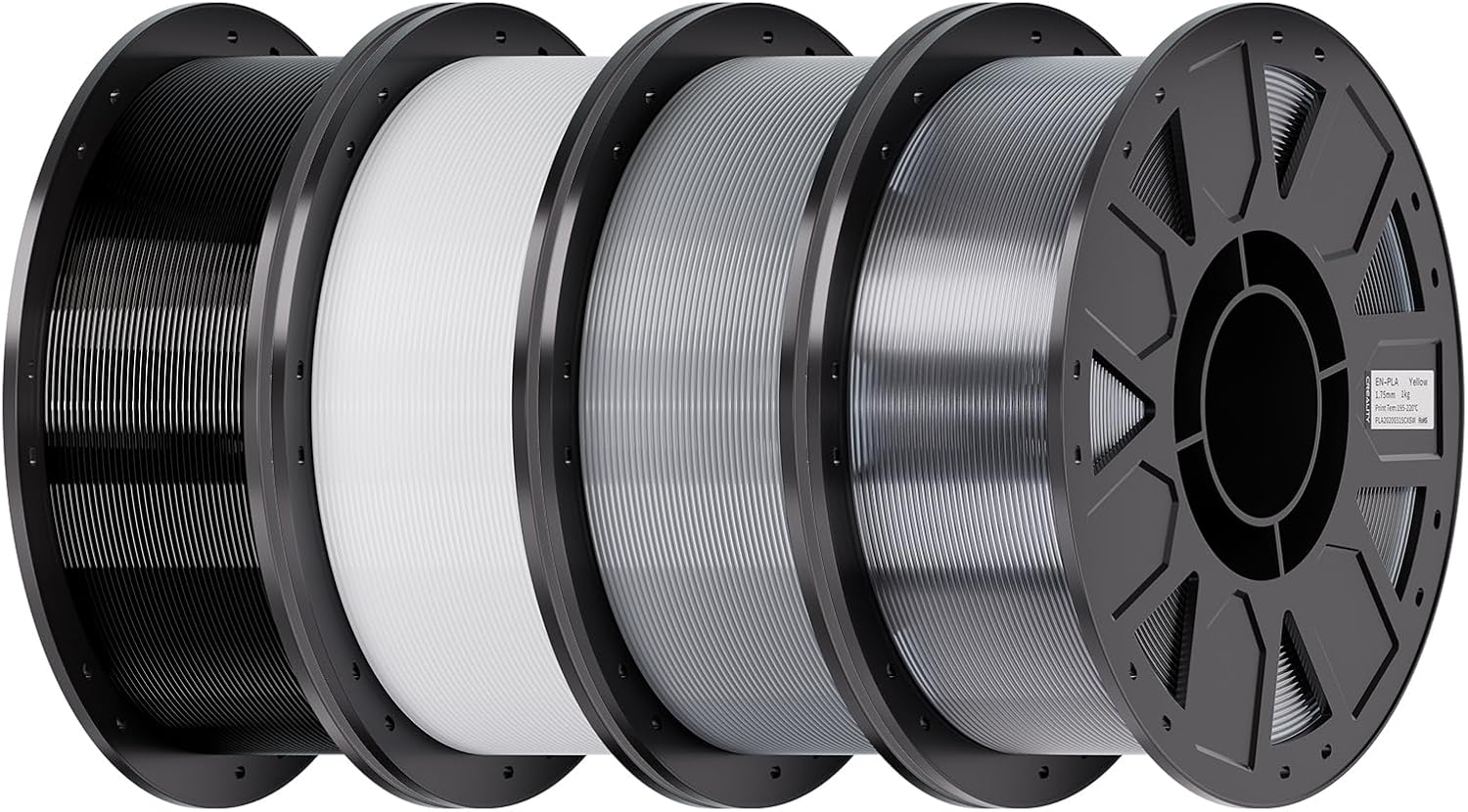
Creality PETG 3D Printer Filament 1.75mm 4KG, Black+White+Grey+Transparent
The lines
- Creality PETG. Standard PETG, 230 to 245 °C, bed 70 to 80 °C. Everyday functional parts on a bed-slinger.
- Hyper PETG. High-flow, 240 to 260 °C at speed. For the K1, K1C, K1 Max, K2 Plus and other fast printers.
- PETG-CF in the Creality range follows the carbon-fibre rules and needs a hardened nozzle.
What to check on the spool
- Tolerance ±0.03 mm stated.
- Vacuum seal. PETG absorbs water fast; a loose bag means a wet spool.
- Spool type. Plastic for a CFS or AMS; cardboard spools shed into the feed path.
- Which line, because bundles mix them.
The spools in the box
Creality’s standard PETG in black is the workhorse for a bed-slinger; the other listed PETG spools are the high-flow alternatives, including Creality’s own Hyper line where available, for a K1-class printer.
Settings that work
- Dry at 65 °C for 6 hours before the first print, and print from a dry box.
- Standard: 235 to 245 °C, bed 75 to 80 °C, fan 30 to 50 %, speed 40 to 80 mm/s.
- Hyper: 245 to 255 °C, bed 80 °C, fan 40 to 60 %, speed as the K1 profile allows.
- Textured PEI, or glue stick on smooth PEI; bare smooth PEI loses its coating to PETG.
- If it still strings, it is wet; dry longer before touching retraction.
When to buy something else
Outdoor parts in sun: ASA. Very fine detail: PLA. Parts that need to stay stiff under sustained load: PETG-CF. See PLA versus PETG for the material choice.
Creality PETG FAQ
Does Hyper PETG work on an Ender 3?
Yes, at Ender speeds, with a little more retraction. You will not see its benefit.
Can I print Creality PETG on a Bambu printer?
Yes; use the generic PETG profile and run flow calibration.
Why does my PETG look cloudy?
Wet filament. Dry it and reprint before changing settings.

LayerWalker
Print defect diagnosis, calibration procedures and parts that actually fit. Corrections welcome through the contact page.