HMS 0300-1800-0003-0009: First High Heatbed Temperature Print Detected
LayerWalker is a participant in the Amazon Services LLC Associates Program. We may earn a commission when you buy through links on our site, at no extra cost to you.
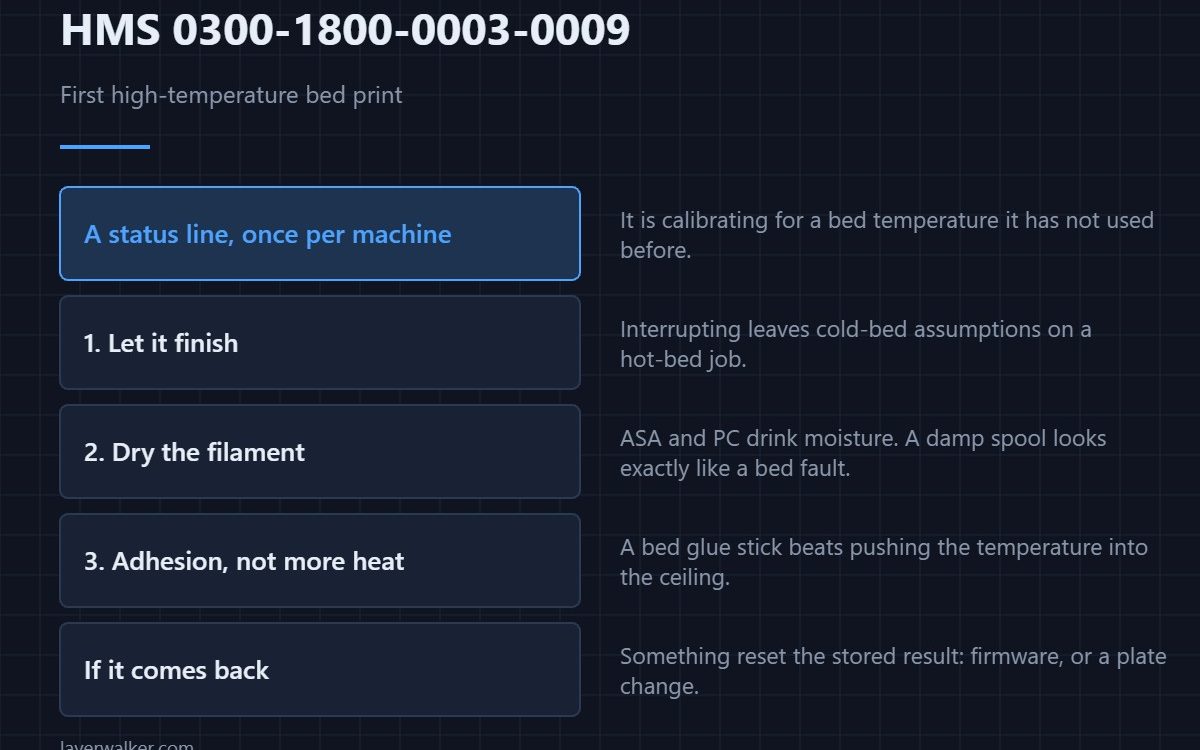
HMS 0300-1800-0003-0009 means first-time high heatbed temperature printing has been detected, and that high-temperature bed calibration is being performed automatically to improve first-layer quality. It is a status message. The only thing it asks of you is patience while it runs.
You see this once per machine, usually the first time you load something more demanding than PLA.
Where to buy


SUNLU Filament Dryer Box 2026 New Upgrade S1 Plus, Black
Let the calibration finish
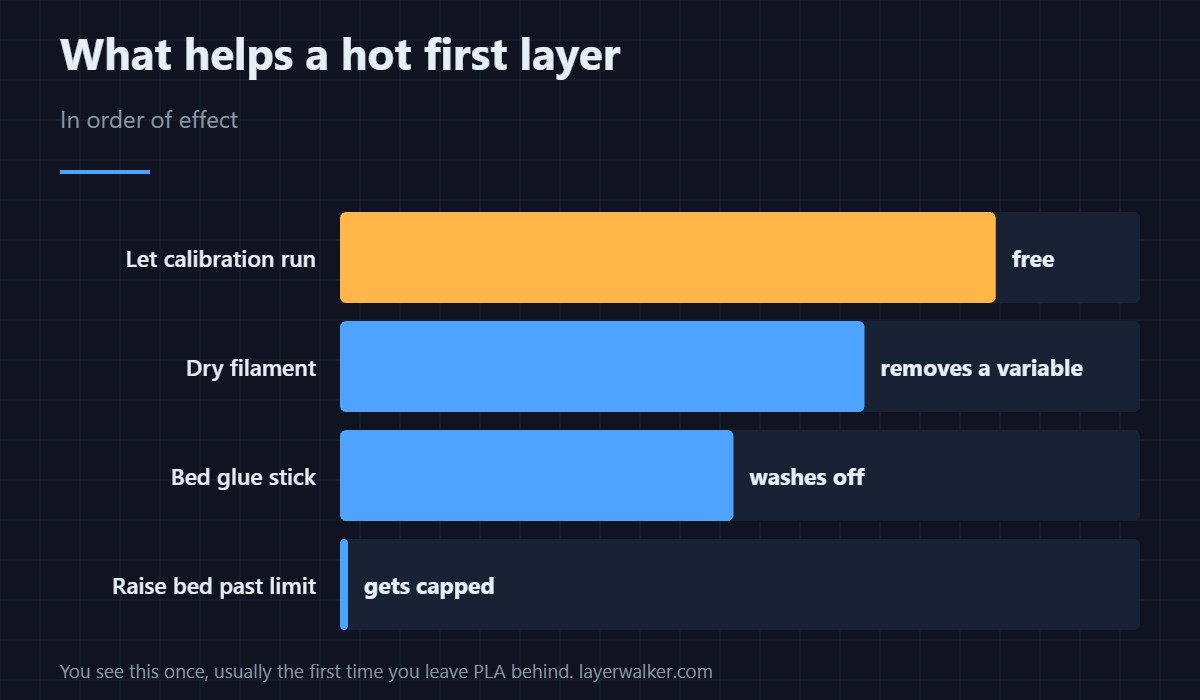
The routine is measuring how the plate behaves at a temperature it has not used before. Interrupting it means the machine keeps working from cold-bed assumptions on a hot-bed job, which is precisely the first-layer problem the routine exists to prevent.
Make sure the material deserves the heat
ASA, PC and similar materials want a hot bed and give you warping if they do not get one. If you are seeing this message you are probably printing one of them for the first time, and the material behaviour matters as much as the calibration — the specifics are in ASA warping.
Dry the filament before you blame the bed
High-temperature engineering materials absorb moisture faster than PLA, and a damp spool produces poor first layers that look exactly like a bed problem. A filament dryer removes that variable before you start chasing it — options in filament dryers.
Help adhesion rather than raising the number
A glue stick made for print beds gives a thin even layer that works with a hot plate, and it washes off. It is a better answer than pushing the bed temperature towards the ceiling, which is what triggers HMS 0300-0100-0003-0008.
Why HMS 0300-1800-0003-0009 appears only once
The result is stored, so the machine does not repeat it for every hot job. If it reappears, something reset that stored calibration — a firmware update or a plate change are the usual reasons.
What good looks like afterwards
A first layer that sits flat on a plate at 90 degrees or more without lifting at the corners. If it still lifts, the causes are in first layer not sticking.
HMS 0300-1800-0003-0009 FAQ
Do I need to do anything?
Wait for it. That is the whole requirement.
How long does it take?
Minutes, and only on the first hot-bed job.
Can I skip it?
Do not. Hot-bed first layers are exactly what it improves.
Why has it come back?
A reset of the stored result, usually after firmware or a plate change.

LayerWalker
Print defect diagnosis, calibration procedures and parts that actually fit. Corrections welcome through the contact page.