HMS 1A00-0100-0002-0033: The Rack Failed to Mount the Hotend Properly
LayerWalker is a participant in the Amazon Services LLC Associates Program. We may earn a commission when you buy through links on our site, at no extra cost to you.
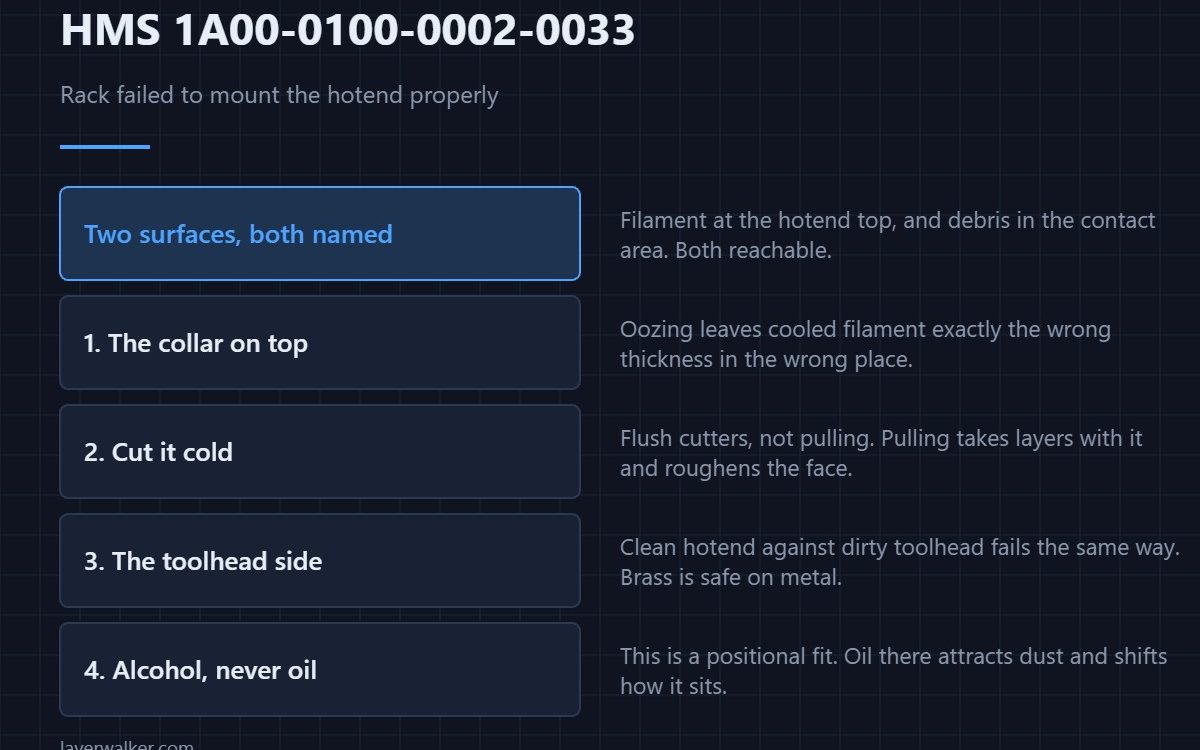
HMS 1A00-0100-0002-0033 means the hotend was collected but never seated properly on the toolhead, and Bambu names two causes: excessive filament at the top of the hotend, and debris in the contact area between the toolhead and the hotend. Both are cleaning jobs on surfaces you can reach.
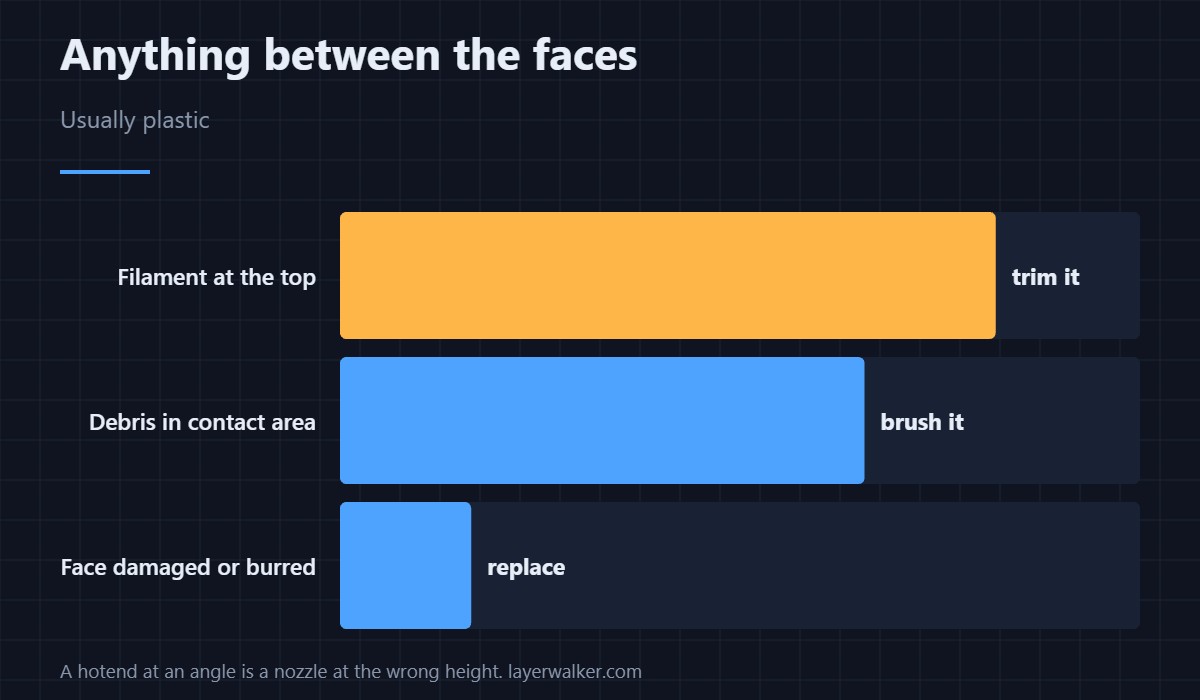
Mounting is a fit between two faces. Anything between them is the fault, and that is usually plastic.
Where to buy


The filament at the top, first
Oozing between swaps leaves a collar of cooled filament on the hotend top, and a collar is exactly the wrong thickness in exactly the wrong place. Let it cool, then cut the residue away with flush cutters rather than pulling, which takes thin layers with it and leaves a rougher face.
Then the contact area
Look at the matching surface on the toolhead. Filament dust and fragments collect there too, and a clean hotend against a dirty toolhead fails the same way. A brass brush is safe on the metal; the orifice itself needs nothing more than a wipe.
Finish with alcohol, not oil
Isopropyl alcohol at high strength lifts the thin film that brushing leaves behind. Avoid putting any lubricant on the mating faces: these are a positional fit, and oil there both attracts dust and changes how the surfaces sit.
How HMS 1A00-0100-0002-0033 relates to the drop code
A poor mount and a dropped hotend share the same cause. The dropped version during nesting is HMS 1A00-0100-0002-0025, and it names the same filament at the hotend top. If you see both, treat it as one dirty surface rather than two faults.
And to the detection code
A hotend that never seats also never registers, so a dirty contact area can produce HMS 1A00-0100-0002-0032 on the next attempt. Cleaning both faces at once saves a second pass. The hardware is covered in 3D printing hotends.
HMS 1A00-0100-0002-0033 FAQ
Can I print with a partly seated hotend?
No, and the machine will not let you. A hotend at an angle is a nozzle at the wrong height.
Why does it happen more with some materials?
Because they ooze more. High-temperature materials leave heavier collars between swaps.
Should I replace the hotend?
Only if a face is damaged. Residue cleans off; a burr does not.
Is there a routine that prevents it?
Check the hotend top whenever you change filament type, and keep spares bagged — the rack capacity angle is in HMS 1A00-1300-0002-0001.
The same residue that stops a hotend seating will also drop it. HMS 1A00-0100-0002-0034 is the fetch-side drop, and it asks you to trim the filament at the hotend top.

LayerWalker
Print defect diagnosis, calibration procedures and parts that actually fit. Corrections welcome through the contact page.